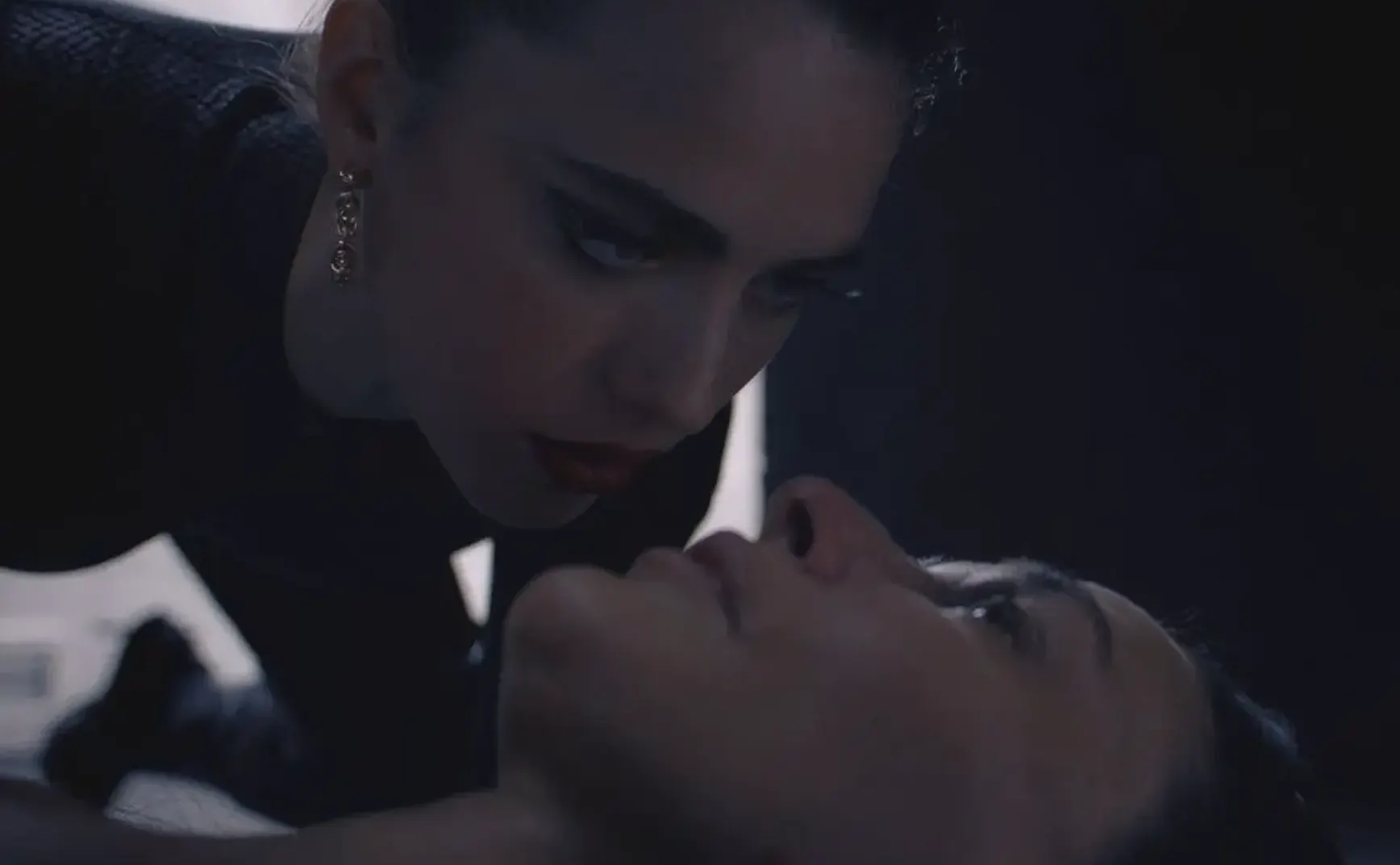
Please watch the film before reading, as this article is a full analysis of key scenes.
The following is a psychological interpretation of the body horror film The Substance (2024), written and directed by French filmmaker Coralie Fargeat. Passionate about women’s issues and genre film, she has relayed openly her thorough use of symbols and colours to convey strong ideas and emotions for memorable impact. With influences such as Lynch, Aronofsky, Cronenberg, and Kubrick etc., it is fortunate that she manages her own aesthetic identity among these heavyweights and presents a purposefully uncomfortable, intimate and vibrant film; paying homage to predecessors in respect and love of the craft.
The film is widely regarded as a vicious criticism of ageism in Hollywood, unrealistic beauty and body standards, as well as the male gaze or toxic masculinity to name a few hot issues. I would also be remiss not to mention the technical feats, the strong sound design and a flair for aesthetics that contribute to an intriguing sensory feast — it has rightly earned numerous accolades for production and set a precedence for women in horror. However, from my point of view, there is more to tease out from the story that goes beyond the face-value symbols, politics, film references, or tropes already discussed online.
I aim to offer a far deeper meaning and perspective - if you have read my previous article, then you’ll find this will follow suit as an atypical analysis as I approach the movie through dream language and alchemy, using depth psychology. Interestingly, through the unfolding and writing of the analysis, a philosophical angle also began to emerge that was unexpected (to be later discussed). I understand Fargeat is meticulous with her use of visuals and colours as symbolic representation throughout each scene – but these are the conscious efforts, which most can perceive. It is the glimpses of unconscious material that intertwine a competing deeper narrative to the surface story, adding layers to the film beyond the conscious awareness of it. This is where my attention and interpretation will go, essentially to what is hidden.
This methodology taps into the unconscious symbols, where true creativity and art reside. Symbols and archetypes are selected autonomously by the unconscious and drive a particular internal narrative for one’s psychological development. These symbols are unbiased, apolitical and seemingly random. It is why certain images can captivate us spiritually and even trigger us emotionally, why we feel deeply and strongly towards a piece of film, music, art, etc., as touching a part of one’s soul, yet not really knowing why. Furthermore, these symbols may expose more than what an audience or director may be willing to admit or recognise about themselves on a personal level. Collectively, it can also explain why certain works elevate to niches or cult fandoms – which this film has all the hallmarks of, if not already claimed.
The beginning of this complex narrative externalises the tribulations of inner psychological turmoil, avoidance of life, fear of rejection and mortality as a condition of the puella aeterna (eternal girl) archetype leading a provisional life, like the life of a teenager never initiated into adulthood – a state of dependence or stasis. The protagonist then accelerates into an alchemical transformation process that she is wholly unprepared for. There is also a living out of opposite poles of inflation, from victim to demi-god — as the ego succumbs to grandiosity and is then consumed by it.
This attempt at inner alchemy (via The Substance) with the body as a mixing vessel (krater) by the main character results in a doubling of the personality, with an aim to differentiate the ego from the Self and birth a new identity. However, Elisabeth (Demi Moore), the woman at the centre of this birthing process, is an immature ego. This produces the emergence of an undifferentiated aspect of the unconscious depicted as Sue (Margaret Qualley). She represents the new Self, distorted by the shadow. Sue, as the greater personality of Elisabeth, reveals the devouring and overt ambition hidden within herself. This leads to a further separation of the psyche, as each ego consciously resigns to relate only to the outer world. It ultimately leads to the destruction of both, when the symbiosis of the relationship is neglected. In a turn of events, involving a violent encounter, the last act depicts an impure chaotic mixture of the vessel which causes a mutation and this leads to the abominable union for a last stand.
If you’re still with me after that, what also sets this film apart is that it has a particular flavour coming from the female psyche. Where themes of this nature have subsisted mainly in the distinctive Germanic sphere of male literary works, The Substance inadvertently claims a significant place amongst the Faustian problem and the Promethean aim of Nietzsche’s Overman (Übermensch), all while underlying the Dionysian condition – as well as the destructive Wotanic (Odin) spirit; evidently a rather interesting excavation of the unconscious.
Lastly, the film explores the masculine aspect within women or animus (spirit or logos drive), constellated through the male encounters within the film - as projections and inner reflected realities, both negative and positive. This topic is a difficult one to explore, since the woman’s psyche, especially as it relates to the animus, is hugely varied and expansive, with sporadic material. This film may be useful to present those lived realities, just not in the way I believe Fargeat has fully intended.
Lost Sparkle
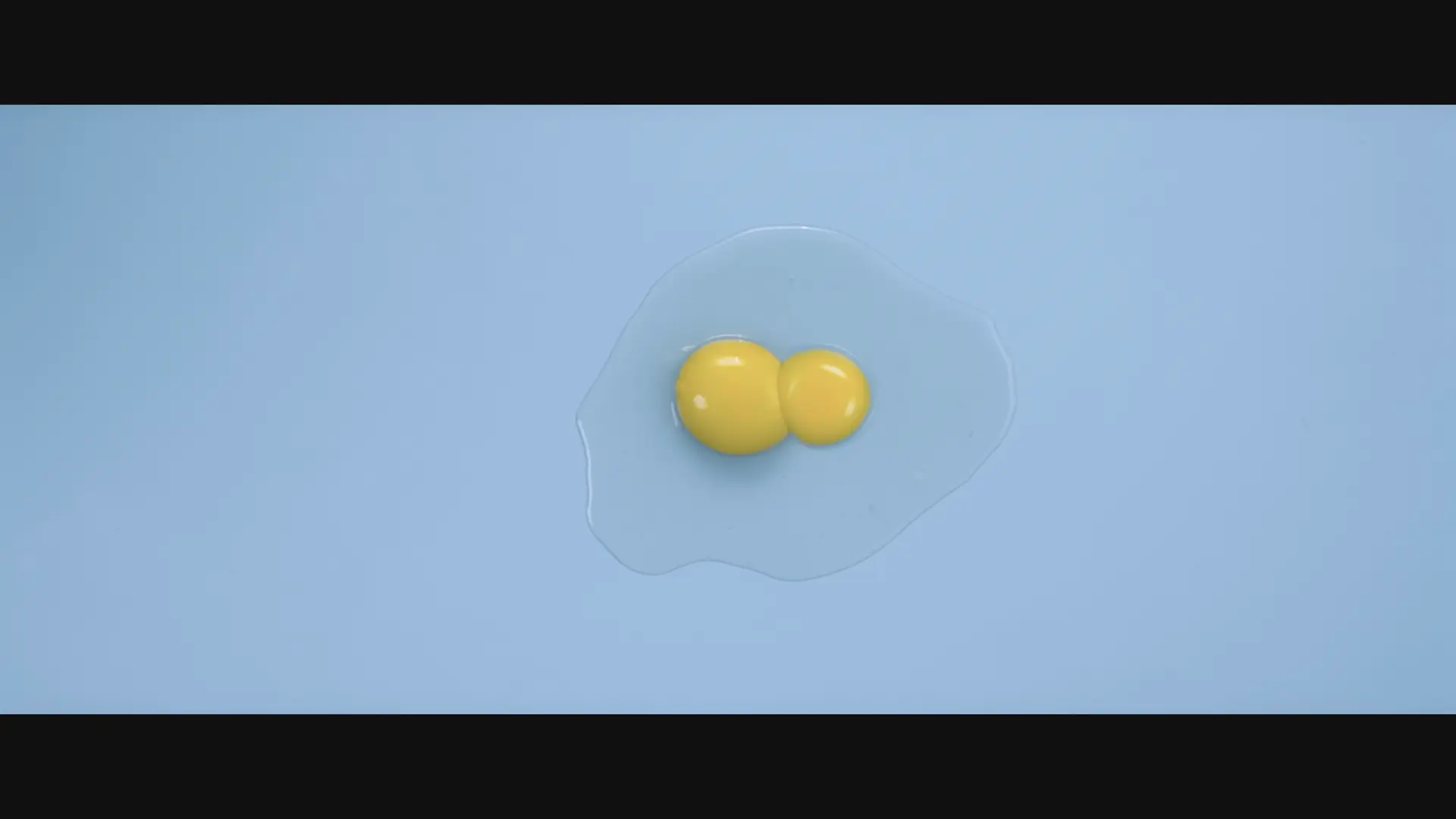
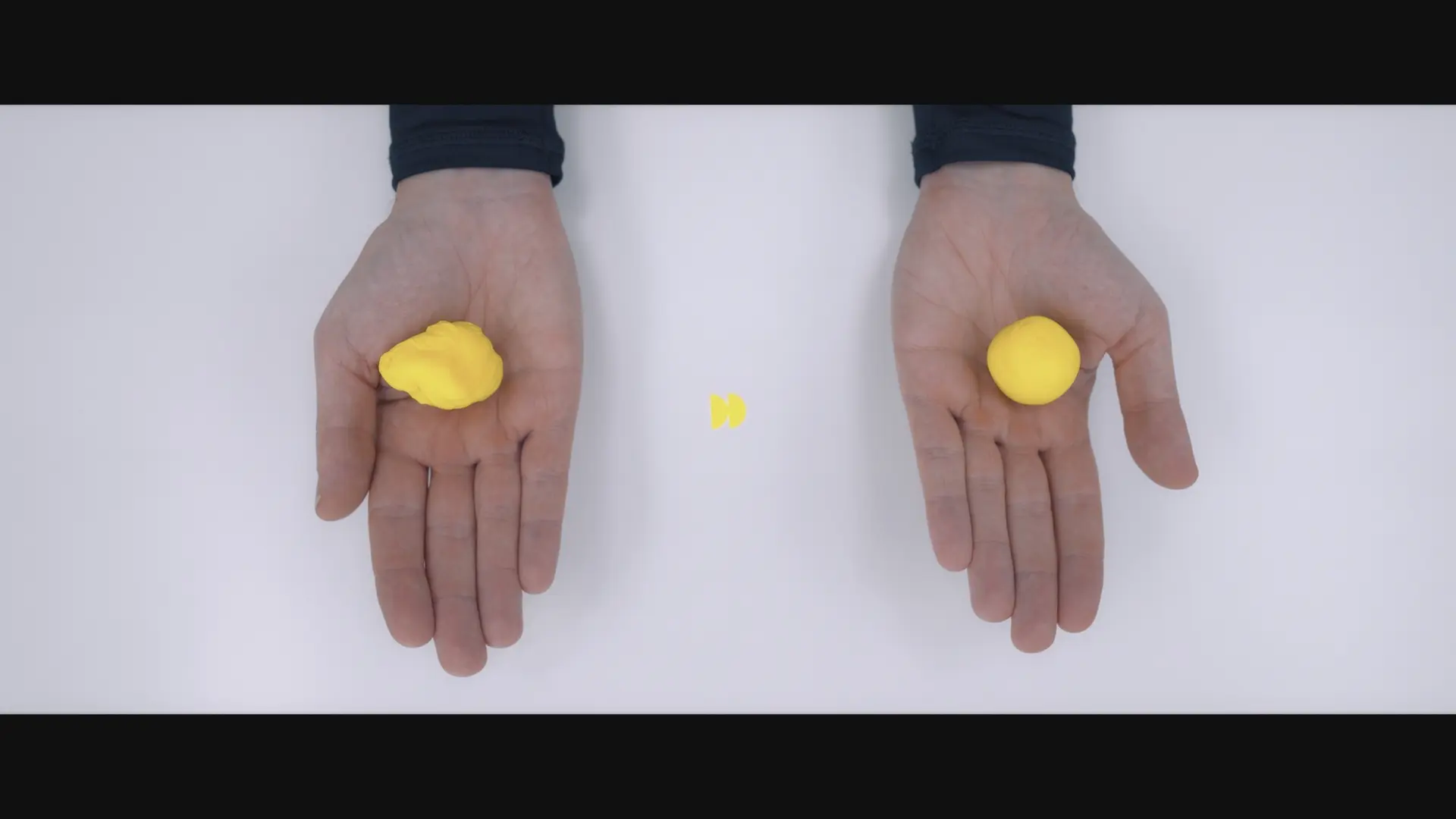
The opening scene demonstrates the experiment in the lab that creates “The Substance” received later in the film. It is depicted as a yolk that generates another similar yolk after the chemical injection. Symbolically, we are looking at the beginning, the monad, that splits itself into two – the doubling of the personality. Axiom of Maria would also apply here, but we will be looking at Nietzsche’s reference later on.
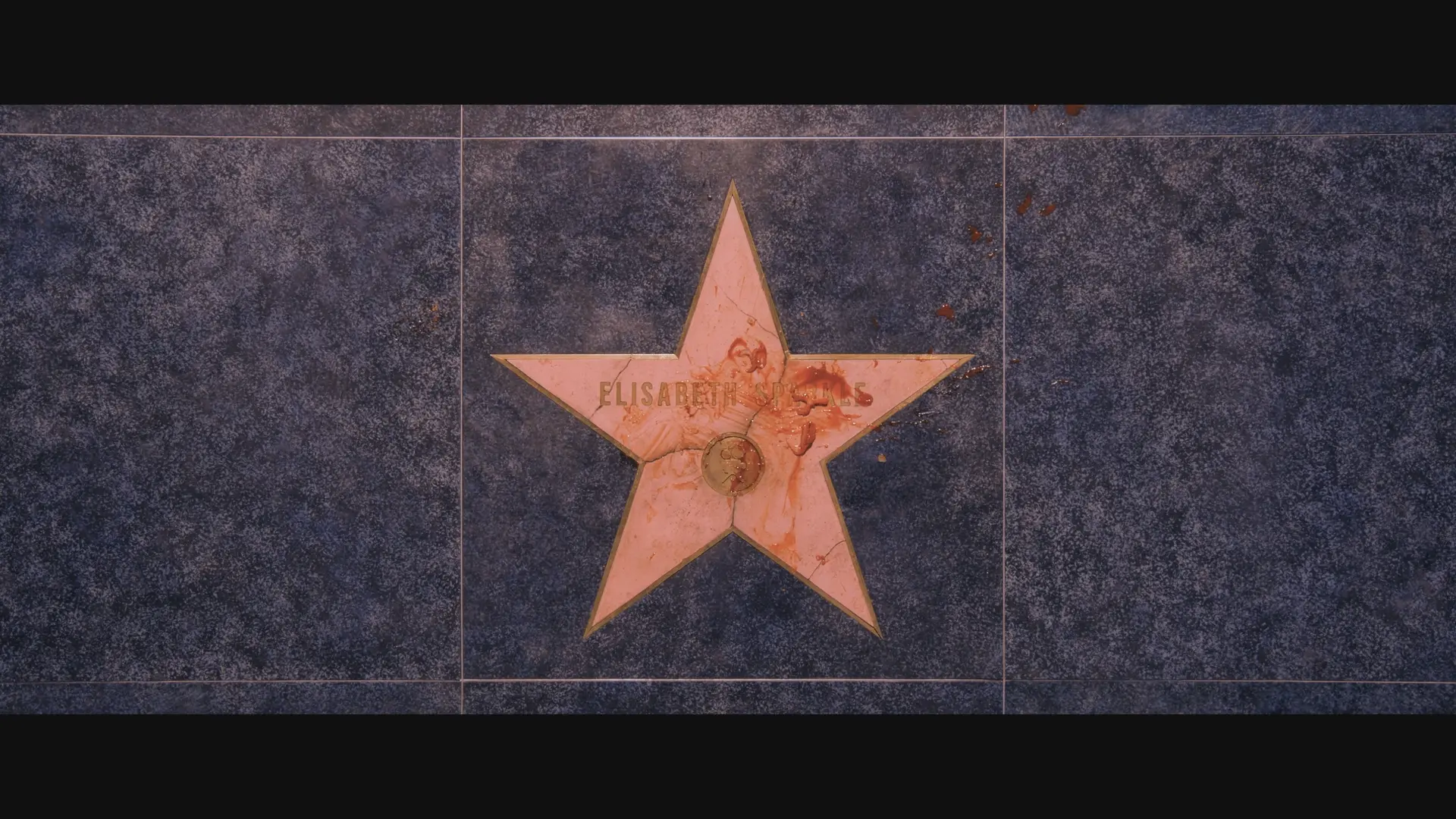
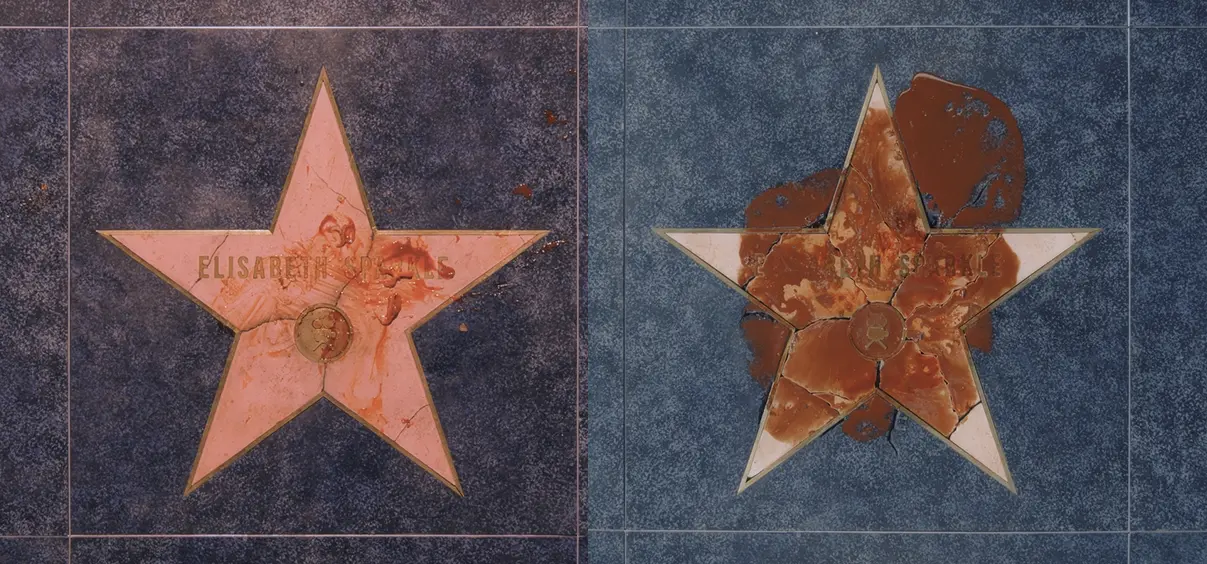
We are then invited to a montage of Elisabeth Sparkle’s vocation, a celebrity with a star on the Hollywood Walk of Fame. The shot lingers, revealing a passage of time in reflection on her fame and status. Through this progression and interaction with the audience, we see her light or fame diminishing, eventually forgotten, wrinkled and aged.
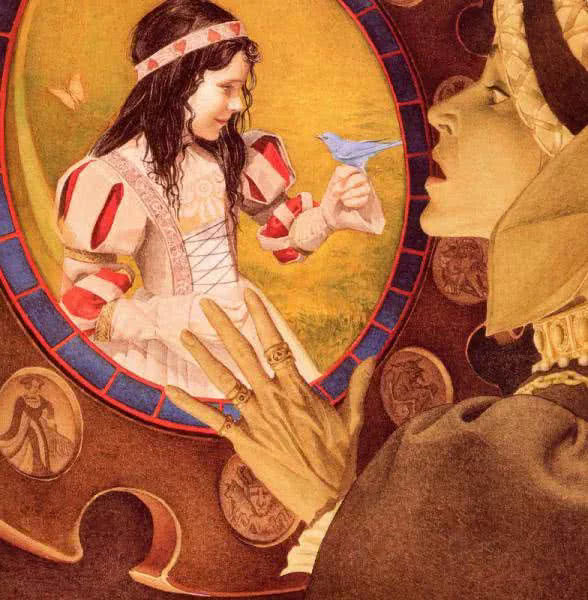
A relevant motif can be seen in myth or fairy tale, of the ageing king holding onto power till the last breath, and for the queen or witch, there is a drive to attain or maintain beauty at all costs; the underlying theme here is that a successor is far from the mind and quite intolerable.
Finally, the sequence ends with a clumsy burger-dropping passerby and a smear of ketchup, revealing a grim foreshadowing of Elisabeth’s demise.
The animus got you down
Elisabeth, relegated to hosting a long-running TV exercise show, wraps filming for the season. Feeling her age on her birthday she overhears Harvey (Dennis Quaid), the network’s boss, crass and ruthless desire to replace the star with a new, younger performer for the show.
Harvey: “We need her hot, we need her young, we need her now.”
While a hurtful and over-the-top display, this is a clear statement that a new matrix (mother) is required to replace the ageing queen. It is a matter of urgency to uphold the kingdom with a vibrant, fertile (creative) successor, so to speak.
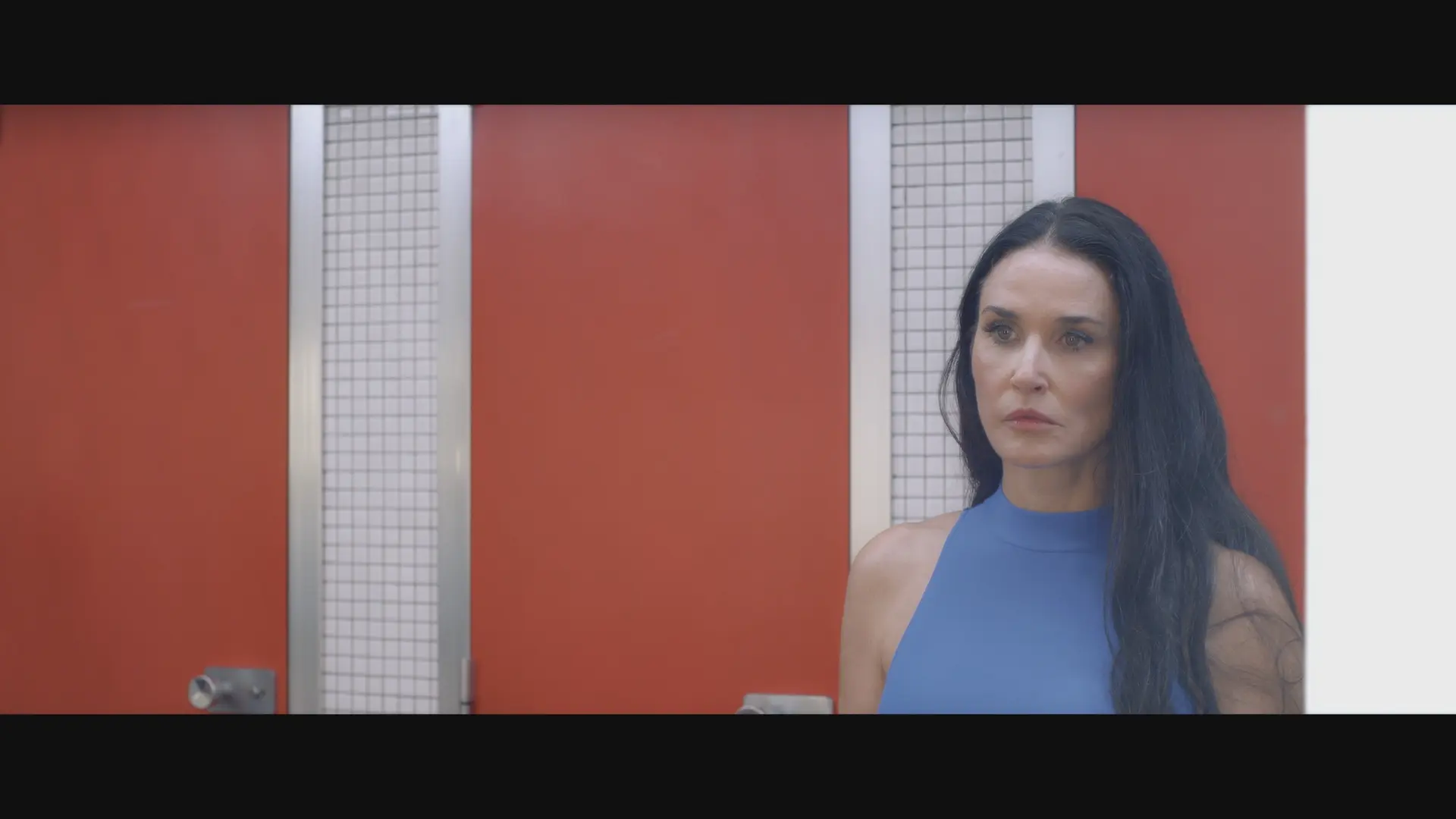
Unsurprisingly, following this alarming and emotive exposition, she is fired by Harvey at lunch.
Harvey: “I have to give people what they want... and people always ask for something new, renewal, it’s inevitable.”
Further implying that a 50-year-old woman is not sexually viable anymore to attract anyone, let alone an audience for the network.
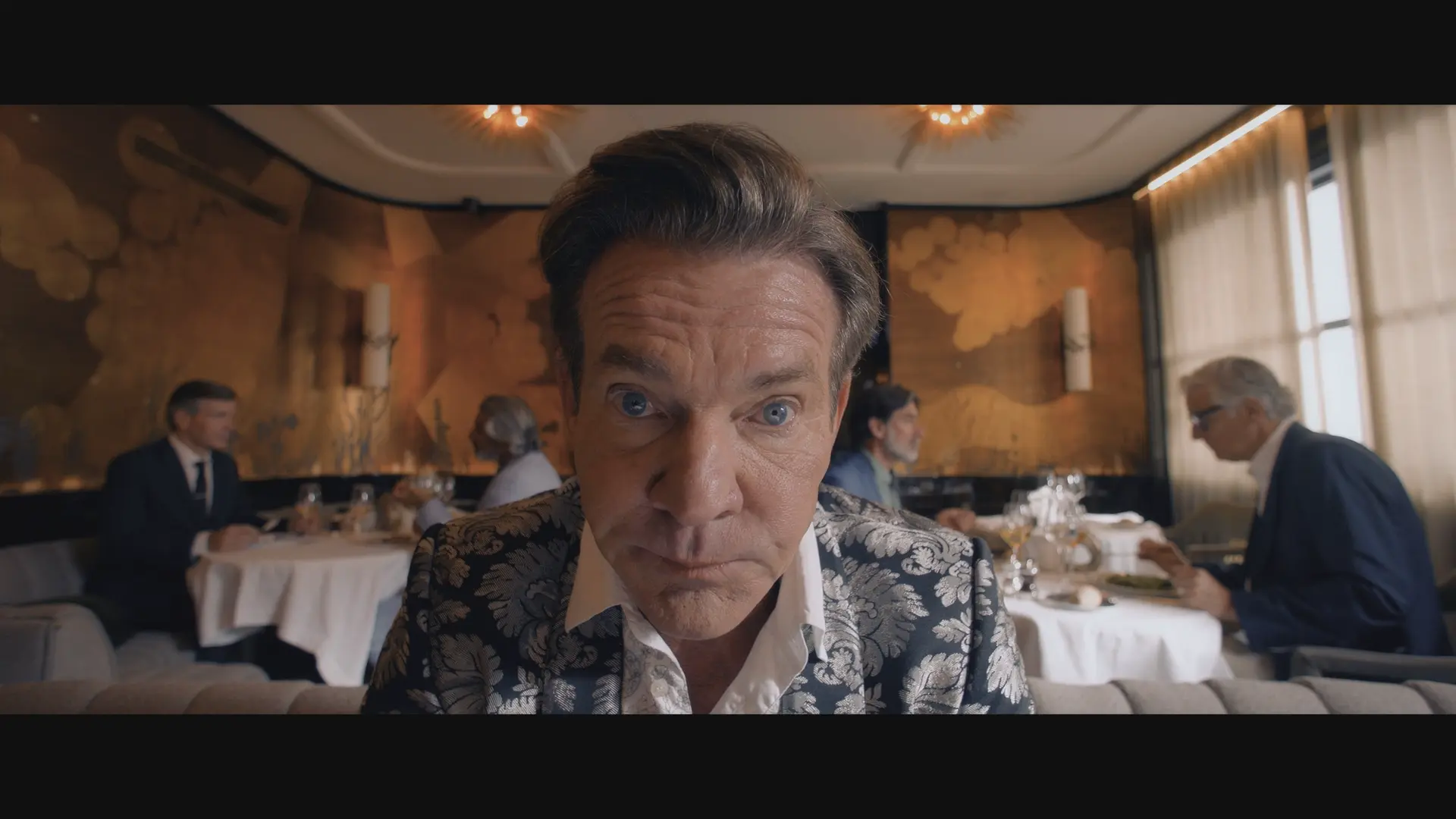
If we review this differently from a psychological perspective, Elisabeth’s whole identity is tied to this maladaptive or negative animus figure, Harvey. The animus is the masculine counterpart within a woman’s psyche and has its own stages of development.
“In its negative form a woman’s inner man, the animus, is a power of evil destructive to human life. He separates a woman from her own femininity. He cuts her off from human warmth and kindness, and leaves her isolated in a meaningless world, martyred by unseen hands. She experiences herself as a victim, a captive, trapped either by external circumstance or by a cruel fate.”
(The Way of the Dream: Conversations on Jungian Dream Interpretation, Marie-Louise Von Franz and Fraser Boa, pg. 144)
Not only is he seen as parasitical, “He personifies brutality, coldness, and obstinacy, and paralyzes a woman’s growth.” (ibid.)
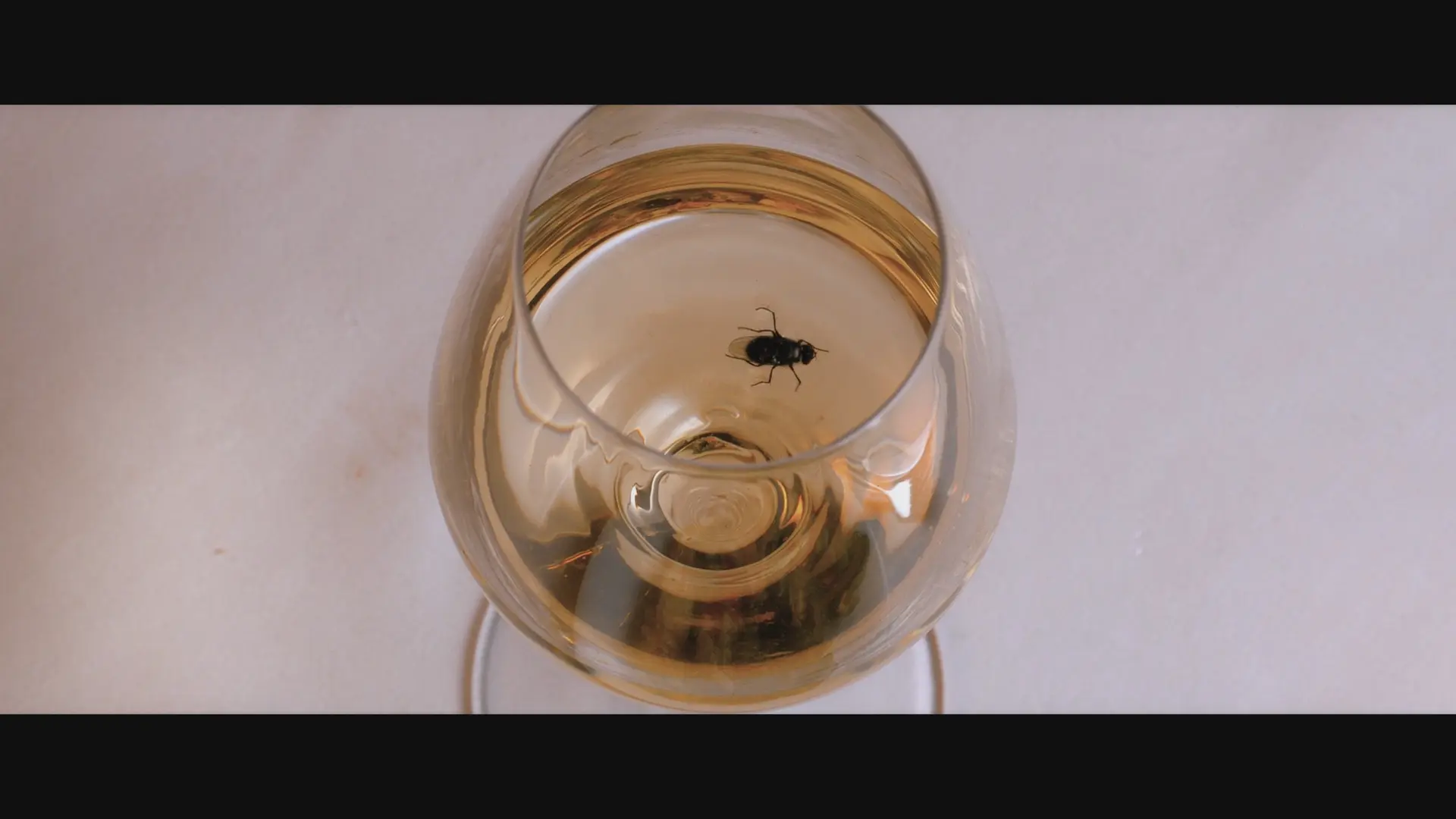
More on the negative animus, but specific to the Tyrant archetype:
“Often the tyrannical boss that women are struggling against is not so much an external man as the tyrannical animus within themselves, which they have projected onto him. Such women even seem to attract the tyrants in their environments or to choose them as partners. They fail to see that this is connected with their inner worship of their own animus, which is suppressing their femininity.”
(Archetypal Dimensions of the Psyche, Marie-Louise Von Franz, para 18.14)
Now of note is the choice of Elisabeth’s main wardrobe, rather pronounced here as a suit at the restaurant - the costume designer (Emmanuelle Youchnovski) has touted this as a show of professionalism among men, purposely concealing her femininity, but this only furthers the aforementioned psychological concept of a restrictive animus.
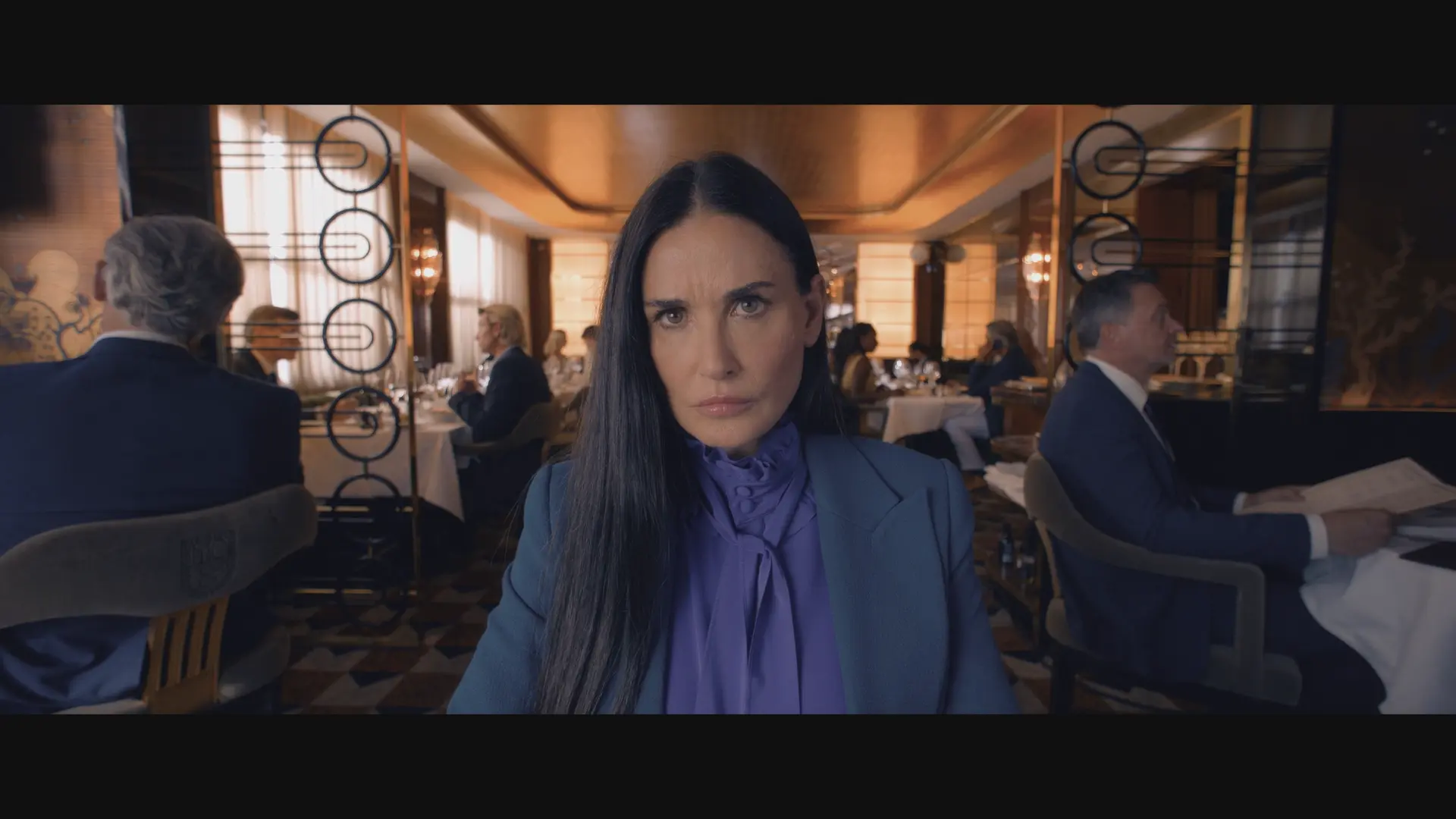
To continue on this important thread of the animus constituted in women:
“It manifests negatively as prejudices, rigid opinions, traditional spiritual patterns, brutality, and other forms of masculine inferiority. It manifests positively as buoyancy, creativity, and steadfastness of character.”
(ibid., para 17.37)
Unfortunately, Elisabeth can be likened to the archetypal eternal girl (puella aeterna), with a weak ego formulation, and bound by the tyrannical animus, Harvey. She does not know who she is without Harvey’s approval, nor does she have any sense or aim outside of being a celebrity. Who is she really without the attention stardom affords? All persona and no ‘substance’, after years of playing the same old role, accumulating seasons without growth, yet she was comfortable.
We get a one-sided view of Harvey with Elisabeth, mostly unsympathetic and chauvinistic. However, detaching from this orchestrated overt facade, his aim is typically masculine (structure, leader) and is focused on supporting the talent for clout, popularity, and financial aims. One could argue that this was once a mutually beneficial relationship, which she is now falling out of favour with. This is why Elisabeth’s world is crushed. Ultimately, she is rejected by him, and more importantly, later rejects herself through his standards, as the masculine within (which is likely why the term internalised misogyny exists!).
“These contrasexual elements can estrange a human being completely from reality and society. The animus, like the anima, is a very ambiguous, very dangerous inner figure which must be approached with great wisdom.”
(The Way of the Dream: Conversations on Jungian Dream Interpretation, Marie-Louise Von Franz and Fraser Boa, pg. 165)
Her identity now in question, is later reinforced when some workers tear down an image of her on a billboard, and in witness to this, she collides with another car. An interesting correlation to how it may feel to be slammed into non-existence.

In the clinic, after receiving treatment for the car accident, she is quietly given “The Substance” USB by a male nurse, since she could be a good candidate for the experimental process.
Divergent path with Fred
Following this revelation is a serendipitous meeting with an old classmate, Fred, who was interested in her when they were younger and reveals he still adores her now. He offers an uplifting, casual warmth in their interaction, seemingly something lost or missing in her life.

Elisa is unknowingly at a crossroads, the realm of Hekate. If she accepted her fate and call from the universe to update her identity naturally, then a break of old patterns and the beginning of a new chapter could take place. Essentially, this chance meeting with Fred should be recognised as divine intervention and a small guiding step towards wholeness.
"Symbolically, crossroads represent moments in our lives where the unconscious crosses consciousness, where the eternal crosses the transitory; in other words, times and places where a higher will demands the surrender of our egos.” (Conscious Femininity, Marion Woodman, pg. 109)
Fred is the depiction of her masculine aspect that would positively aid her transformation into her next evolutionary stage, into the wise woman, elder, or crone. That is, if she had stayed in contact with Fred and kept her date that occurs later in the film. He would have been the positive animus - the masculine dimension of her inner world, that procures self-acceptance, creative power and authenticity.
“The positive animus is an innermost instinctive awareness of the inner truth, a basic inner truthfulness which guides the spiritual woman in her individuation, toward becoming her own self.”
(The Way of the Dream: Conversations on Jungian Dream Interpretation, Marie-Louise Von Franz and Fraser Boa, pg. 176)
The process of this transformation would look like a recession from the limelight and going within. This absence of light means darkness and a venture into the unknown - through such a trial, if one is successful upon emergence, a renewal of the ego or selfhood would be attributed to the wisdom and strength gained.
All this is in line with Harvey’s comment on renewal of the feminine, as in this context, it relates to new beginnings and an identity closer to one’s true self, only if one could alchemise the negative emotions and sacrifice the old, to give in to the new.
It requires effort to fight the negative animus and make it workable, but:
“...when women succeed in maintaining themselves against the animus, instead of allowing themselves to be devoured by it, then it ceases to be only a danger and becomes a creative power. We women need this power, for, strange as it seems, only when this masculine entity becomes an integrated part of the soul and carries on its proper function there is it possible for a woman to be truly a woman in the higher sense, and, at the same time, also being herself, to fulfil her individual human destiny.”
(Animus and Anima, Emma Jung, pg. 42)
Alas, this film depicts a regression and perpetuates a maladaptive masculine relation with the animus as Harvey, riddled with pain.
The Substance as inner alchemy
“When a summit of life is reached, when the bud unfolds and from the lesser the greater emerges, then, as Nietzsche says, “One becomes Two,” and the greater figure, which one always was but which remained invisible, appears to the lesser personality with the force of a revelation.”
(Archetypes and the Collective Unconscious, Carl Jung, para 217)
Elisabeth gets home and plugs the USB she received into her TV. An attention-grabbing video plays, introducing The Substance. Let’s take a look at these extraordinary claims:
“One single injection unlocks your DNA, starting a new cellular division that will release another version of yourself.” This is the doubling of the personality, the lesser ego and greater personality as ego Self (One becomes Two).
“You are the matrix. Everything comes from you.” The body is the krater (mixing vessel) of transformation that bears life, and everything is born of the mother (matrix).
“And everything is you.” One consciousness, many aspects (the crude material to be refined).
“This is simply a better version of yourself. You just have to share.” The point stressed here is to not lose yourself.
“The one and only thing not to forget, you are one.” It seems that it is easy to forget, as depicted in the film! The birthed personality or being is a part of you and vice versa. “Unum est vas”: The vessel is one.
“You can’t escape from yourself” A testament of responsibility to care, nurture, accept, harmonise and integrate, since there is no leaving the prime ego’s vessel or matrix.
Low point, bad decisions
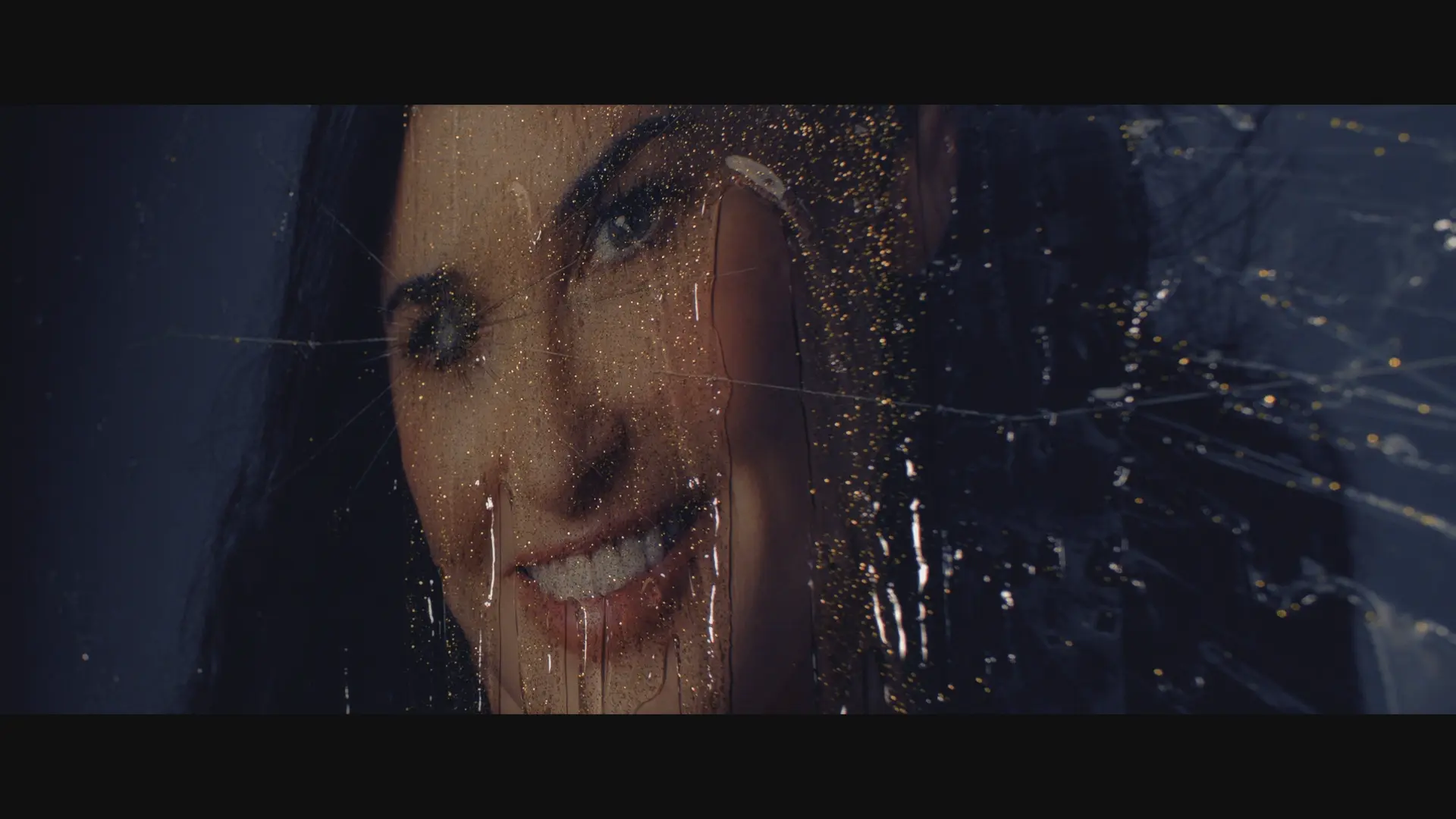
A dejected Elisabeth (Elisa) downs cocktails at the bar for her birthday in melancholic fare. Back at her apartment, in a moment of grief and anger, she throws a snow globe made in imitation of her stardom directly at her oversized hanging portrait on the wall. Interestingly, it strikes one eye, leaving cracked glass and a trail of shimmering glitter.
The loss of one eye conjures the image of Wotan, which colours some of the film’s essence. To expand slightly in this instance, this is the lost ability to ‘see’ the bigger picture. A partial blindness that leads to her ordering The Substance; a solution to her suffering and conversely, is what initiates the Faustian bargain.
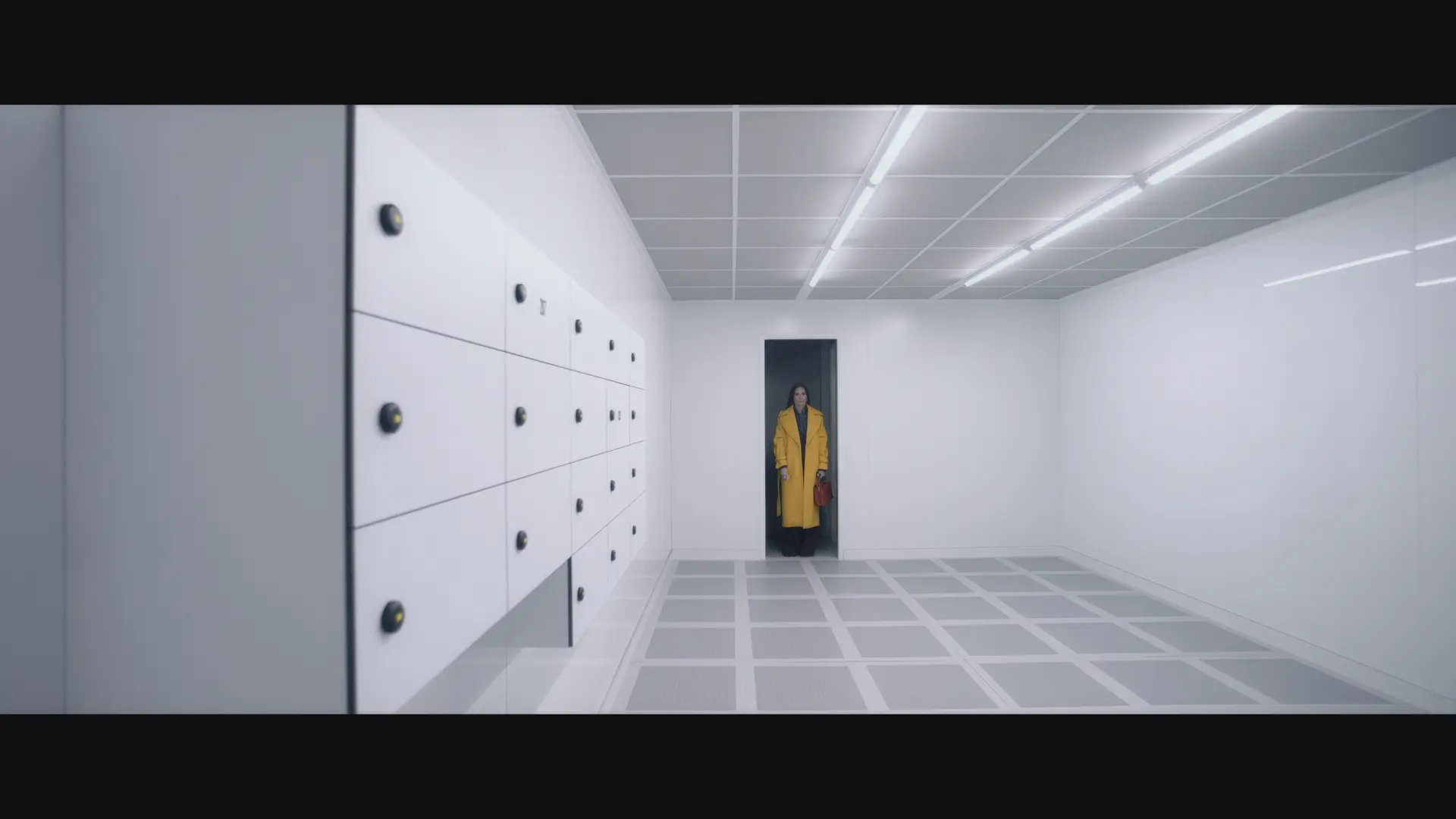
Angered by the call-out ad in the newspaper for her previous position at the studio network, she receives her access card for the Substance deposit box via mail.
The pickup location is a lonely back-alley contraption, awash with white - playing with notions of clinic artificiality and exposure. The room also touches again on Hekate’s realm of the liminal space, as the threshold between worlds. Later in the movie, Elisa's bathroom will be of a similar aesthetic and tone.
The Substance unboxing – or alchemy kit
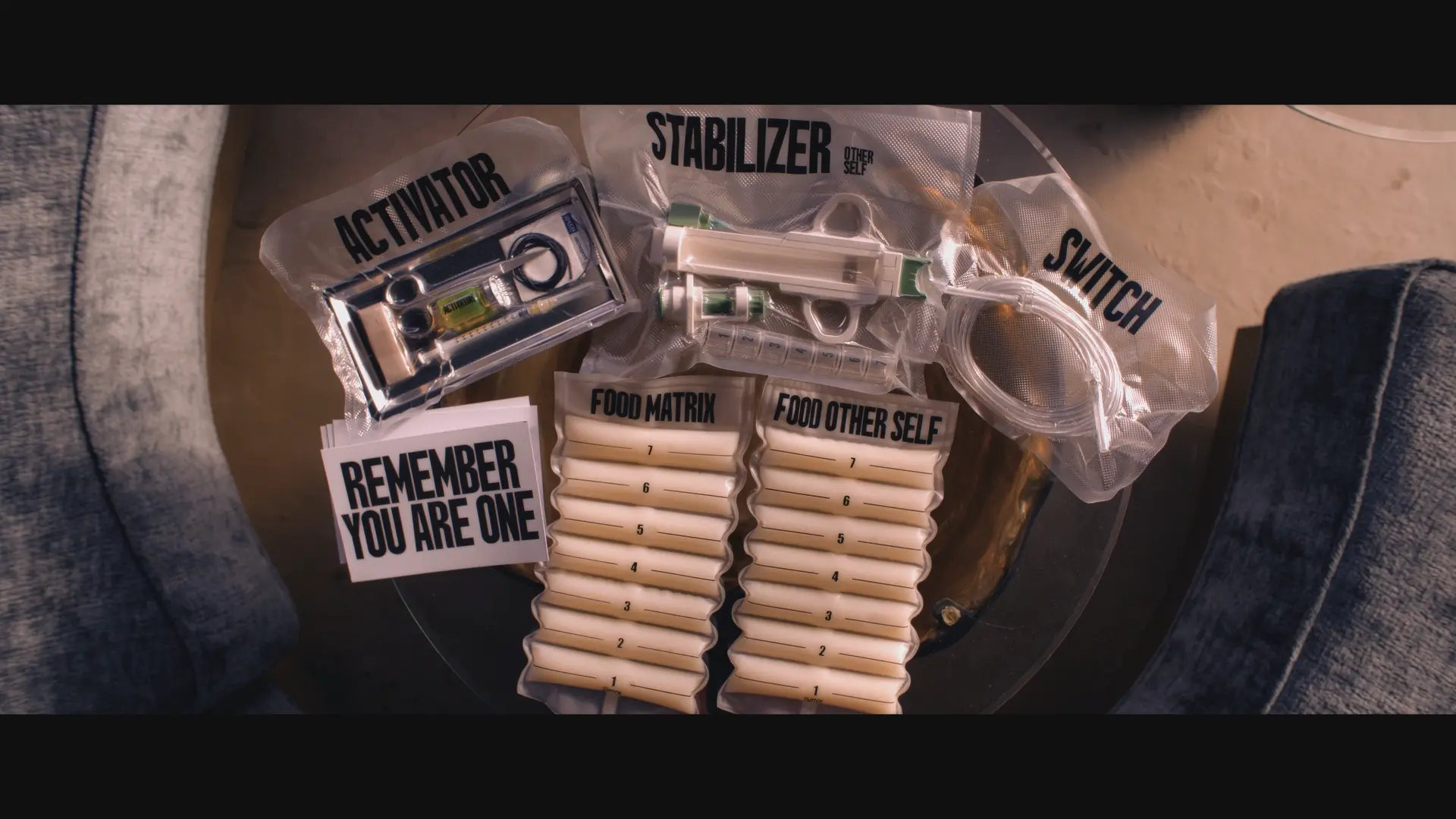
Back at the apartment, the package is opened to reveal an assortment of items with the instructions:
“You activate only once.” The first step initiates the doubling of the personality, a one-time deal.
“You stabilise every day.” The new self needs the old to sustain it, the lifeblood vitality is from the source consciousness, the ego or mother (mater, matrix).
“You switch every seven days without exception.” Reconnect with the prime ego to stay grounded, integrate experience, and keep reminded of reality.
Birth pangs
Elisabeth, reflecting on her bodily imperfections in front of the mirror and driven by the desire to be a better, younger version of herself, takes the “Activator” from The Substance kit.
Birthed from her spine with her genetics is a Homunculus — a fully formed artificial human figure of youthful vibrancy and her consciousness is transferred into the new body, which then requires life force from Elisa’s body to sustain or “Stabilise” it.
“Psychologically, the homunculus signifies the birth of the conscious realization of the autonomous psyche. In dreams it may appear as a doll or statue which comes to life, representing the ego's dawning awareness of the existence of a second psychic center, the Self.”
(Goethe's Faust Notes for a Jungian Commentary, Edward F. Edinger, pg. 62)
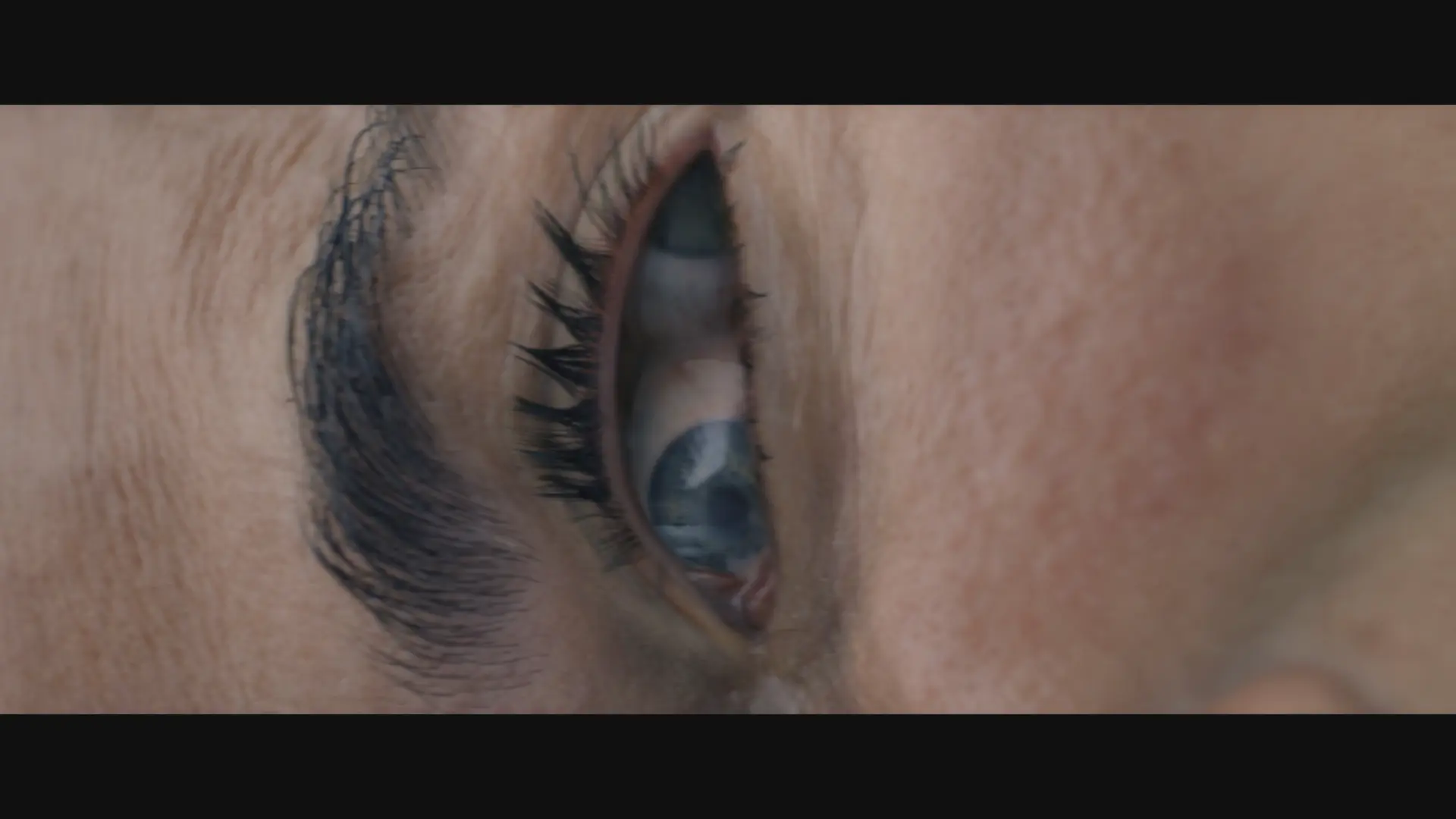
We can now hearken back to the egg yolk opening scene. The doubling of the personality takes place, and the lesser ego (Elisa) has extracted forth the greater ego-Self (later named Sue).
“...in light, sometimes caught in shadow, all game,
all sea, all midday, all time without aim.
At once then, my friend! One turned into Two -
and Zarathustra strode into my view ...”
(The Gay Science, Friedrich Nietzsche, pg. 371)
In this extract, it reveals a similitude of the inner double’s emancipation as Zarathustra (Self). The ideal theory is that it would guide the ego – but an encounter with the Self does not always end well.
This film depicts a further shift to this challenging notion, as instead of a Zarathustra figure, we actually have, in Sue, a character more like Mephistopheles (Goethe’s Faust). Since it is the undifferentiated shadow colouring the Self – that which obfuscates positive transformation, the presence of which we will discover later on. The reason for this discrepancy is due to Elisabeth not being an actualised ego.
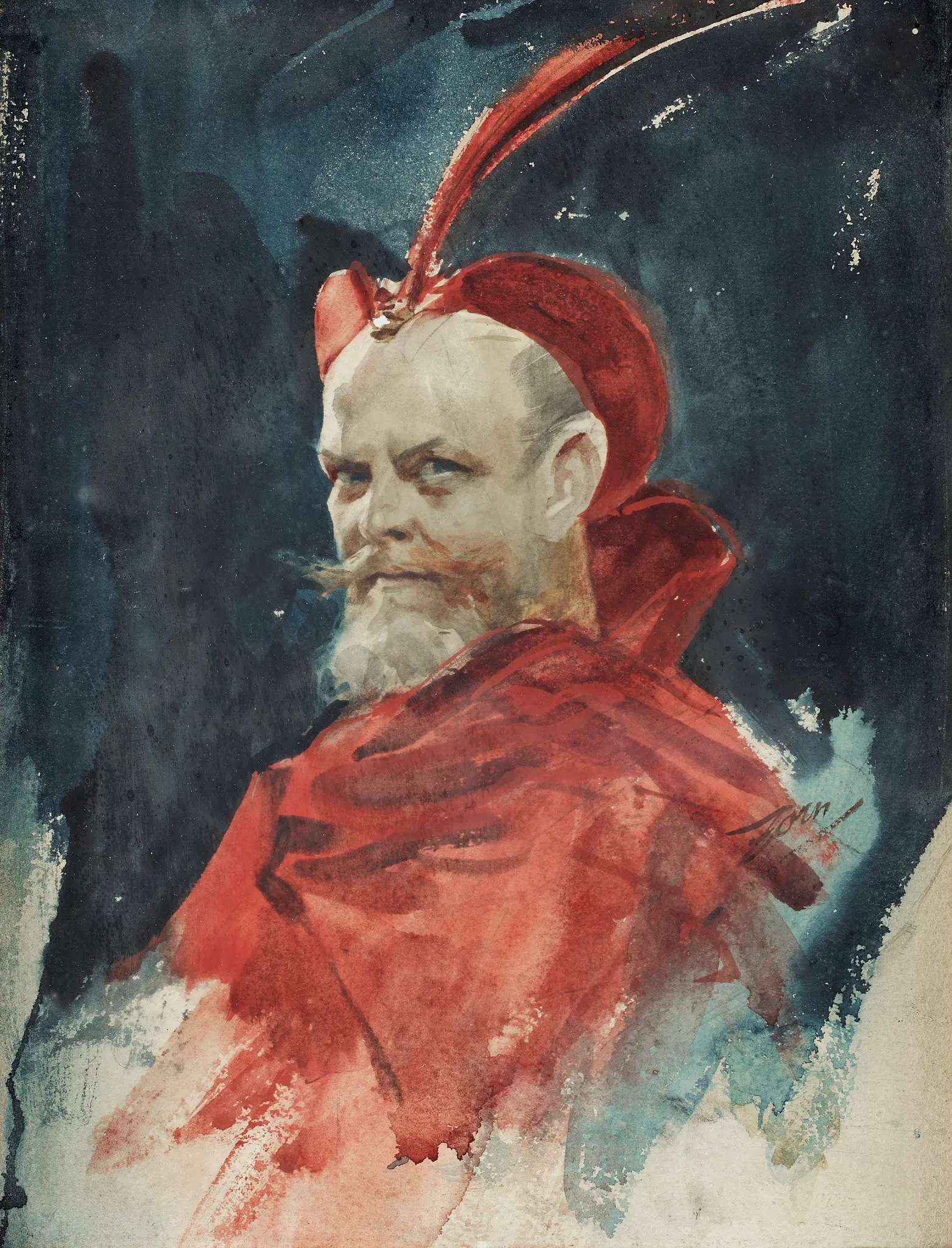
“...once he realizes that he himself has a shadow, that his enemy is in his own heart, then the conflict begins and one becomes two. Since the “other” will eventually prove to be yet another duality, a compound of opposites, the ego soon becomes a shuttlecock tossed between a multitude of “velleities,” with the result that there is an “obfuscation of the light,”
(The Practice of Psychotherapy, Carl Jung, para 399)
This distinction is the source behind the conflict to transpire. As just like Faust, Elisabeth’s addiction to success and idolisation contaminates her relationship to the greater personality or alter ego.
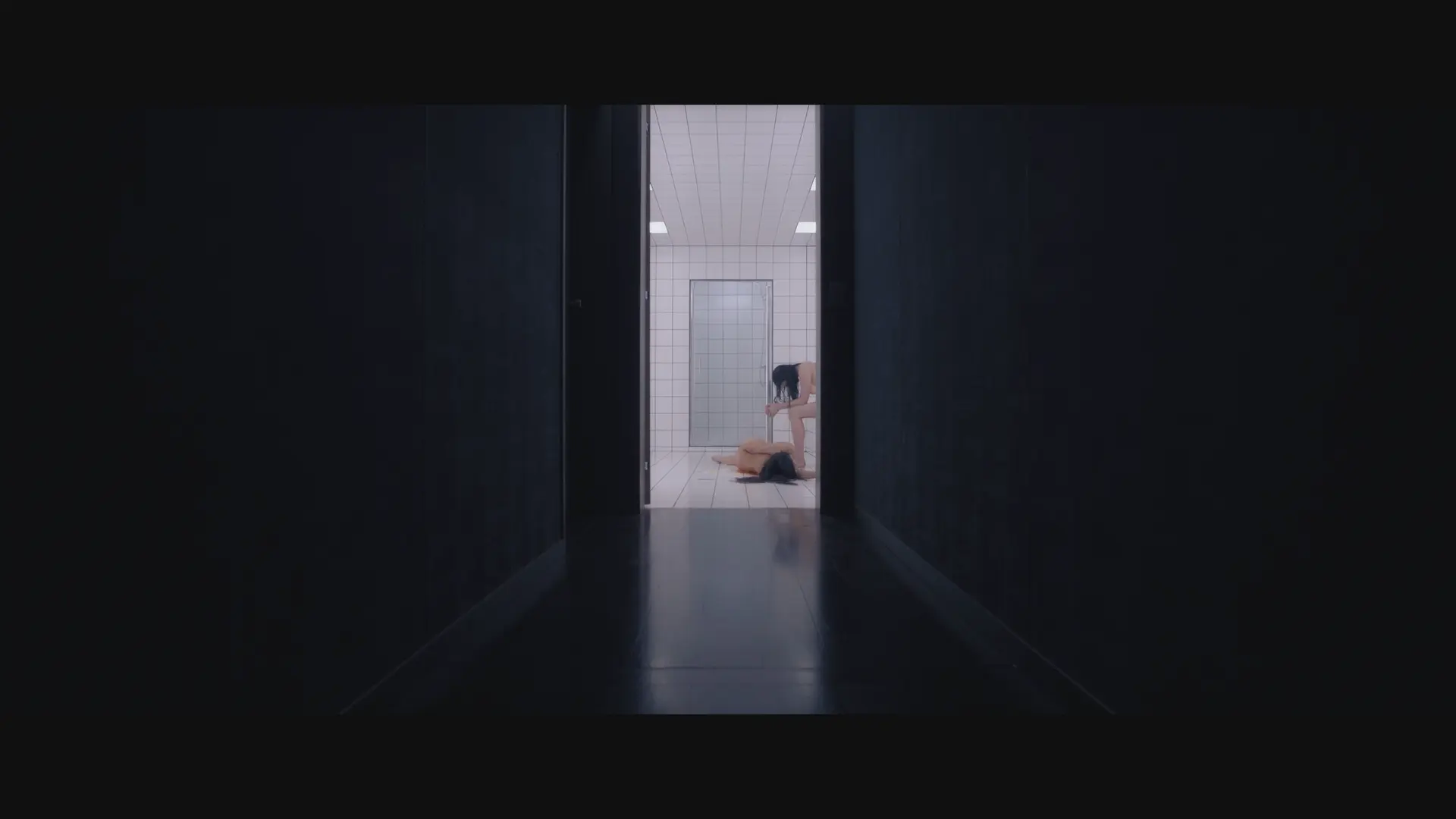
You got it, Sue!
Elisabeth, as Sue, now finds herself with the single aim to return to the studio, as she sets out to audition, in recall of the newspaper listing that advertised her former employment.
The big question here is: Why? Well, for this film, it seems the protagonist is nowhere near ready to leave the spotlight, and more specifically, the exact same role of her exile. It is only too apt to further conclude that Elisabeth is lost without her negative animus figure, Harvey, to call the shots in her life.
Some insight into this can also be gleaned from the topic of facing the shadow as puer aeternus (eternal boy) but should apply to the puella aeterna (eternal girl):
“When you are identical with the puer aeternus archetype, then the shadow has to be faced in order to come down to earth. But when you are identified with the shadow, the archetype of the puer has to be faced again in order to connect with it, for facing the other side is what leads to the next step.”
(The Problem of the Puer Aeternus, Marie-Louise von Franz, pg. 159)
If the drive to replay the life already lived as Elisabeth is at the root of the alchemy via The Substance, then nothing has been learned by her and she remains unconscious to the trappings. Since as Sue, she falls back into a pattern of inflation, regaining the attention and desire from men that was lost, essentially, to capture the anima projection or be the anima woman.
“Many people don't want to be human; they'd rather live on idealization and perfection. They don't want to take responsibility for their lives because it's much easier to fly off into spirit and try to live out an archetypal dream. Psychologically we call this inflation and the only end is to crash down to earth or to recover earth through depression or illness.”
(Conscious Femininity, Marion Woodman, pg. 19)

The return also includes going back to the Tyrant animus; she’s not really ‘sticking it’ to anyone or even a symbol of feminine power, since her transformation must remain a secret, and this is entirely to land back in Harvey’s good favour -- as he can provide her the fame, attention and adulation she craves, which keeps her unconscious.
The complexity of Sue
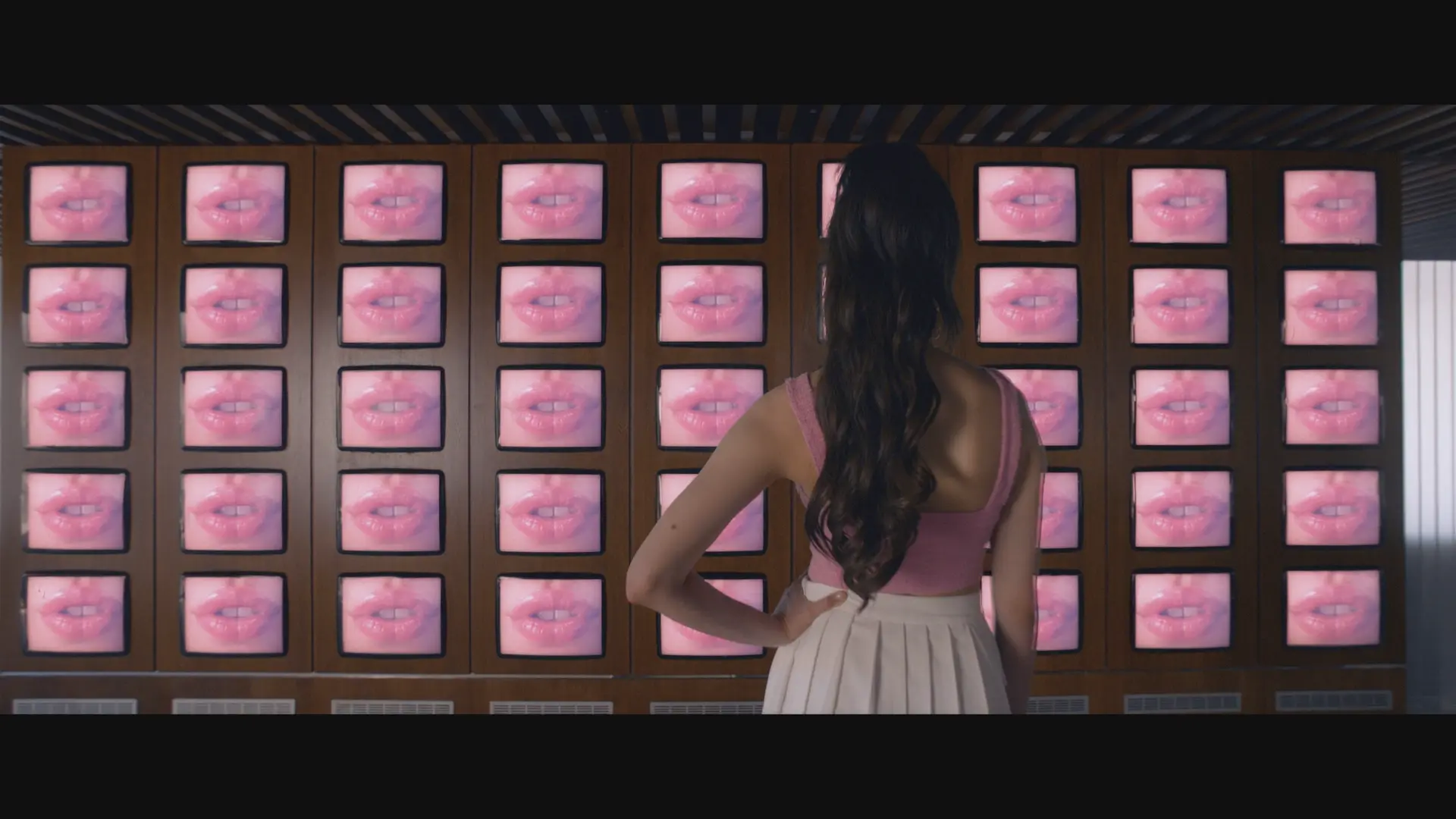
Sue imagines her lips saying her name on the wall of compiled screens. This hints at the steamroll to come: a complete overtaking of the greater personality, in tandem with the negative animus, by grandiosity, an inflation akin to a Faustian power drive.
To recap the complexity of Sue’s psychological symbolism: she is the Mercurial spirit coming from Elisabeth’s unconscious, which contains all opposite aspects of the personality. In this context, she is shrouded by Elisa’s undifferentiated dark side. Sue then, is not a higher figure of light, but is a lower figure with dark intentions - leading to the progressive alienation of the main ego.
“Thus the “supraordinate” personality can appear in a despicable and distorted form, like for instance Mephistopheles, who is really more positive as a personality than the vapid and unthinking careerist Faust.”
(The Archetypes and the Collective Unconscious, Carl Jung, para 310)
In Harvey’s office, we find Sue juxtaposed next to the canine statue; Fargeat likely wanted this scene to depict the new pet to heel, but we can go a little further.
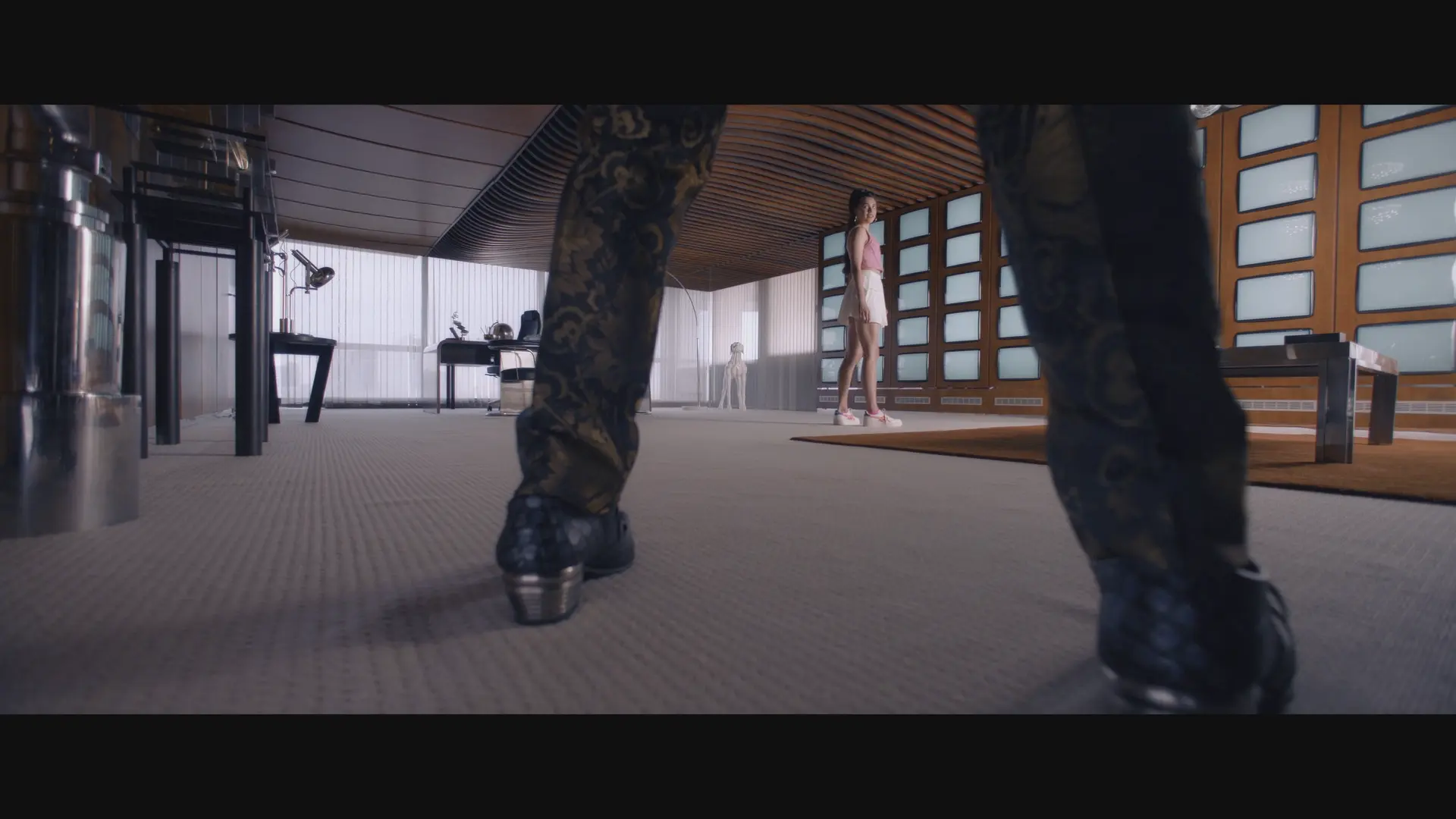
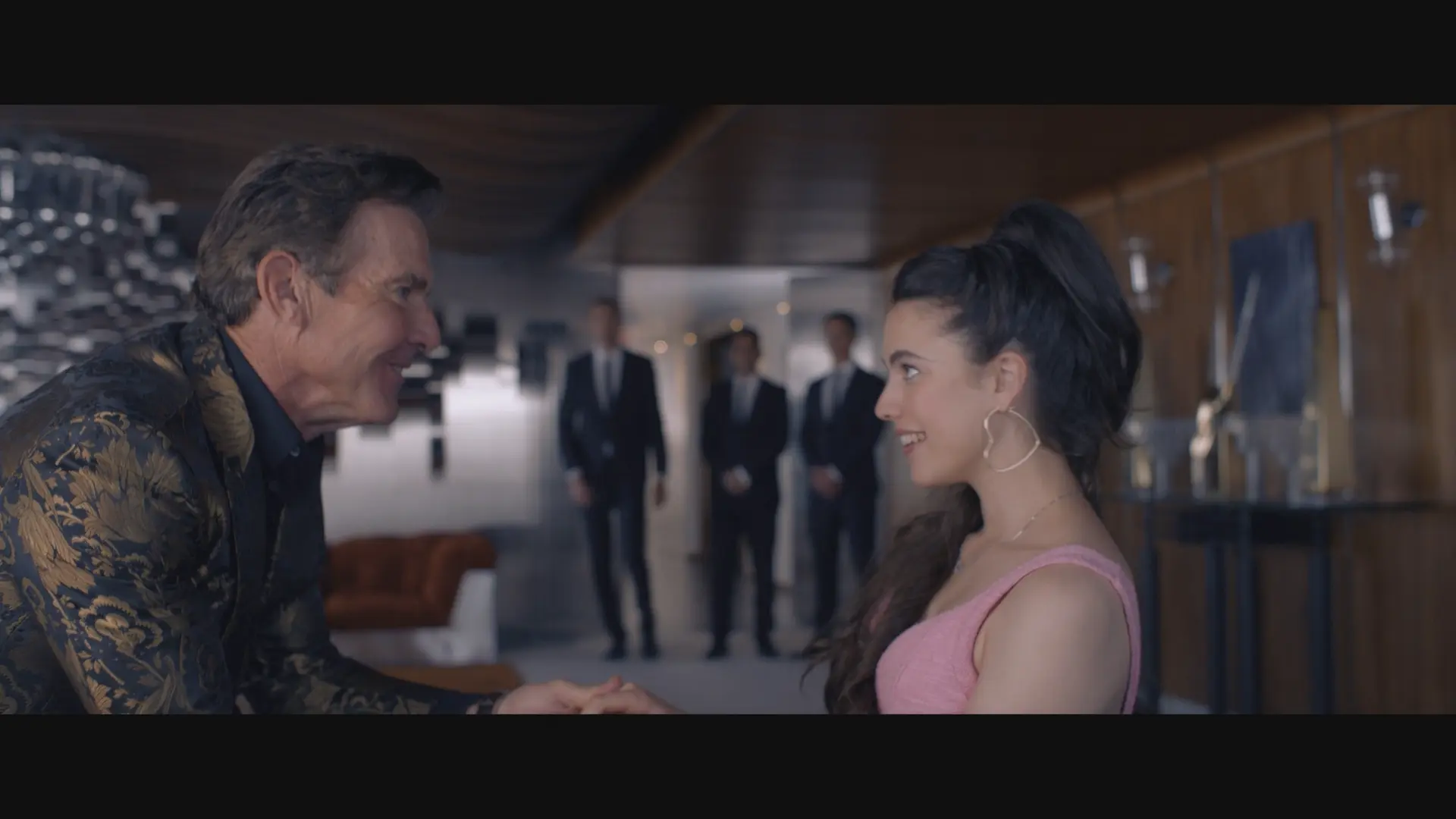
Harvey calls her a ‘gorgeous little angel’, which is referenced again in a later scene on her t-shirt (being in the clouds). Sue, of course, gets the gig and is subsequently reunited with Harvey.
“The animus is expert at sketching in and making plausible a picture that represents us as we would like to be seen, for example, as the "ideal lover," the "appealing, helpless child," the "selfless handmaiden," the "extraordinarily original person," ... This activity naturally lends the animus power over us until we voluntarily, or perforce, make up our minds to sacrifice the highly colored picture and see ourselves as we really are.”
(Animus and Anima, Emma Jung, pg. 18)
Sue represents the feminine vitality and youthful vigor that Elisabeth has lost in herself, but will again be manipulated once more by accepting the mask given by the maladaptive animus within, as Harvey, since she cannot procure an identity or values outside of her desire for celebrity stardom.
Dragonborn
As Sue settles into her work routine, she assumes a symbol – a golden dragon, which is embellished beautifully on a dark navy velvet robe. Sue, with outstretched arms, forms a winged dragon, and rather thematically, winged award statues are later in frame. While this image has been claimed to be a “phoenix rising” or “weapon”, I would beg to differ! As has already been discussed, the return of Sue to Harvey is unconscious, correctly of air, but essentially an ungrounded state.
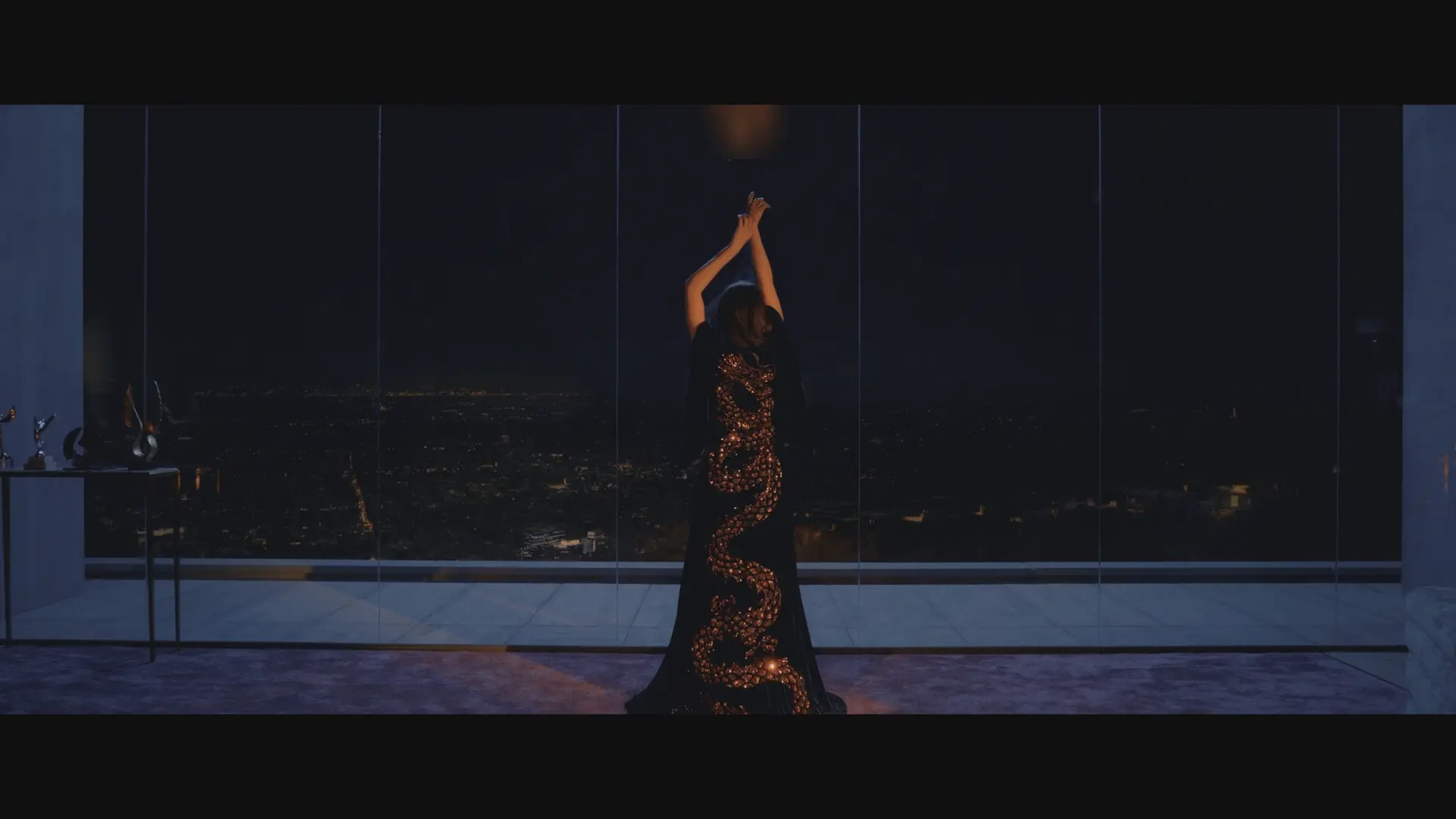
To understand the nuance of the dragon symbol in this frame, we have to get into the complexity of Mercurius and the all-encompassing ideas or container that is the Self, that have a similarity in definition.
“The alchemists accordingly represented their Mercurius duplex as the winged and wingless dragon, calling the former feminine and the latter masculine ...who on the one hand is Hermes the mystagogue and psychopomp, and on the other hand is the poisonous dragon, the evil spirit and “trickster.”
(The Archetypes and the Collective Unconscious, Carl Jung, para 556, 689)
The golden dragon symbol embodied by Sue is the poisonous dragon. A duality of light and dark aspects, both saviour and hostile adversary.
“...when observed in a woman to the type of supraordinate personality. It is an essential characteristic of psychic figures that they are duplex or at least capable of duplication; at all events they are bipolar and oscillate between their positive and negative meanings.”
(Archetypes and the Collective Unconscious, Carl Jung, par 310)
Sue saves Elisa from her existential suffering, but in doing so, draws on powerful dragon energy that pivots from inflation to grandiosity – essentially consuming the entirety of the personality in the process.
“Just as conscious as well as unconscious phenomena are to be met with in practice, the self as psychic totality also has a conscious as well as an unconscious aspect... When it represents a complexio oppositorum, a union of opposites, it can also appear as a united duality, in the form, for instance, of tao as the interplay of yang and yin, or of the hostile brothers, or of the hero and his adversary (arch-enemy, dragon), Faust and Mephistopheles, etc. Empirically, therefore, the self appears as a play of light and shadow, although conceived as a totality and unity in which the opposites are united. Since such a concept is irrepresentable—tertium non datur—it is transcendental on this account also.”
(Psychological Types, Carl Jung, para 790)
Sue, the inner double and supraordinate personality of Elisa, both share a yin-yang composition that is essential to the function of the ego; however, ultimately this dragon symbol Sue dons is a destructive runaway force. We will soon see this idea culminate in Elisa’s Nightmare #1 (see below).
Lastly, and perhaps worth a mention: the pervasive use of the spine is a conscious decision by the director and production team all throughout. The justification is to represent reptilian-like metamorphosis that carries through scenes. Be that as it may, I’ll just add that the snake and/or dragon symbol is as old as time, and its meaning is numerous, how we attach symbols intellectually may not reveal the true unconscious drive of why we need it, or why we feel it is vitally important to have it there in the first place. There is incredible wisdom and insight to be gained by the symbols we use and attach ourselves to, and even that is just one of those snake-like revelations.
Elisa’s nightmare #1 – Oncoming Calamity
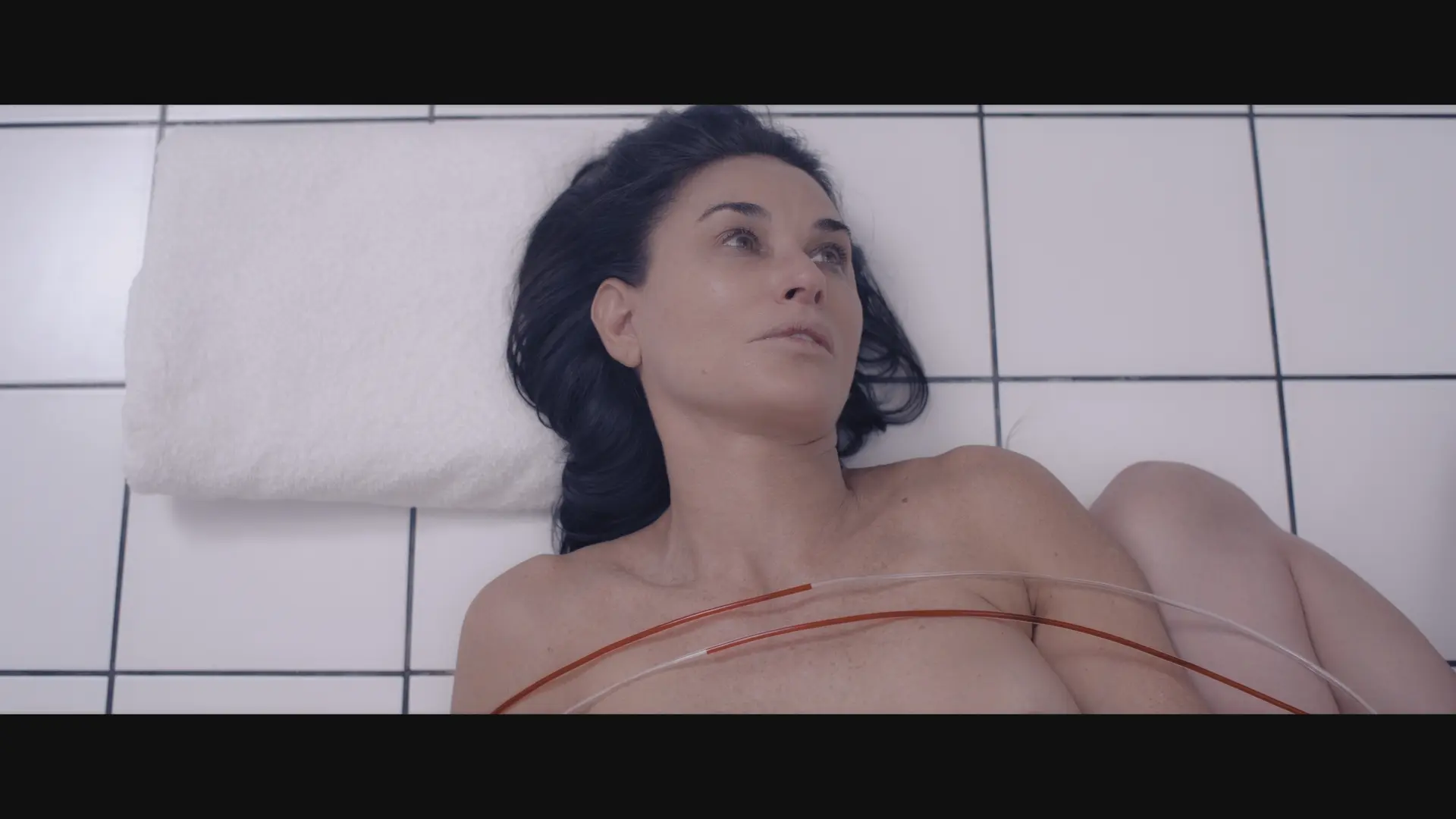
Elisabeth’s nightmare after Sue’s first week happens to be of colliding with a masked, unstoppable force on a motorbike. While it seems to foreshadow the appearance of the man (Troy) in later scenes and the idea of ‘road kill’ at the end of the film, it can also be psychologically representative of the force that is now in play, initiated by The Substance that will overtake Elisa. Sue, with grandiose dragon energy, hits like a severe storm; unstoppable and destructive. A warning from the unconscious that what’s to come cannot be managed, it is a consuming darkness. The black completely envelopes the white road stripes, depicting the imbalance of the yin-yang.

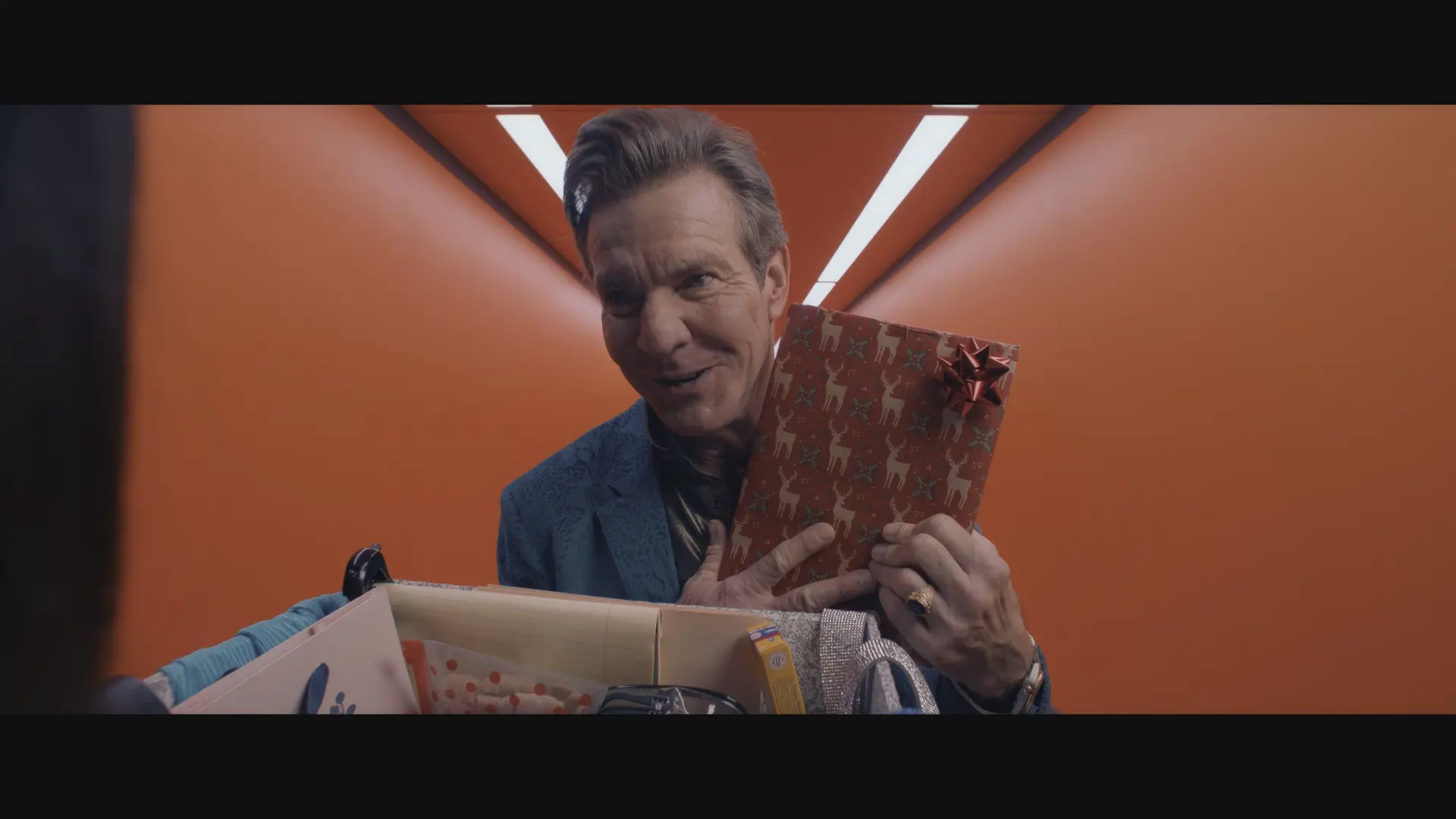
Elisabeth receives a parting gift from Harvey. More on this later!
Repression
What’s evident in the unfolding arc is that Elisa is determined to live out her life as Sue and consciously chooses to lay low at home, putting her own life on hold – allowing a one-sided dominance. What’s worse is that she actively, as Sue, renovates the bathroom to hide Elisa’s lifeless body. Akin to burying her personage deeper into her psyche, what’s depicted is that she is humiliated and disgusted by her real aged body – but it can also be seen as a self-abandonment of the original personality, a belief that she is unwanted goods by all, including herself. The sad reality of the rejection of matter can be reflected in this quote:
“The sins of the mother are visited from generation to generation, and the progressive loss of the feminine in our culture may be one of the chief causes of the escalating numbers of young women who reject their own bodies and hide behind their self-created Athena's aegis... Whatever the reasons, the feminine libido is blocked, the feminine goddess is outraged and sends her ultimatum to the ego... Only by establishing communication with that unconscious force can the body ultimately be healed and the feminine spirit released.”
(The Owl Was a Baker’s Daughter, Marion Woodman, pg. 23)
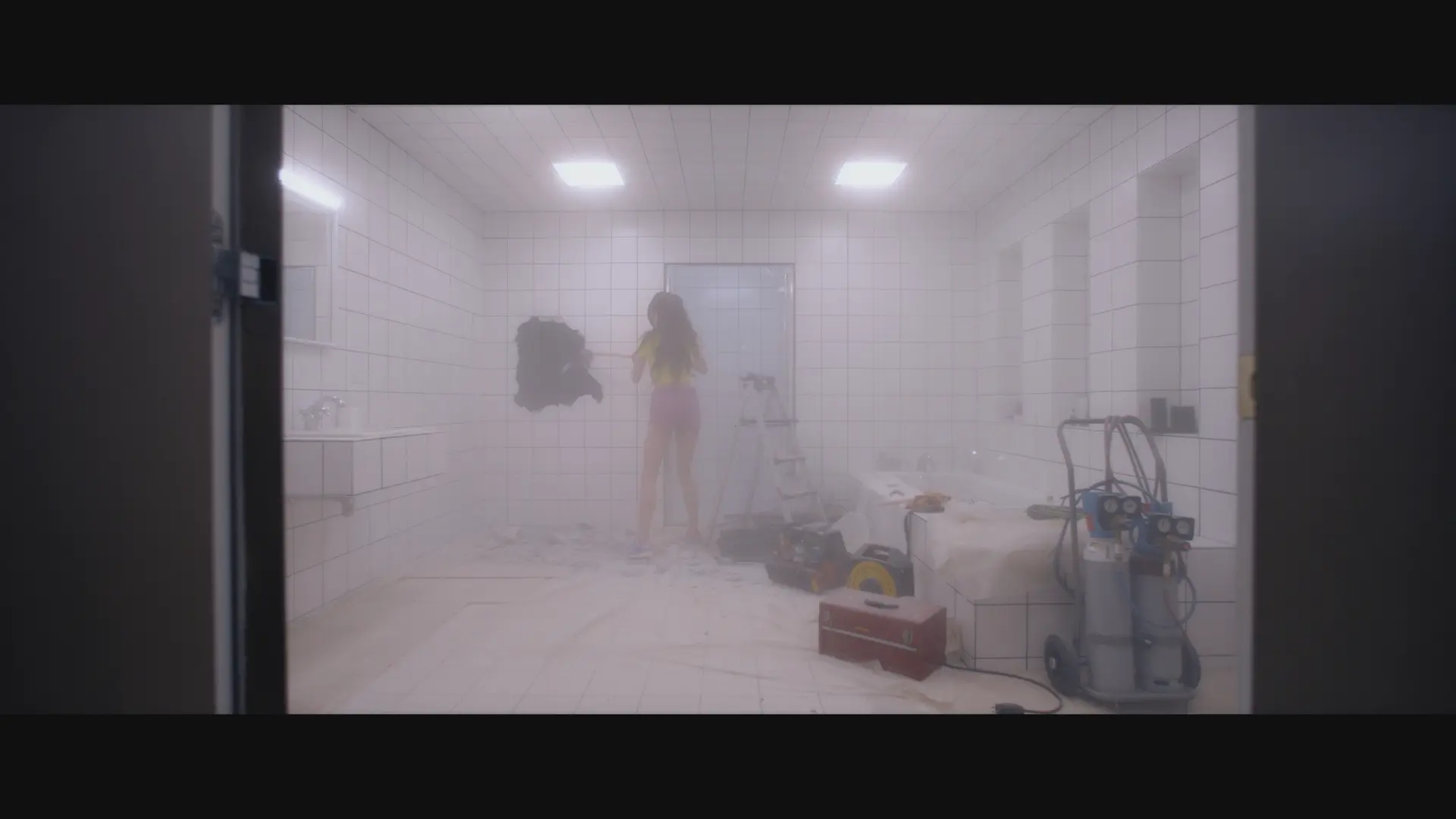
The renovation leads to the construction of a dark room behind a secret door. This is the shielded state of conscious awareness. One is more able to reduce care, which leads to eventual neglect.
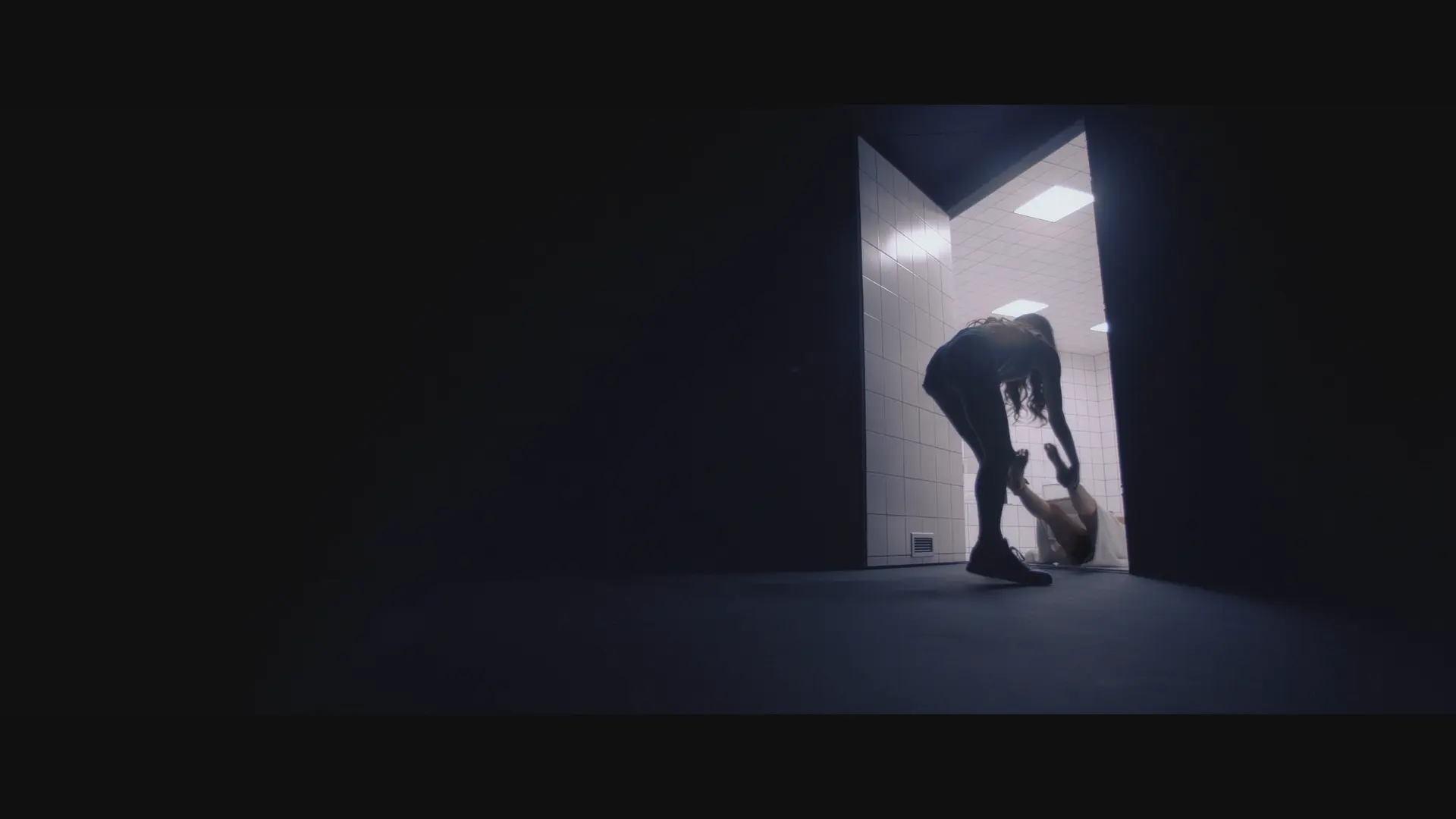
The removal of the revelatory bathroom light allows the darker aspect of Elisa to take hold. Elisa's conscious awareness departs in favour of Sue's lived experience; she abandons herself, figuratively and mentally.
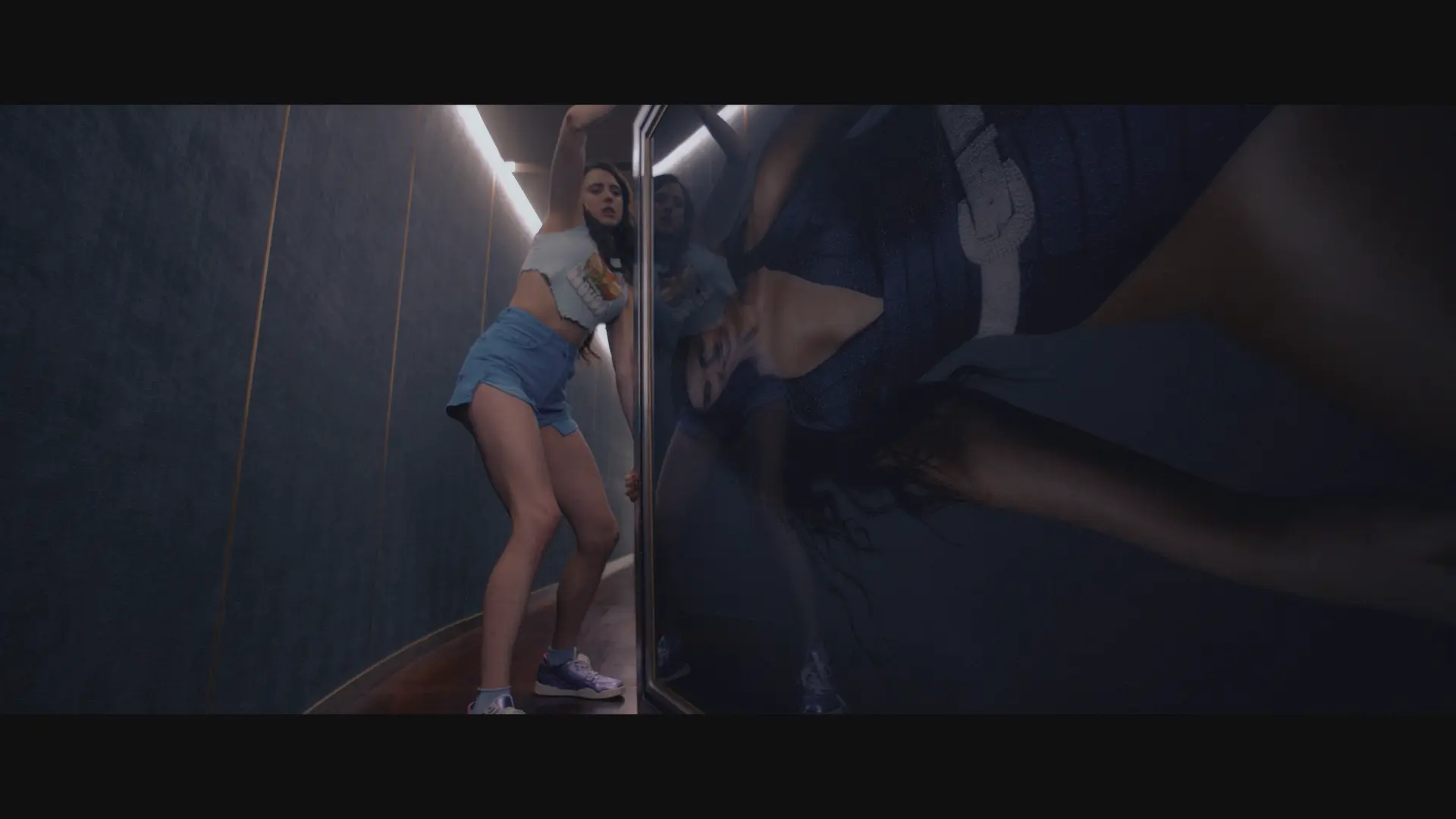
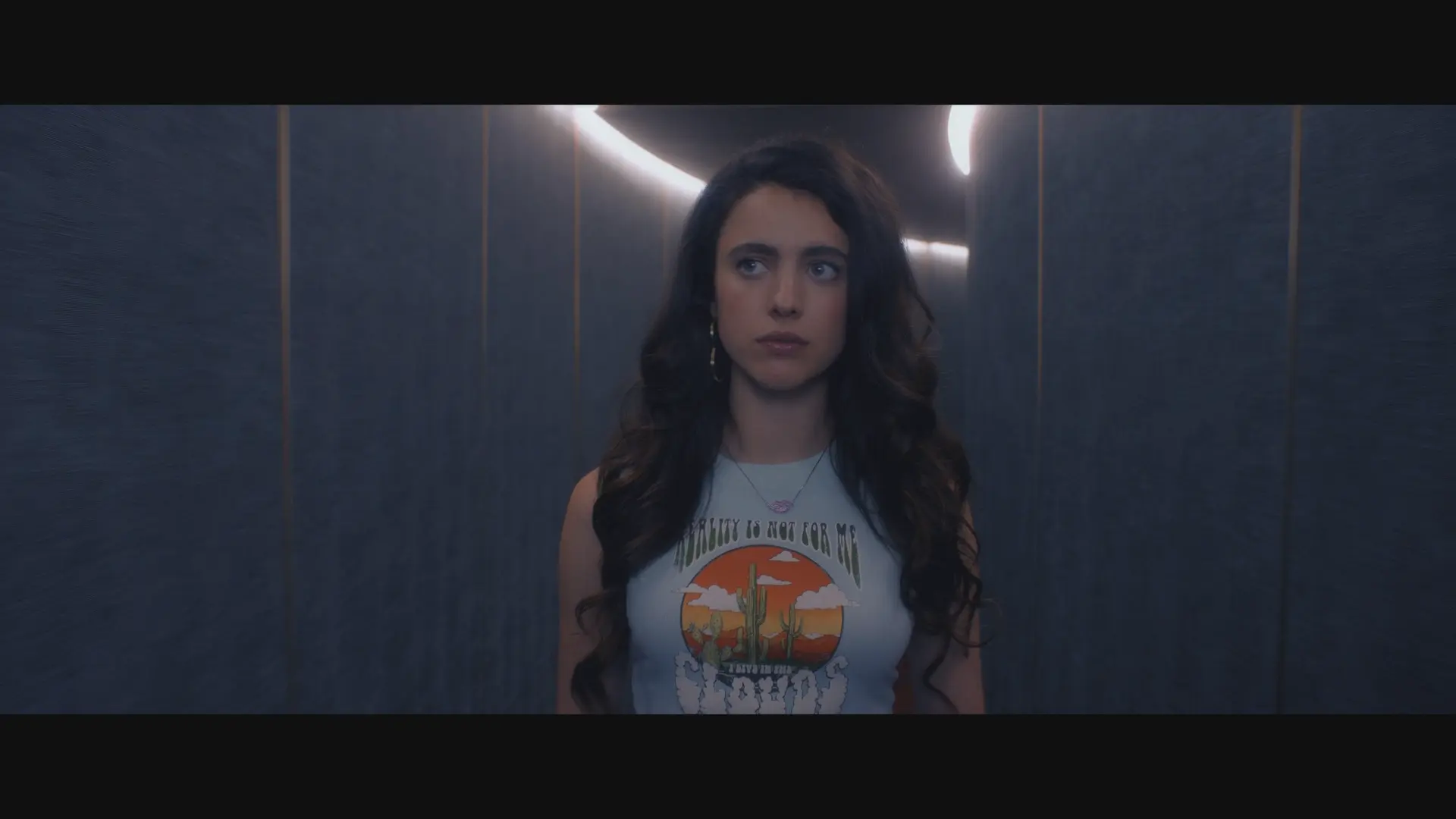
As mentioned before, Sue is enacting a false identity under the guise of the poisoned animus, as “the angel”, the perfect girl next door, the fantasy image for males (anima woman).
She wears a T-shirt with “Reality is not for me, I live in the clouds” to indicate that, nailing the concept of the false or provisional life, the puella aeterna archetype - either living high up in the clouds or too deep in the underworld. In both cases, they are far removed from present grounded reality.
Original sin
Sue prepares for a night out and now embodies the dragon again via the tight skin suit. What takes place over the course of the evening is a boundary misstep against Elisa's body; since it was time to "Switch".
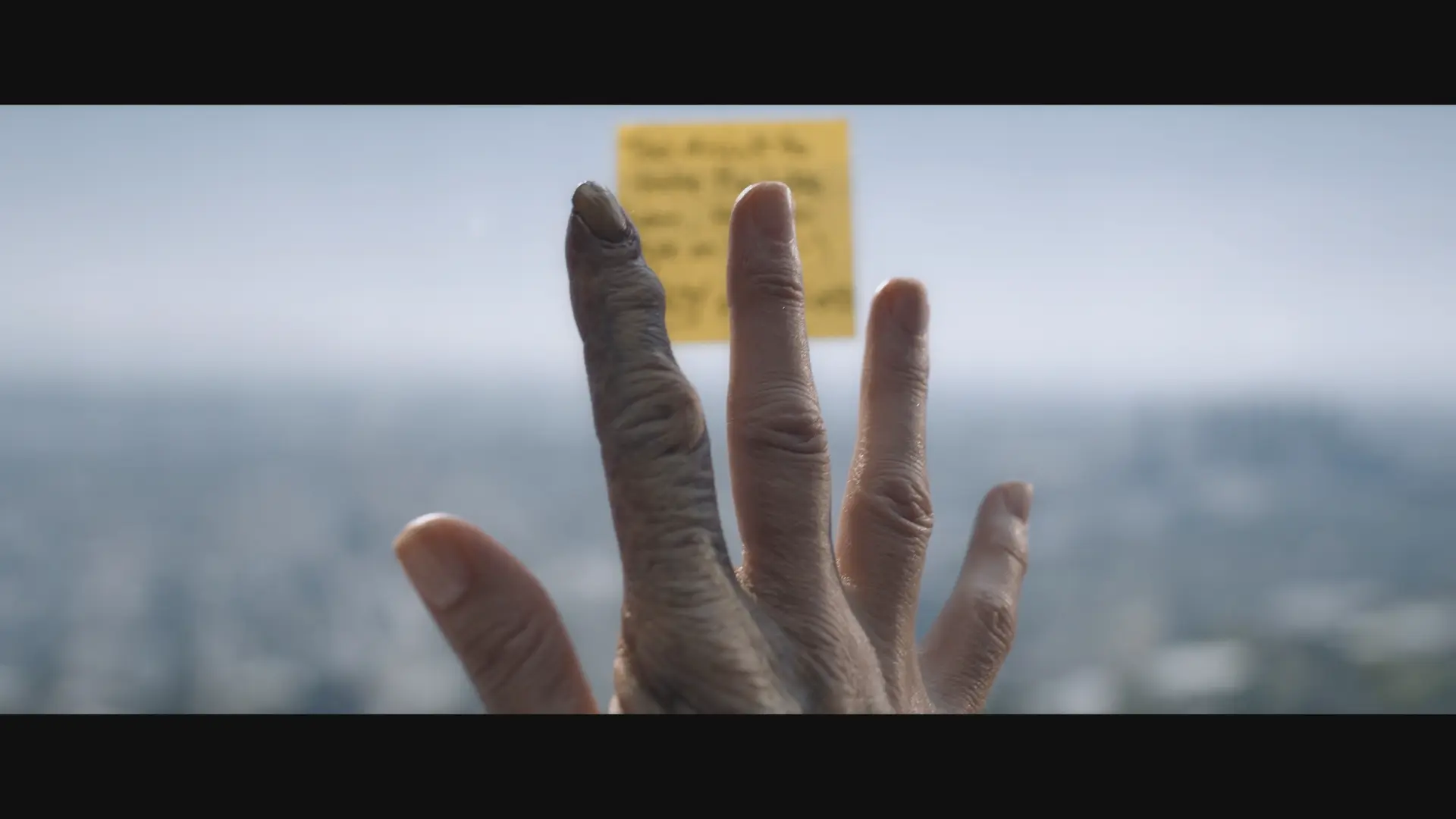
Sue’s lust and desire to be with a man, Troy, someone who is later exposed to be rather toxic, is a result of regrettable poor judgement. Sue has stolen a few hours more for Troy and Elisa pays for it with years, as her deteriorated finger reveals the misdeed.
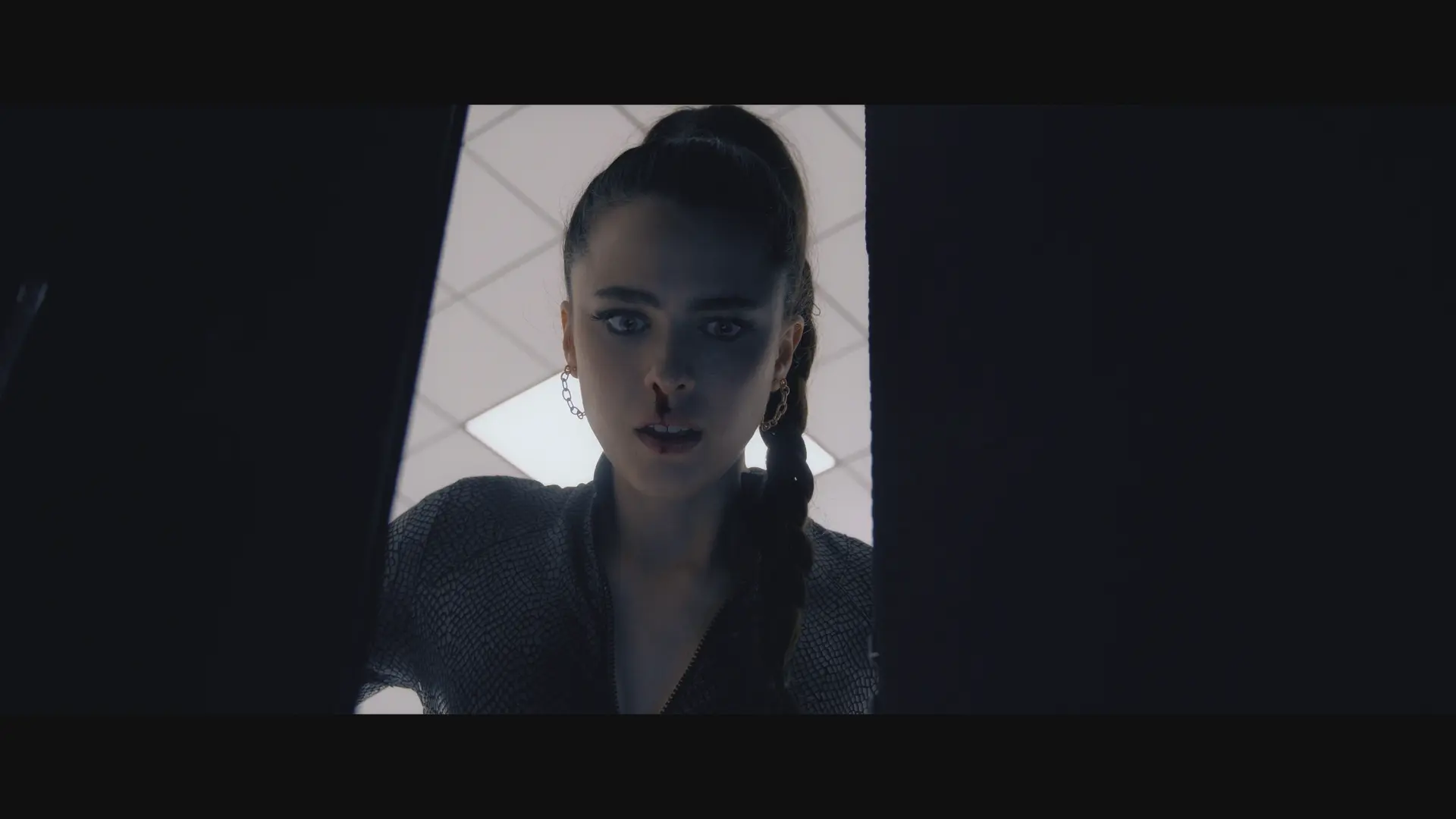
Elisa nightmare #2 – Unzipped
Elisa, in her unconscious bodily state, has a nightmare which happens to be of the very moment Sue is preparing to get with Troy, although she gets a horrifying version where all of Sue’s innards fall to the ground —after he unzips her bodysuit.
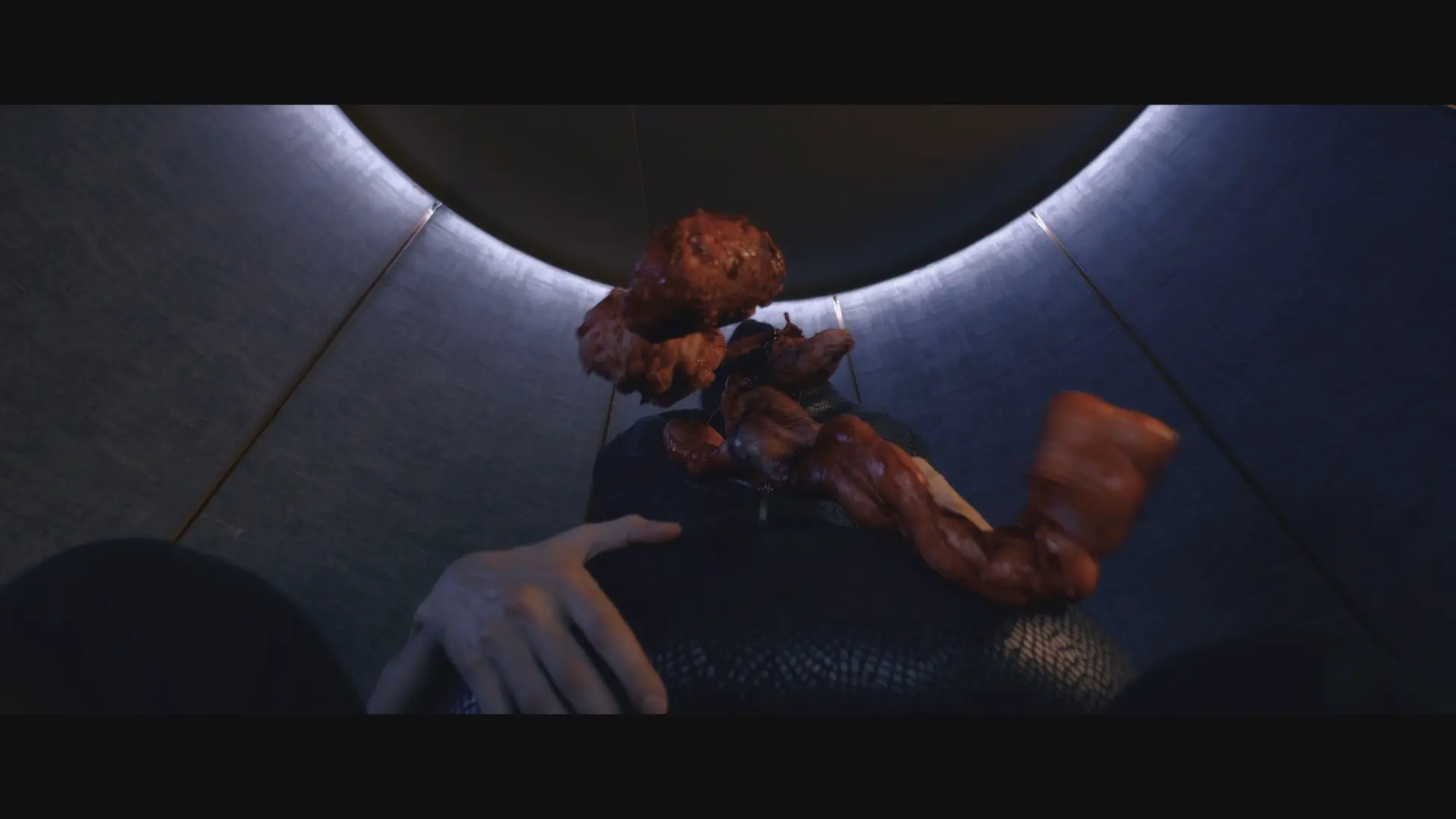
What can be gleaned from this nightmare is the feeling of being caught out or exposed for being a fraud or lacking character. It can also demonstrate the horror of one’s inner world and the ugliness of that being seen. There is more to expand on this when the time comes.
Elisa’s awakening after the second week of Sue’s foray into the working world promotes immense bitter resentment, especially now that she has discovered that the disrespect of boundaries and the bypassing of rules have irreversible consequences. Elisa sees this as a personal attack and it strikes at the wounded core of her dilemma, vanity.
Elisa: "I don't know what she was thinking."
Man: "Remember, there is no she and you, you are one."
Man: "Respect the balance and you won't have any more inconveniences."
The man operating The Substance hot line is of no use; Elisa cannot accept that her alter ego has jeopardised her original body, not realising that it is her own self-rejection that has instigated and fomented such reckless disregard.
Diner woes
Elisa, now awake to the danger of this experience yet still unwilling to change her trajectory, like an addict, heads back to pick up the next instalment at the deposit box; yet this time, strange voices interrupt the ritual. Spooked, she races out and heads for cover into a nearby diner.
An old man, now recognised as the young nurse from the clinic who introduced her to The Substance, laments his own use. He offers some sage advice, yet seemingly is unable to give up the addiction himself and potentially is in the same conundrum of this psychological and physical polarisation.
Old man: "Gets lonely every time."
Old man: "That you still matter."
Old man: "Is she eating away at you yet?"
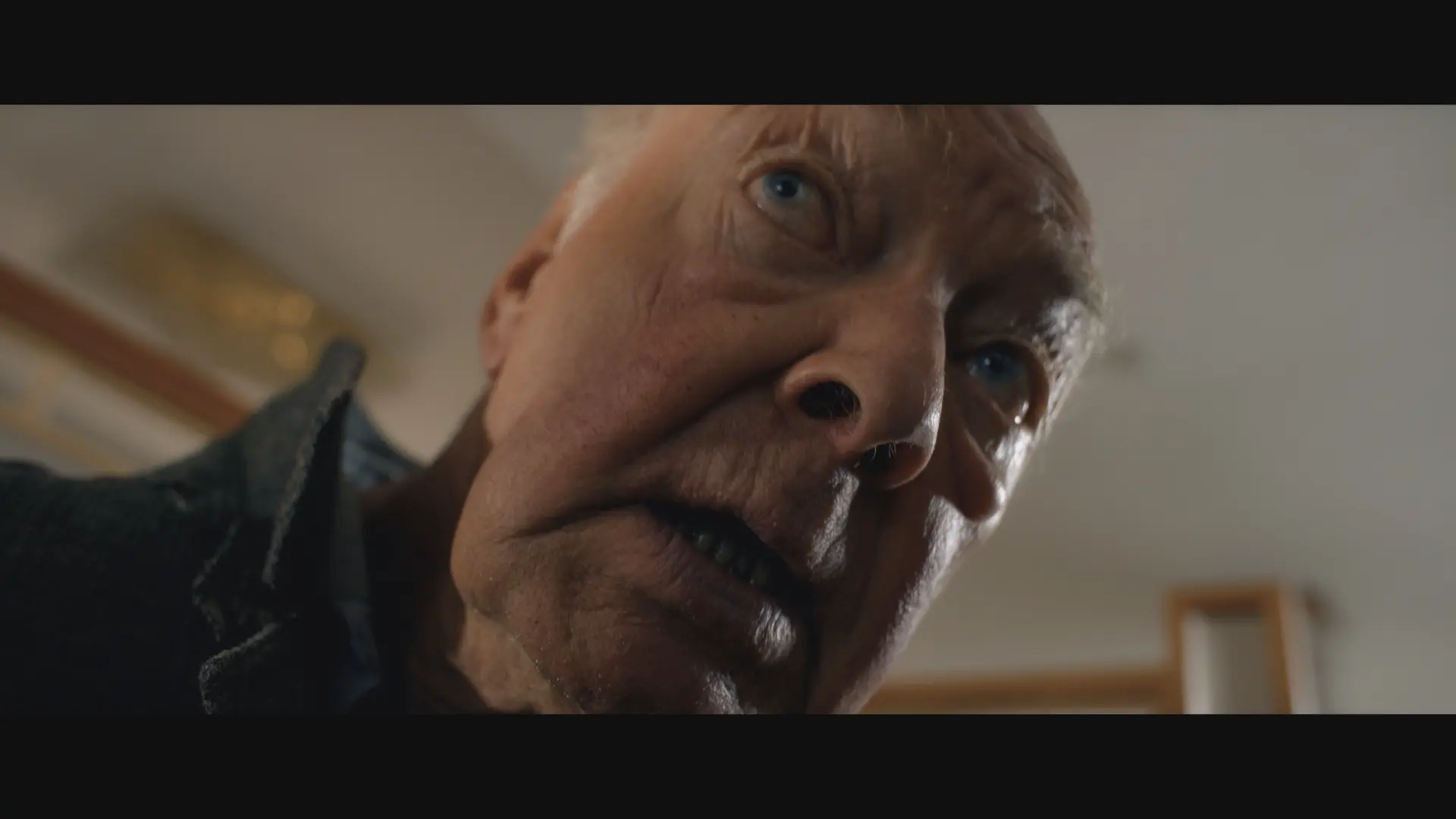
Here in dream language, the old man stands in for spirit; he offers wisdom and guidance for Elisa through his own similar lived experience.
“The old man always appears when the hero is in a hopeless and desperate situation from which only profound reflection or a lucky idea—in other words, a spiritual function or an endopsychic automatism of some kind—can extricate him.” (The Archetypes and the Collective Unconscious, Carl Jung, para 401)
The downward spiral
Taking on his warning, she remembers her encounter with Fred and his phone number on mud-washed paper with his cholesterol numbers – perhaps implying something heart-related, the imperfectly real. Setting up the date with an incredulous Fred over the phone reveals a tentative excitement in Elisa to feel that she does, in fact, still matter.
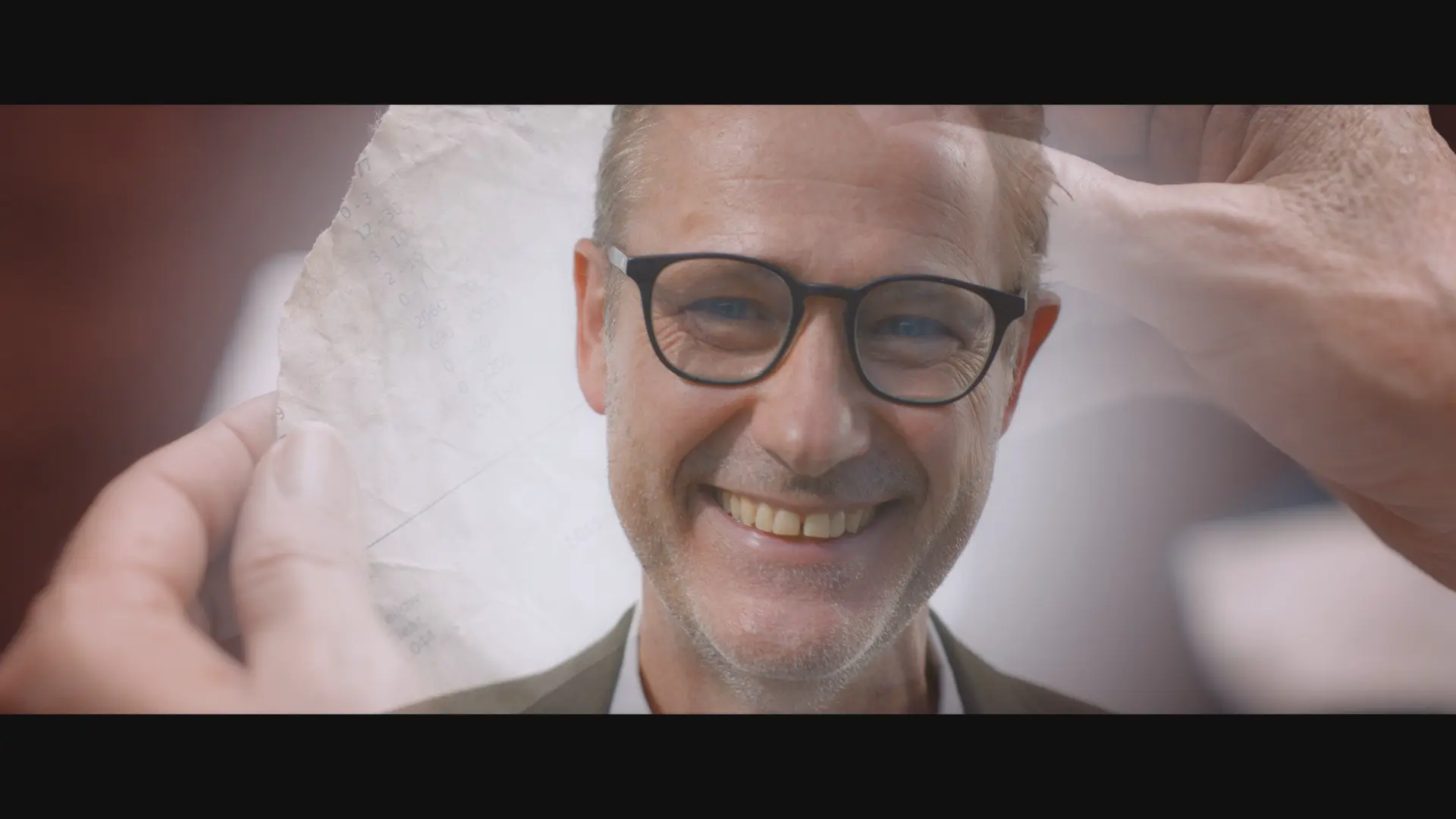
However, Elisa, over a period of a few intense hours, tragically deteriorates into a neurosis; her struggle against the beauty standard she has internalised via Harvey culminates into an irredeemable self-loathing and highlights her inferiority complex.
“Also a strange paralysis of feeling together with a profound lack of self-confidence is frequently the effect on a woman’s own inner world of an unacknowledged animus judgment. In such situations, the animus whispers to the woman in the depths: 'You’re a hopeless case; why try? It’s all to no avail anyhow. Your life cannot, and never will, be any different.'”
(The Individuation Process, Marie-Louise von Franz, pg. 320)
She loses the battle within herself, has adopted a skewed value system, and wrongly attributes her worth to only what is skin deep. The billboard of Sue’s perfect body looms ominously over her, as salt in the wound – this conclusively leads to a date no-show.
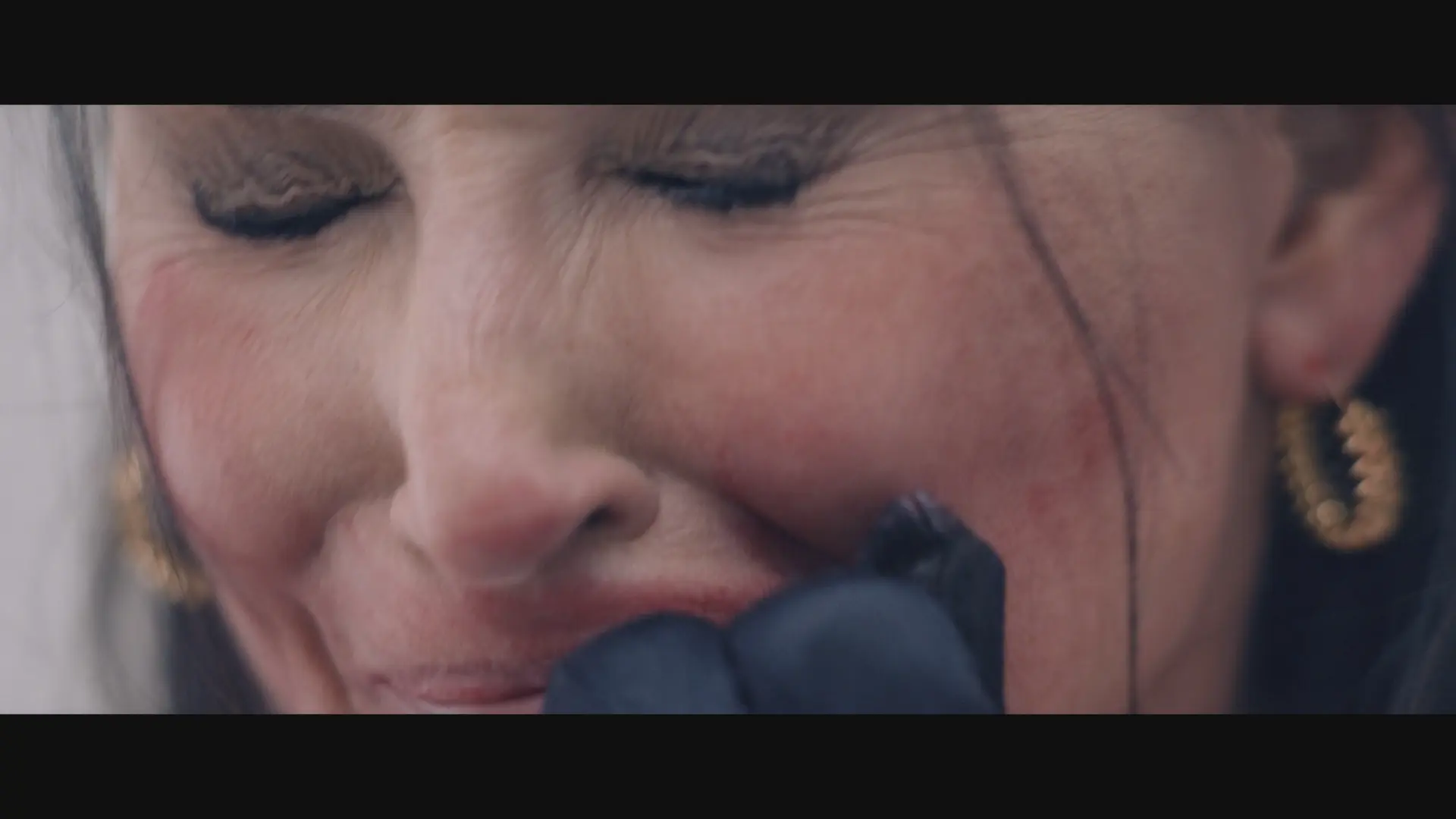
While a potent and memorable depiction of a relatable suffering, it also shows our character at her absolute lowest and exemplifies the futility of competing within a superficial worldview. We are witness to a woman who lacks foundational self-esteem and self-worth. As suggested earlier in my article, Fred is the positive animus, but ultimately that connection is rejected, in favour of the fantasy, even beginning with him would require a reordering of values regardless.
To summarise, a poignant note on this defeatist attitude: the engagement of the fantasy of The Substance, enacted through Sue and Harvey is a bitter-sweet solution. Without it, Elisa would inextricably fall into the depths of a self-destructive spiral, as her life (body) increasingly falls out of the unattainable perfectionist worldview.
Sue’s nightmare - Break a Leg
After Elisa ghosts Fred, we witness an elaborate nightmare from Sue. Amidst filming a show, she becomes self-conscious of her body, as something lumpy moves around inside. The cameramen/animus figures prepare to zoom in and find the aberration on screen. Mortified that her artificial body will be revealed, she exits with haste to locate it, and in true gruesome fashion, pulled out from her belly button, is a cooked chicken leg.
This dream is connected to the "Unzipped" nightmare (#2) of Elisa, in that it reinvokes the feeling of being exposed for one's alien content; in this sense, it could mean the consequence of the lived experience of being the inner double. This motif will reappear in the final scenes.
An interesting aside to do with dream logic or the unconscious and its uncanny ability to repeat the same concept yet with an array of differing symbols, is explained here:
“When a dream has several scenes they can usually be best understood as varying ways to describe the same central idea. In other words the stream of images in dreams circumambulates certain nodal centers rather than proceeding in a straight line as does rational thinking.” (Ego and Archetype, Edward F. Edinger, pg. 23)
Insecurities surface
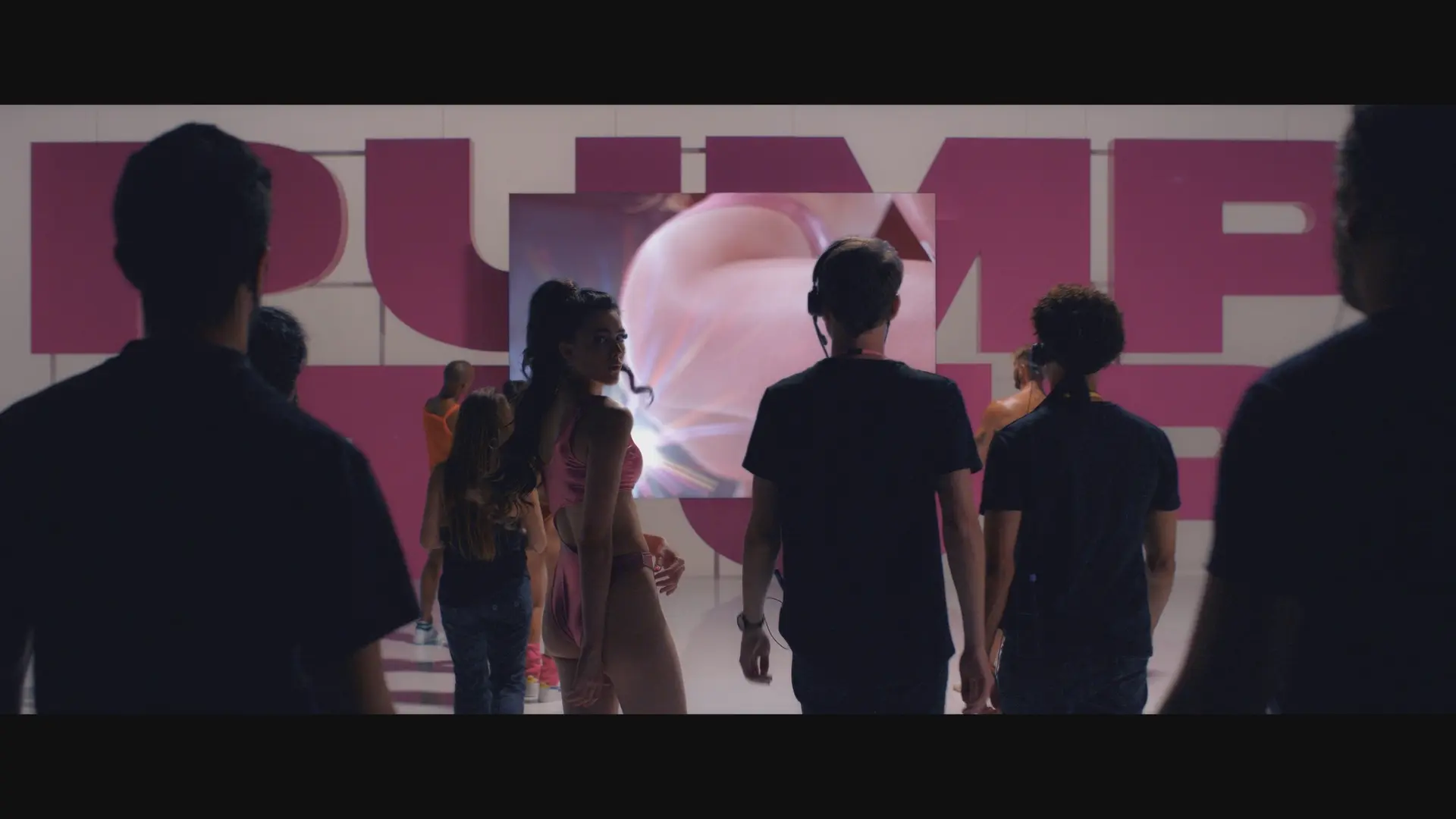
Sue awakens to a messy, chaotic apartment. Elisa has gorged herself on food, an overconsumption to fill the emptiness that is now her real life since ‘activating’ Sue. Sue angrily calls The Substance hotline:
Sue: "This balance is not working."
Sue: "She wastes 7 days stuffing her face in front of the TV."
Man: "Remember, there is no she and you."
Sue arrives at work, nervous after being told the show is cancelled. All this feeds into her (namely Elisa’s) fear of being unwanted and undesired – this need for approval is coming from this sense of inferiority. However, she is promoted to host the network’s huge event, the New Year's Eve show.
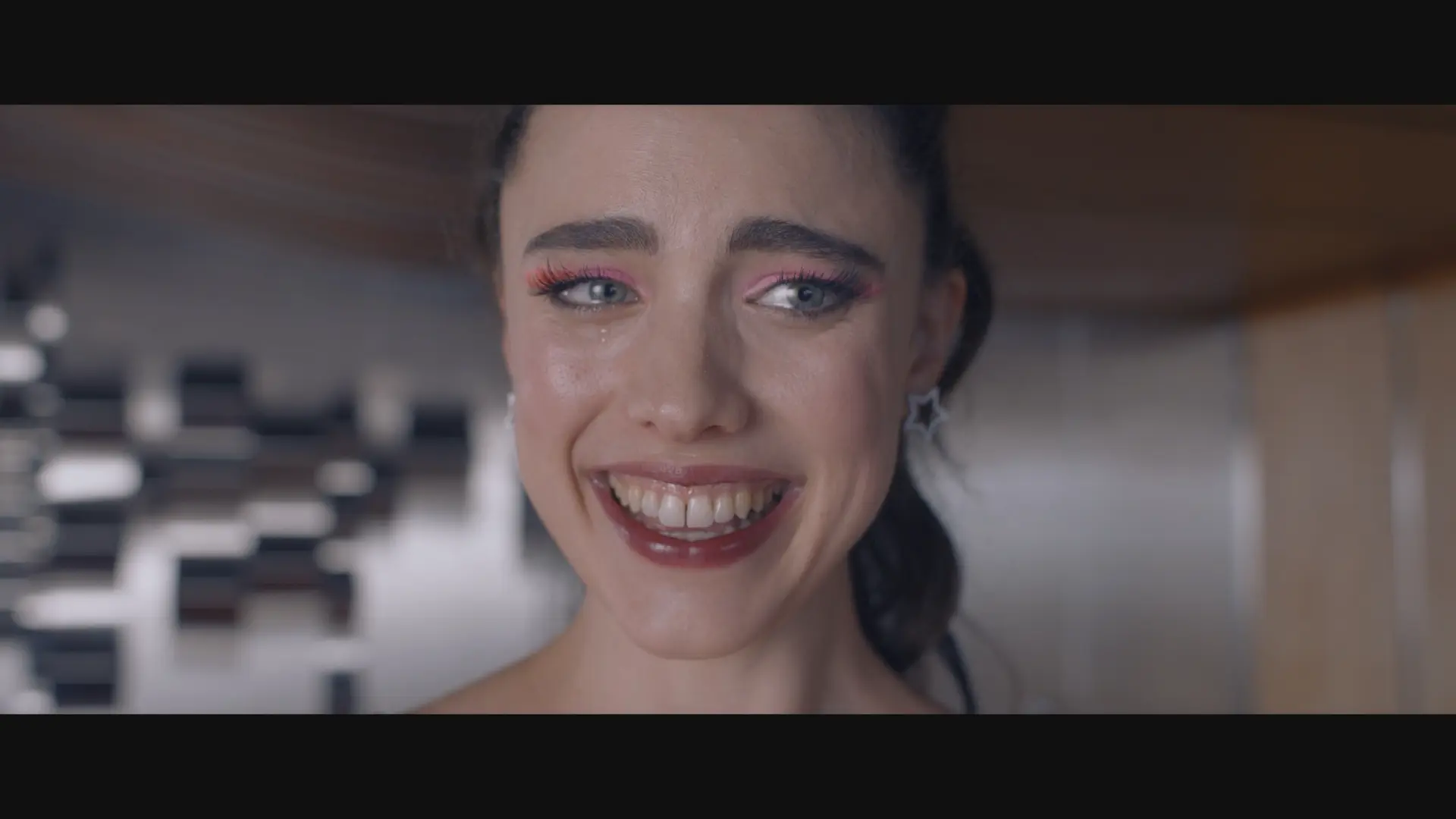
Sue, now a rising star, accomplishing what Elisa once had; opportunistically, she defies the rules and takes life essence from Elisa’s body without respite. The wound festers, almost with full abandonment of her original body or ego-consciousness.
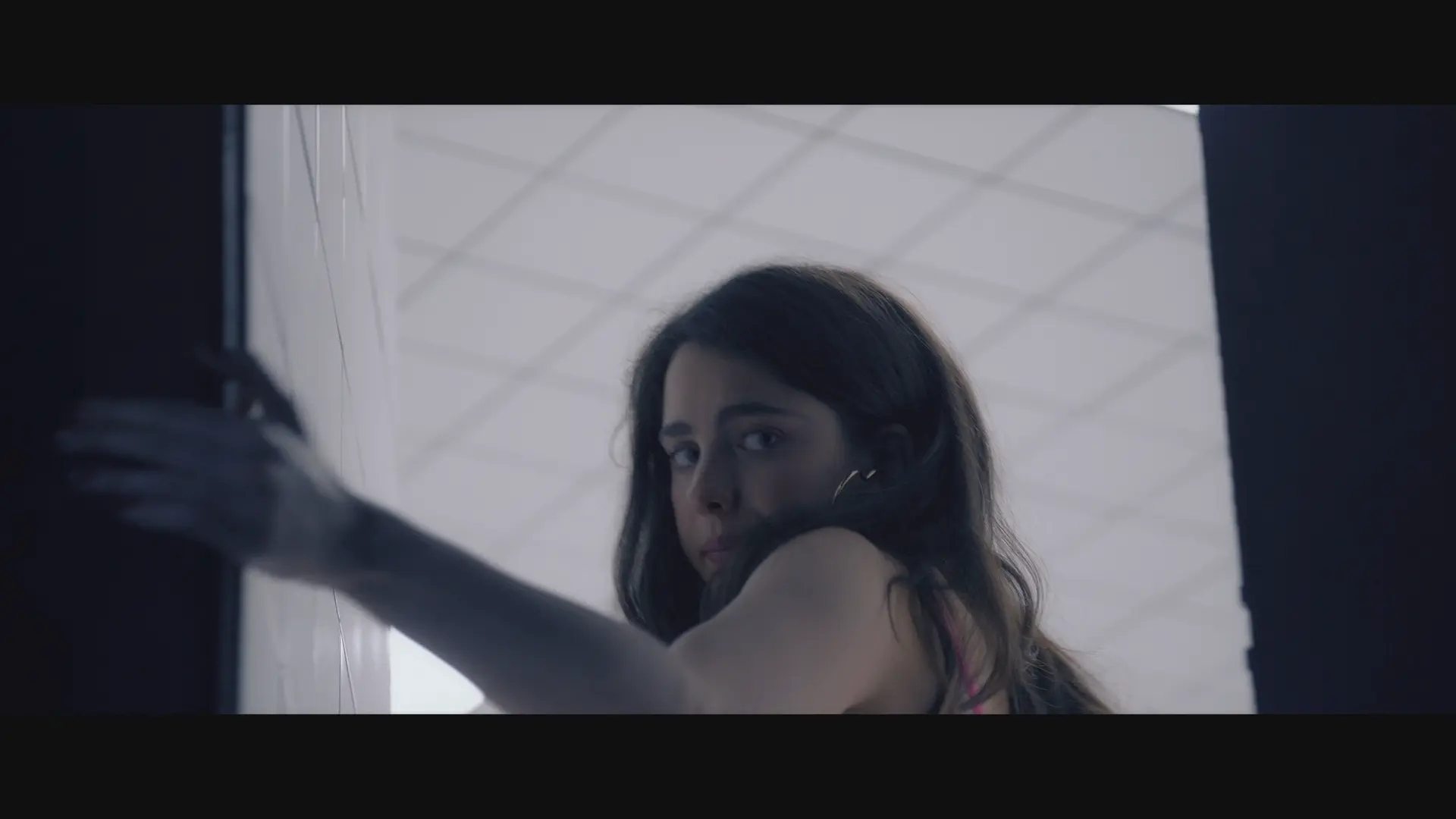
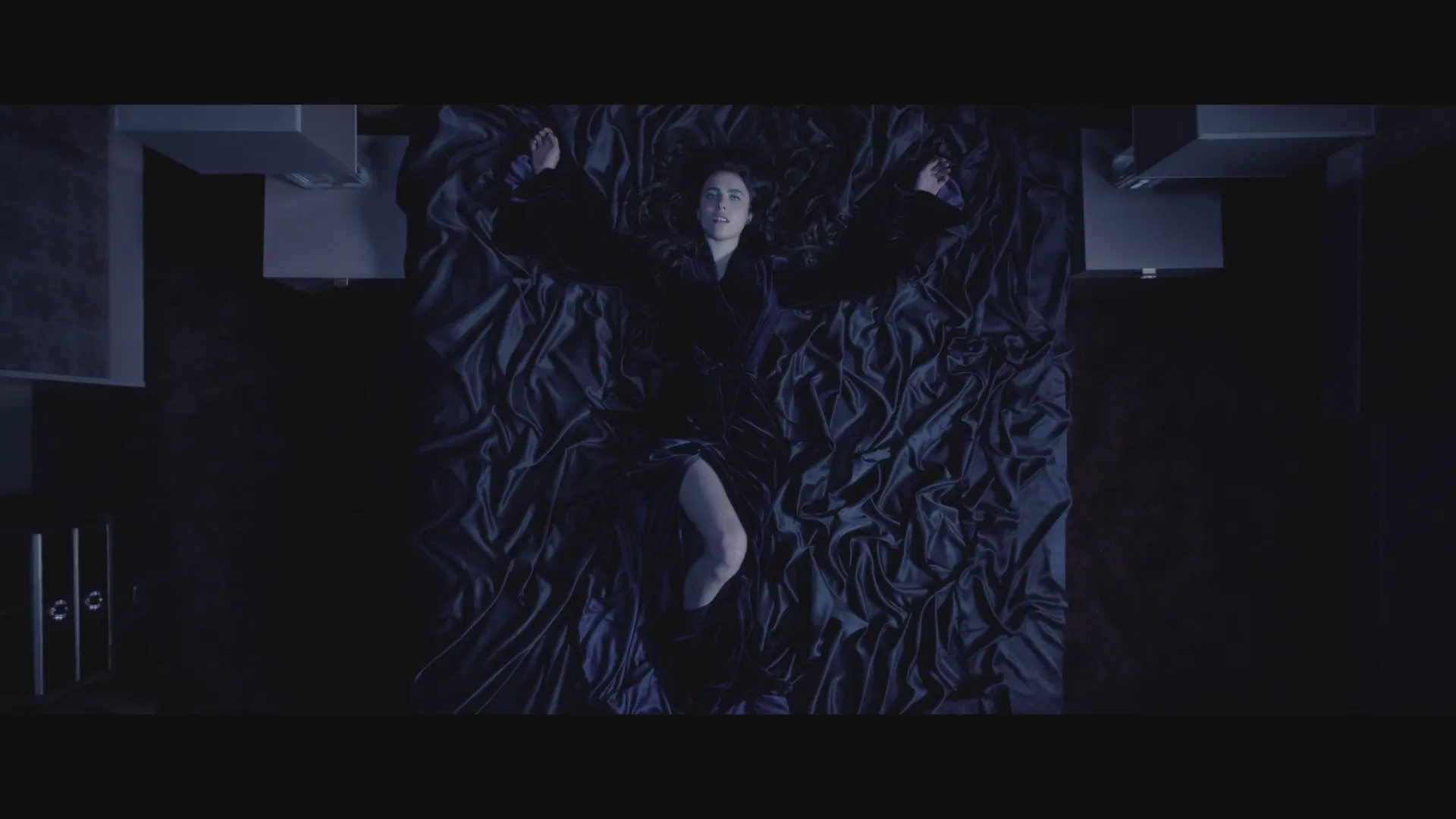
Elisa’s descent into madness as the crone
Elisa: “She didn’t respect the balance. She’s stealing more and more time from me, completely without consideration of the consequences. She’s a selfish bitch!”
The man on the phone offers her an out, but even with the neurosis, Elisa has a few choice words, seemingly knowing, yet unable to act on them herself. She is simply too far gone and too disconnected from the centre of her personality.
Elisa: “She... I... The balance just needs to be respected.”
Man: “So respect it.”
Recalling the gift from Harvey, now revealed to be a French cookbook, stirs up a vitalistic attitude – interestingly, a diagnostic kick from the animus:
“You could say that with a woman the animus always anticipates what she has to do later in reality. So, if you have the problem of the puer aeternus having to come down to earth, this is what the woman's mind has to do later; it is only one step removed, and naturally the puer aeternus problem is always linked up with the creative problem, and that is paramount in a woman's psychology.”
(The Problem of the Puer Aeternus, Marie-Louise von Franz, pg. 16)
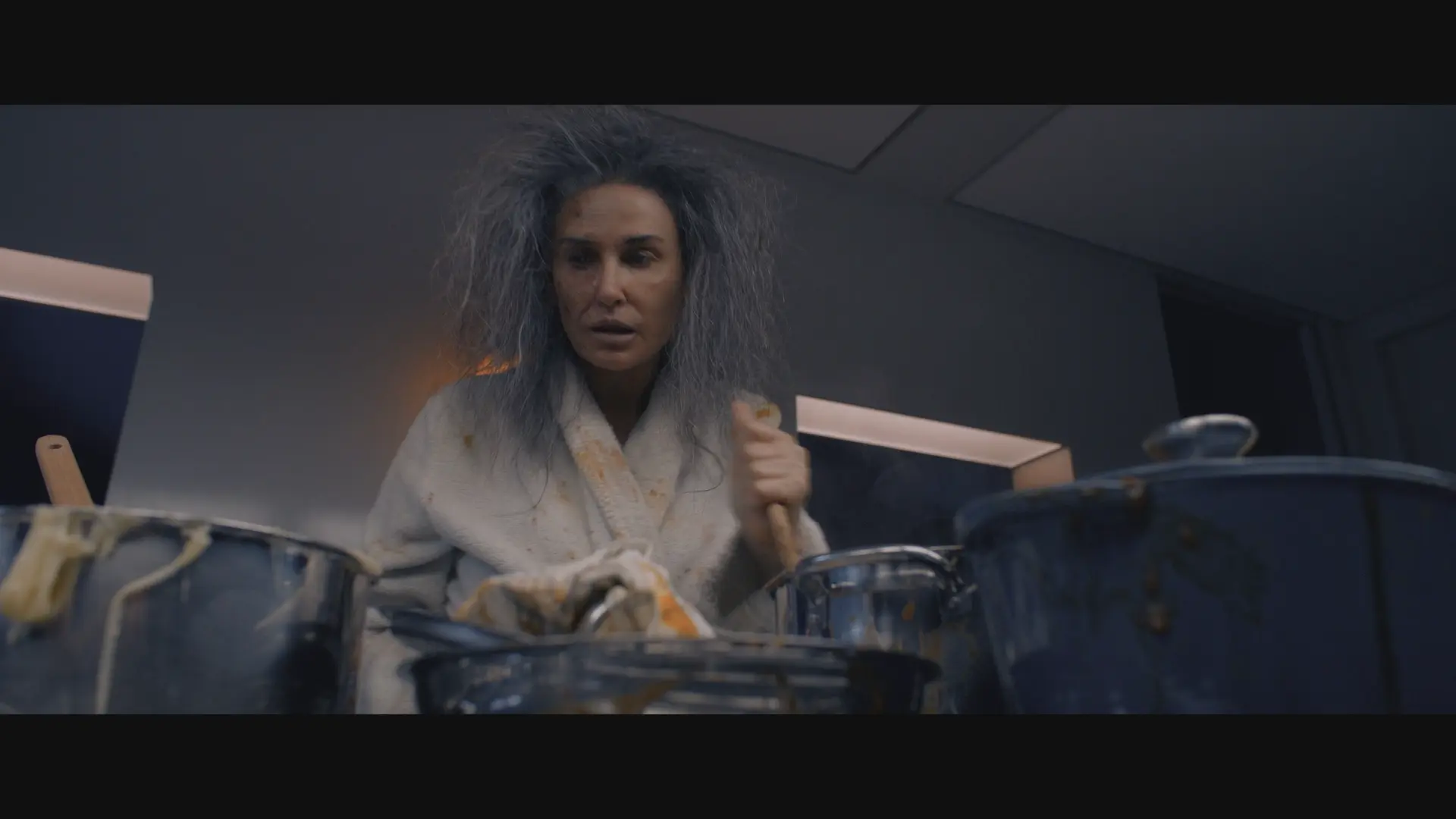
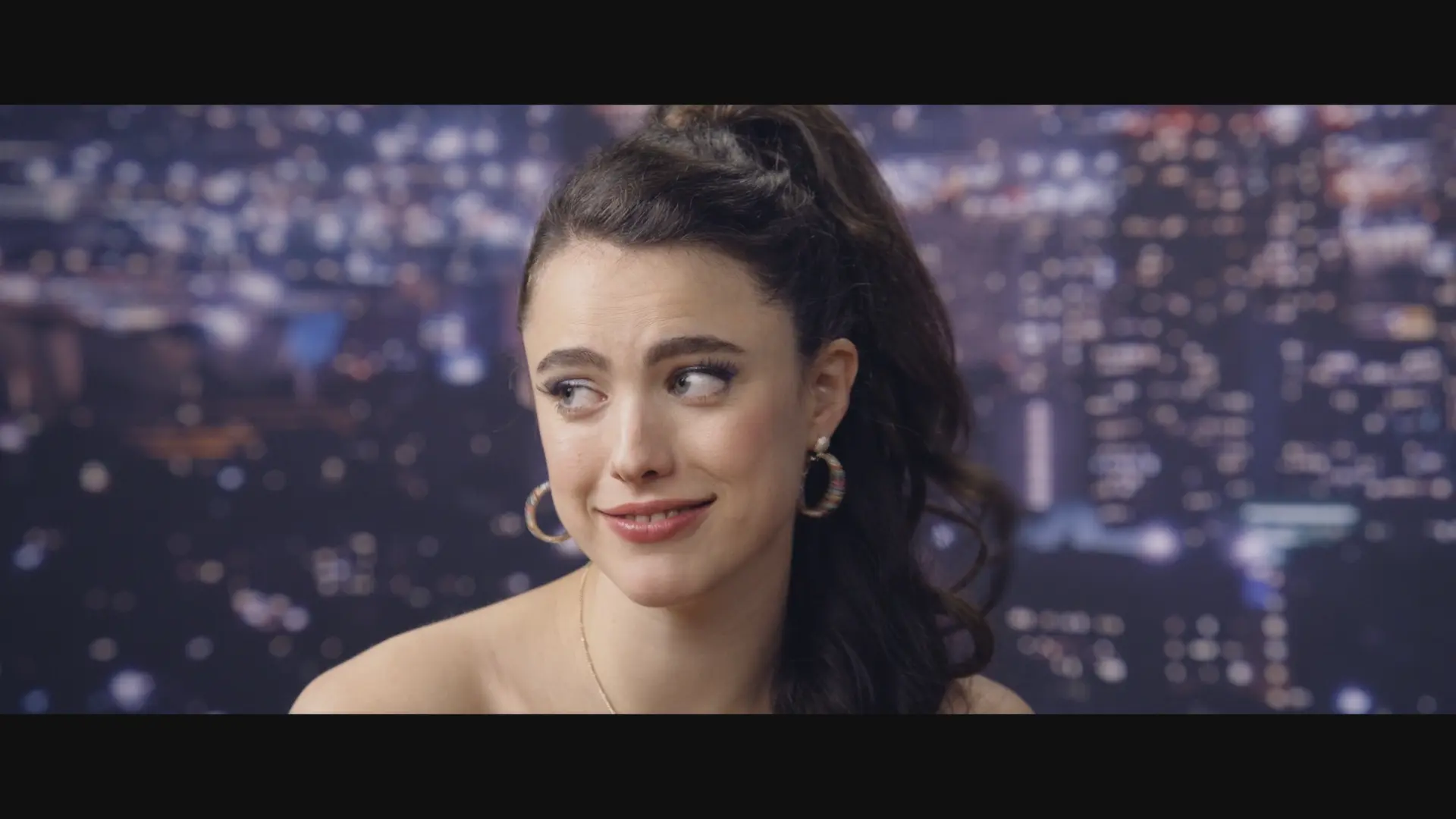
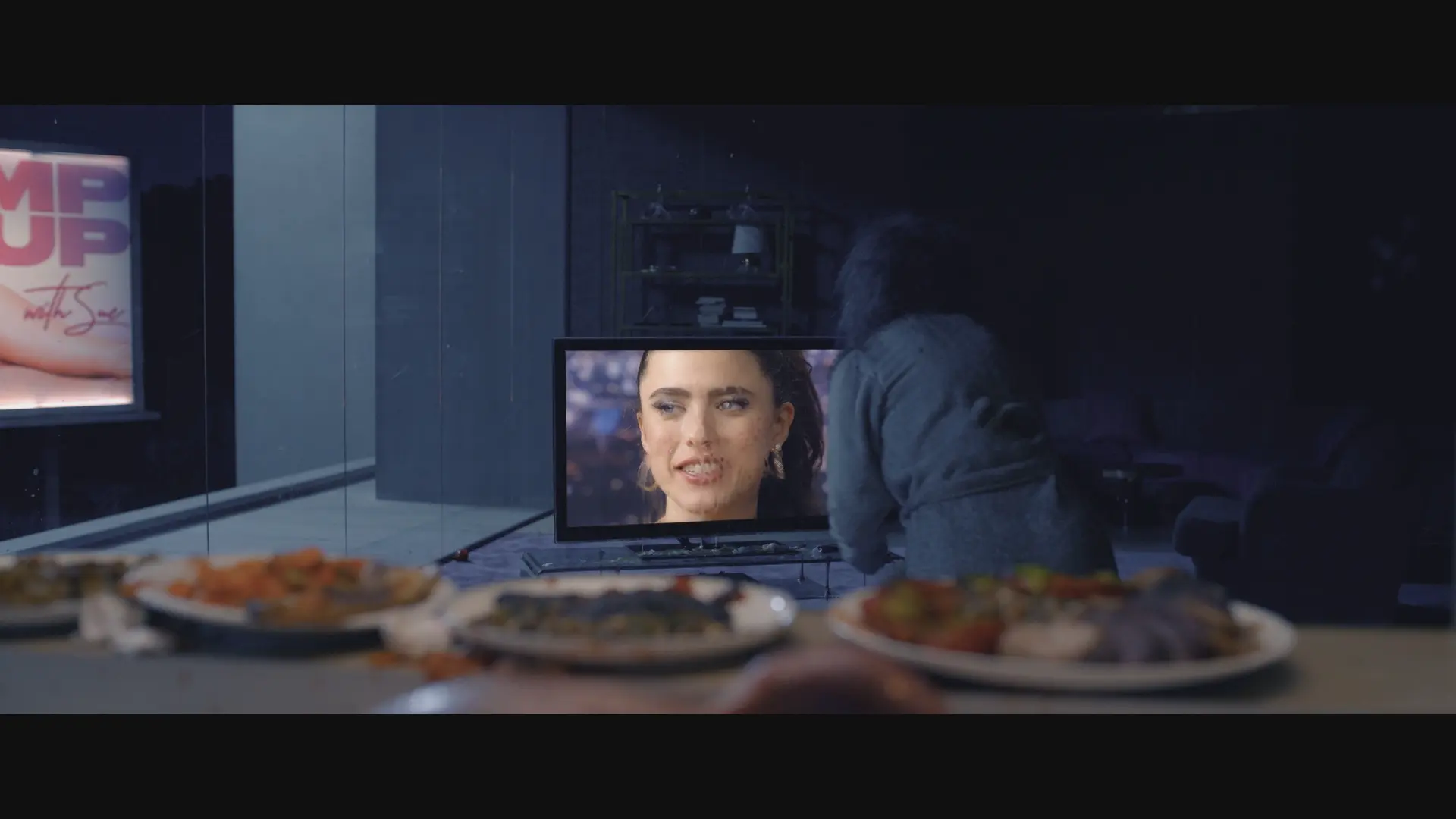
The creative task for problem solving ends up in the kitchen as busy work – cooking up a storm, wherein she argues with escalating resentment and disdain against Sue and her responses on an airing TV interview. Each response from Sue is poised to strike at Elisa’s own wounds; of upbringing, stature and eventual irrelevance. Her diminishment of Elisa takes place on screen and ultimately ends in Elisa overcompensating through overconsumption of the newly prepared meals. In its finality, we see a return to darkness and a veiling over Sue’s billboard, as Elisa blots out the window with newspapers, a visual rendering of the metaphysical wall that separates the two ego states.
Sue: “In a way, I grew up with her, whether I liked it or not”
The chef the patron
In recognising the symbolism of cooking or chemistry, it is important to appreciate how it can show up in dreams, it indicates a functional act, of exploration and experimentation, into ‘working through or working out’ a problem or situation, it is usually contextually based for the dreamer, that is specific to the day and often the unconscious can produce the result of the creative effort.
In this context, Elisa shows vigour and some awareness of her situation, but not the right kind of fighting out of psychic content - as it is chaotic (a rush to prove oneself), French cuisine (foreign or not native in concept to her, although she is adept), and unusual in ingredients (atypical source material). All together, these lead to a concoction that is ripe to cause issues and the process itself is coloured by the miasma of the unprocessed wounds (Sue’s disregard, devaluation).
A positive point to this symbol, however, we can look to Marie-Louise Von Franz: "Instead of arguing with the drives which carry us away, we prefer to cook them and... ask them what they want... That can be discovered by active imagination, or through a fantasy, or through experimenting in reality, but always with the introverted attitude of observing objectively what the drive really wants."
Now, having discussed the symbolism of cooking, the act of eating for solace or over-consumption can be seen as satiating a non-physical spiritual hunger, essentially:
“...the numen which naturally belongs to the spirit is projected onto food.”
(The Owl Was a Baker’s Daughter, Marion Woodman, pg. 98)
This drive to seek the numinous is misaligned to the dark side of perfectionistic self-control. A pointed release of the repressed energies that have built up while persona non grata.
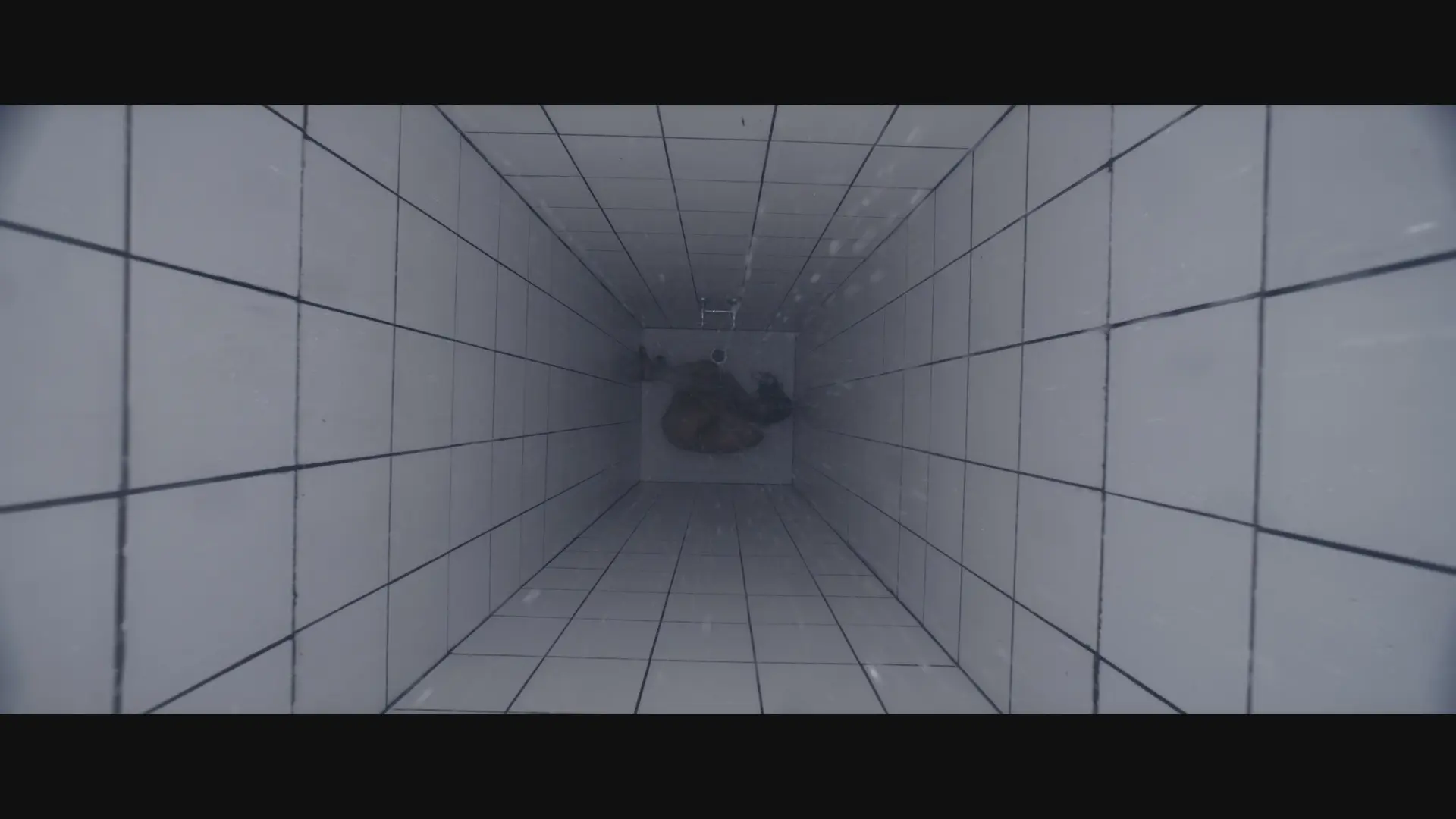
Elisabeth, exhausted and sanitising (solutio) herself from the experience in the shower, mutters despondently:
Elisa: “You have to....
No sympathy for lady vengeance
Sue: “Control yourself!”
With such a dramatic scene change, and with the other finishing the sentence, there is an engaging interplay between the two ego-consciousnesses.
Lacking in self-awareness, or perhaps powerless with the drive, this projection is an interesting one, since, in the following scene, it is Sue who will push boundaries with the fluid extraction, and fall into the same Dionysian (Wotanic) frenzy of excess and low impulse control, just as Elisa has done with cooking and overconsumption.
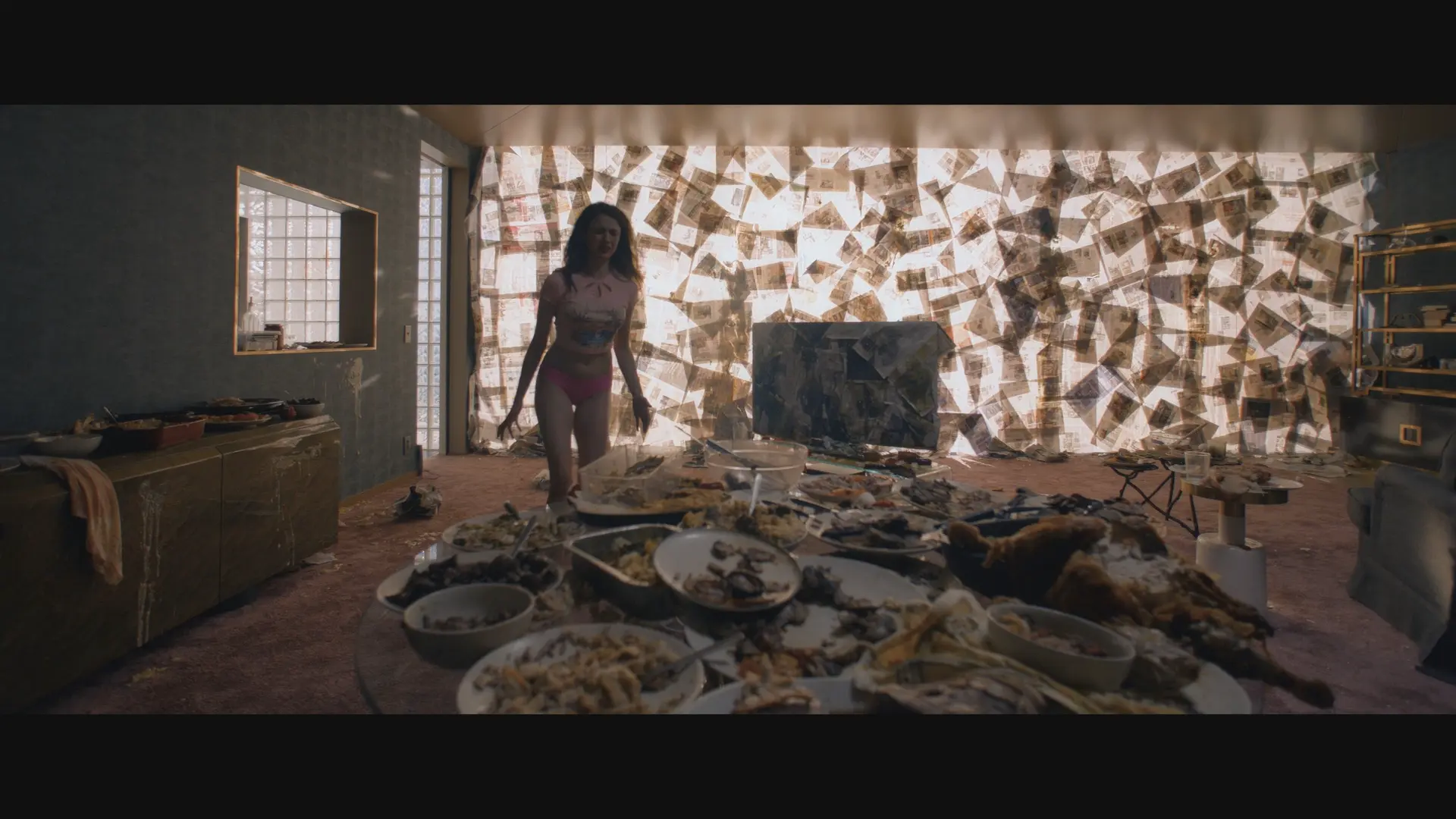
Sue: “Gross, old, fat, disgusting!”
Sue violently extracts “Stabiliser” fluid (life force) from Elisa’s blackened wound to extend far beyond the strict 7-day switch rule, to 3 months; enough to get her to the big TV event. This further thrusts the unconscious attitude into the darkness, unwilling to contend with herself, and disregarding all ‘balance’ of the needs and wants of the other, and with an air of superiority to boot.
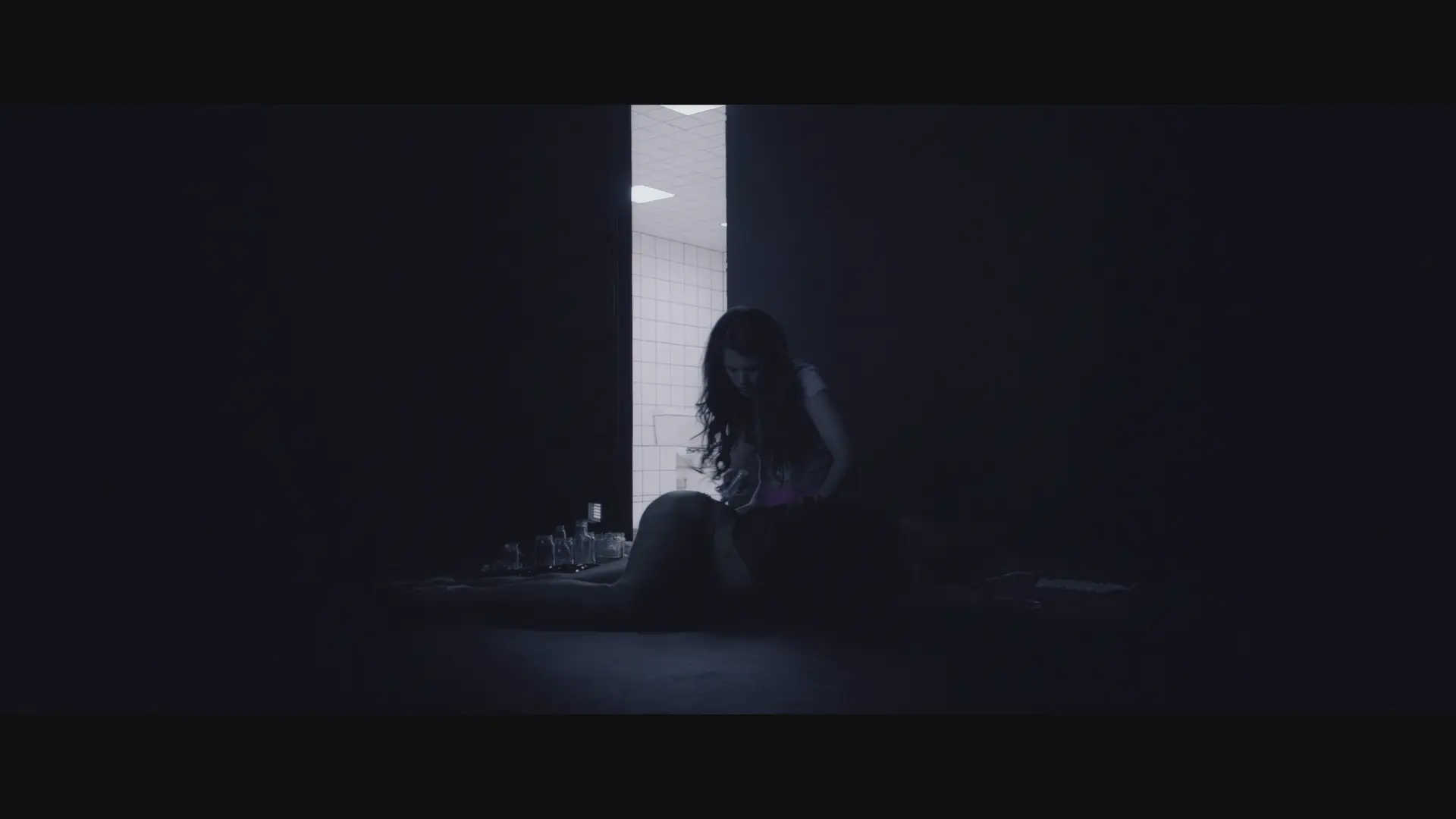
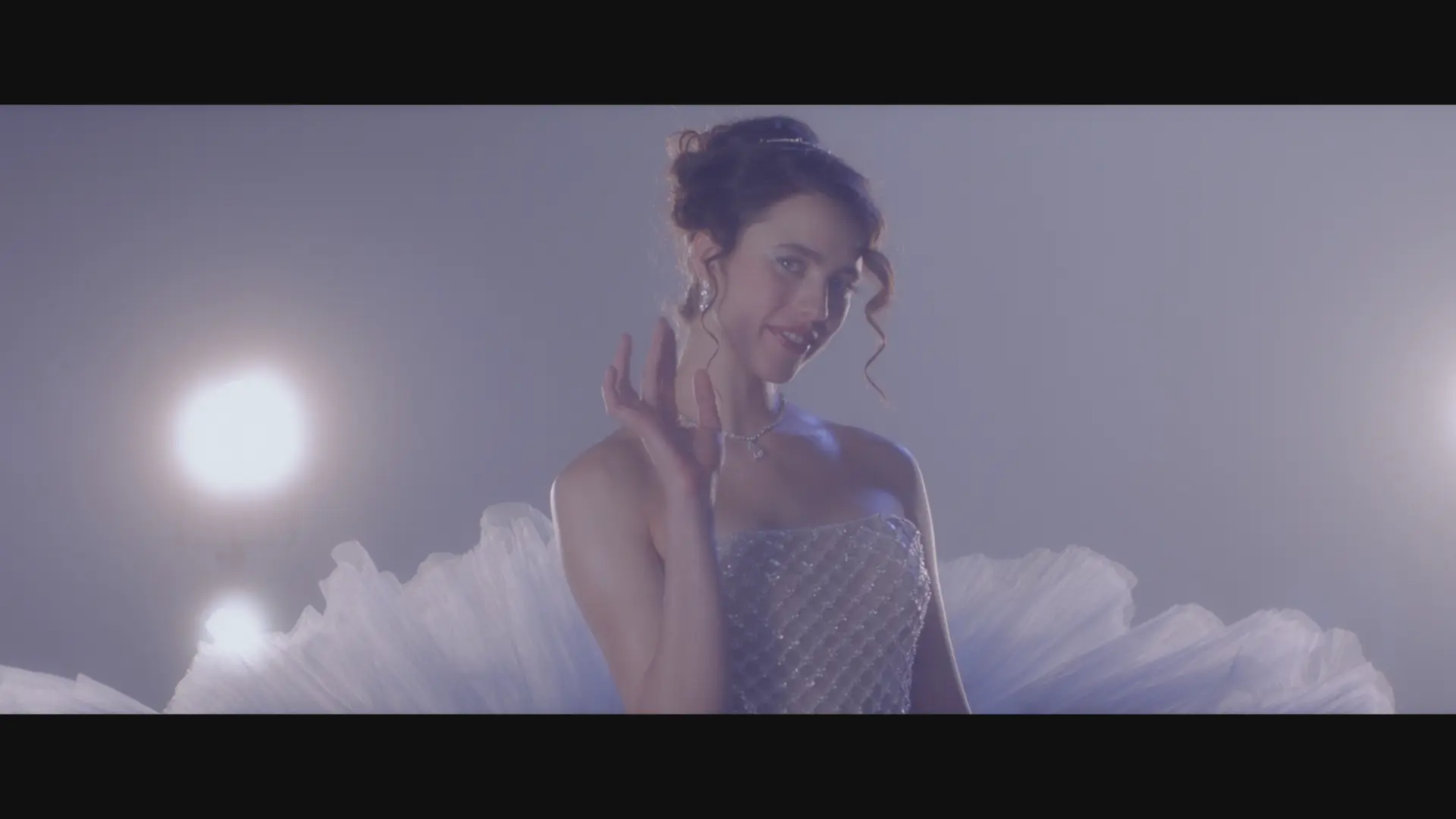
A grey picture of time
This dastardly play leads us radically towards the downfall of Sue, as before her big night, she can no longer extract more from Elisa and has been debilitated, running on empty, as it were. She has no choice but to switch, revealing the horror of her abandonment and violence. Elisa has surpassed the crone and is at death’s door, a grotesque, hulking shell (named Gollum on set).
In despair, terror, and face-to-face with her new form, she finally musters a decisive courage; she calls The Substance hotline to stop the subscription. She pulls her large portrait frame back to its original place, an ode to what was lost and a futile attempt at reclaiming her original image.
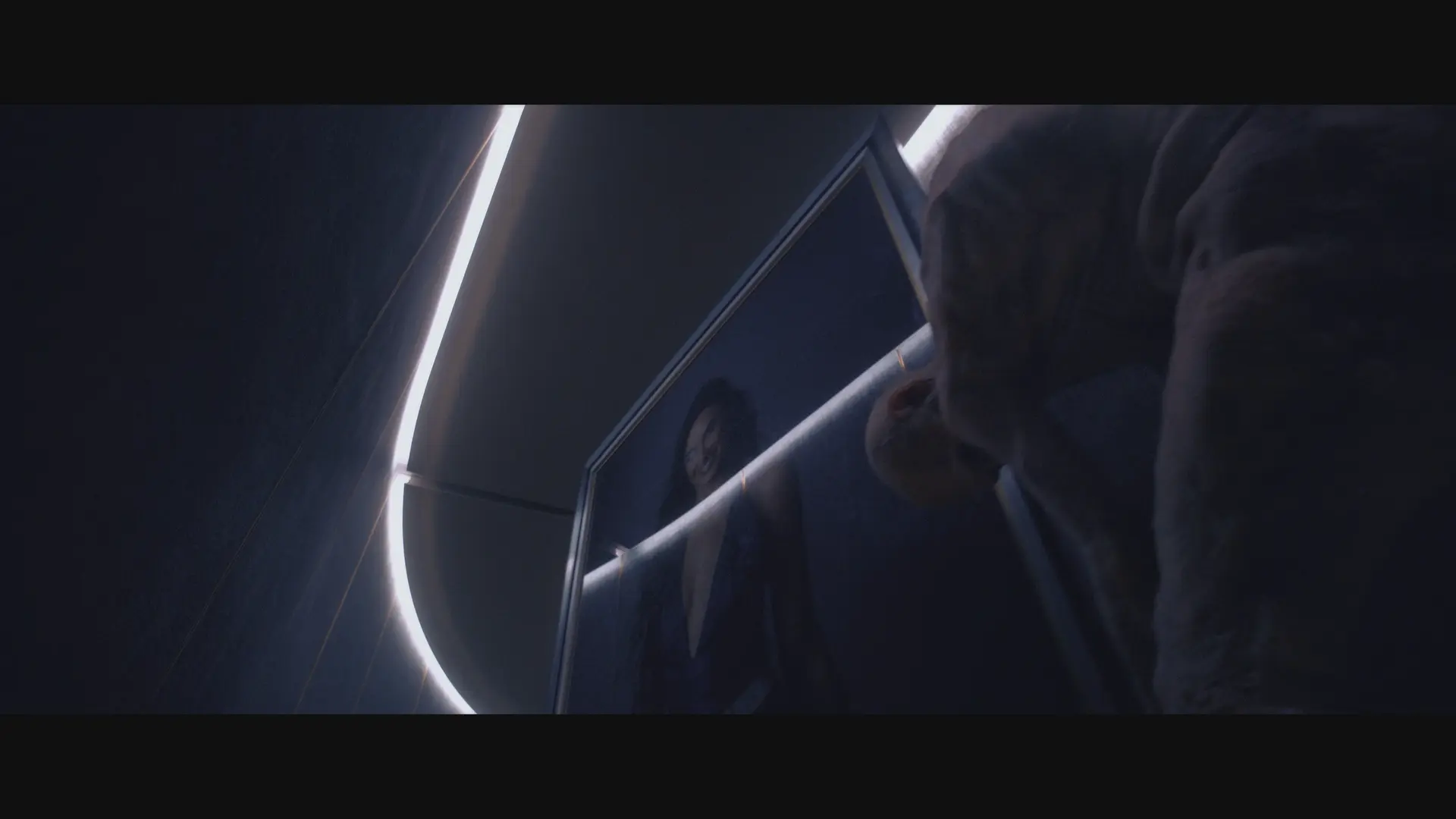
Shadow showdown
Man: “We are sorry you didn’t appreciate your experience with The Substance.” The significance of the alchemy that could have allowed a step towards self-appreciation, acceptance, wholeness, etc., was unappreciated.
Elisa, now in possession of the “Termination” needle, falters at the last quarter of fluid. Nostalgia of the past reignites her starry-eyed need for acceptance from others, since she cannot love herself.
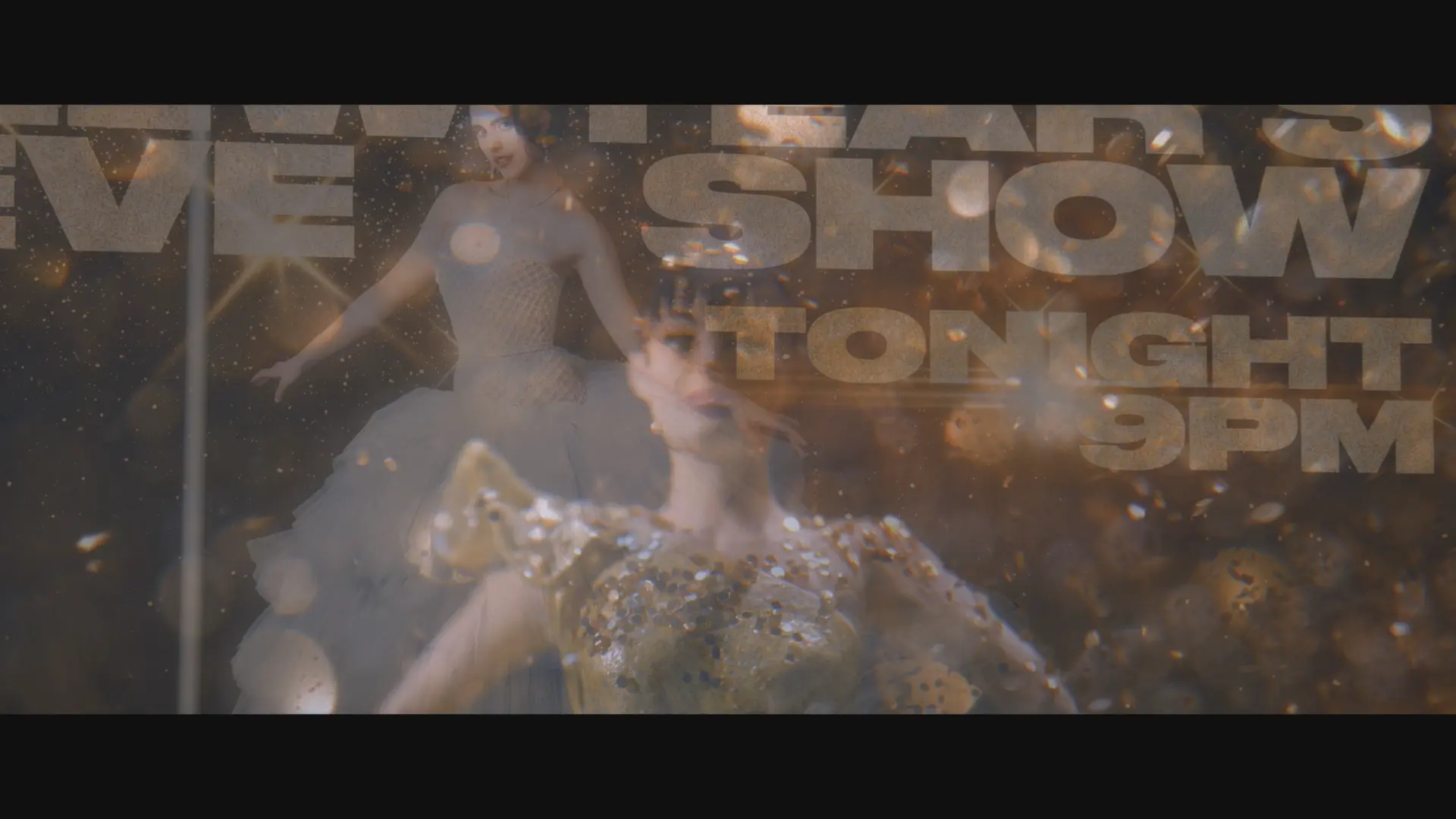
Elisa: “I need you because I hate myself.”
Elisa: “You are the only lovable part of me. You have to come back.”
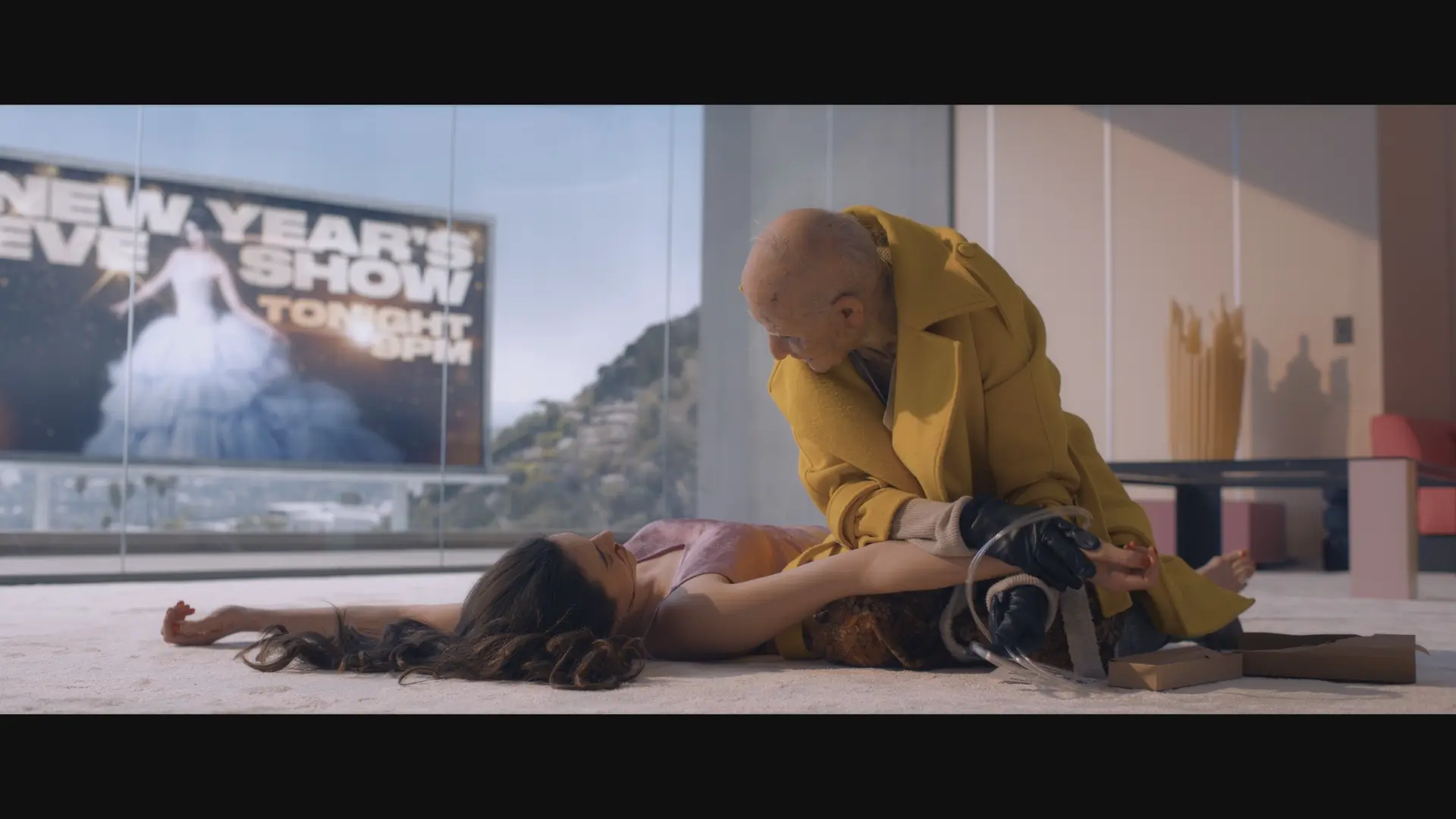
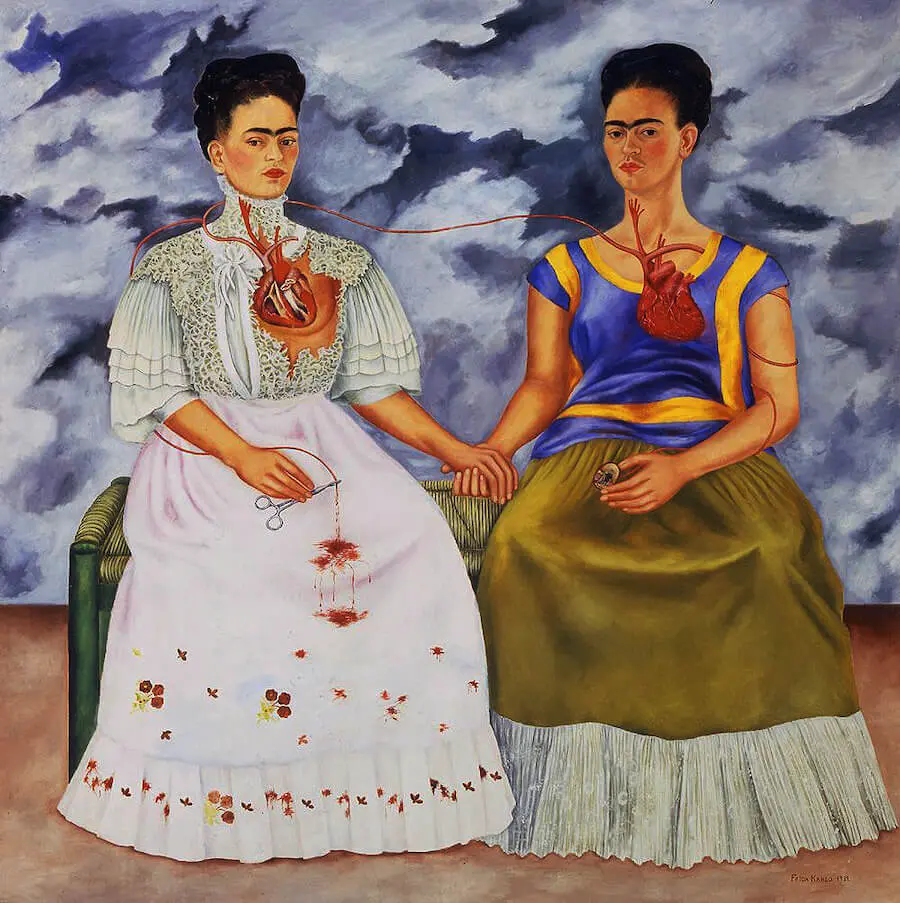
Once again, Elisa tries to undo her actions by transferring blood directly back to Sue’s heart, and in a pivotal twist, Sue awakens. Here, it is unclear if the consciousness has separated and she has now fully taken the part of Elisa that was once united and can now exist independently, or if the full unadulterated hatred of herself in decrepit form is on display. Likened to the rage of the Wotanic spirit, the violence that ensues is a difficult watch, since it is completely one-sided and deadly.

Aligning with dream language, a same-sex depiction in aggressive conflict is a depiction of the shadow. It is usually an unrelenting, unknown stranger figure that attacks you, follows you, and is generally ominous and unnerving. It can also appear initially as an animal on the prey. This is a part of the psyche that is negatively charged, but also needs your attention and will transform once interacted with or engaged with. If one can move past the pent-up aggression, conflict, or violence, then with conscious awareness or communication with that part, other stages of personal development can be accessed.
“... if we are able to see our own shadow and can bear knowing about it, then a small part of the problem has already been solved: we have at least brought up the personal unconscious. The shadow is a living part of the personality and therefore wants to live with it in some form. It cannot be argued out of existence or rationalized into harmlessness.”
(Archetypes of the Collective Unconscious, Carl Jung, para 44)
“Medieval heroes had to slay their dragons: modern heroes have to take their dragons back home to integrate into their own personality.”
(Owning Your Own Shadow, Robert Johnson, pg. 51)
Living dead girl
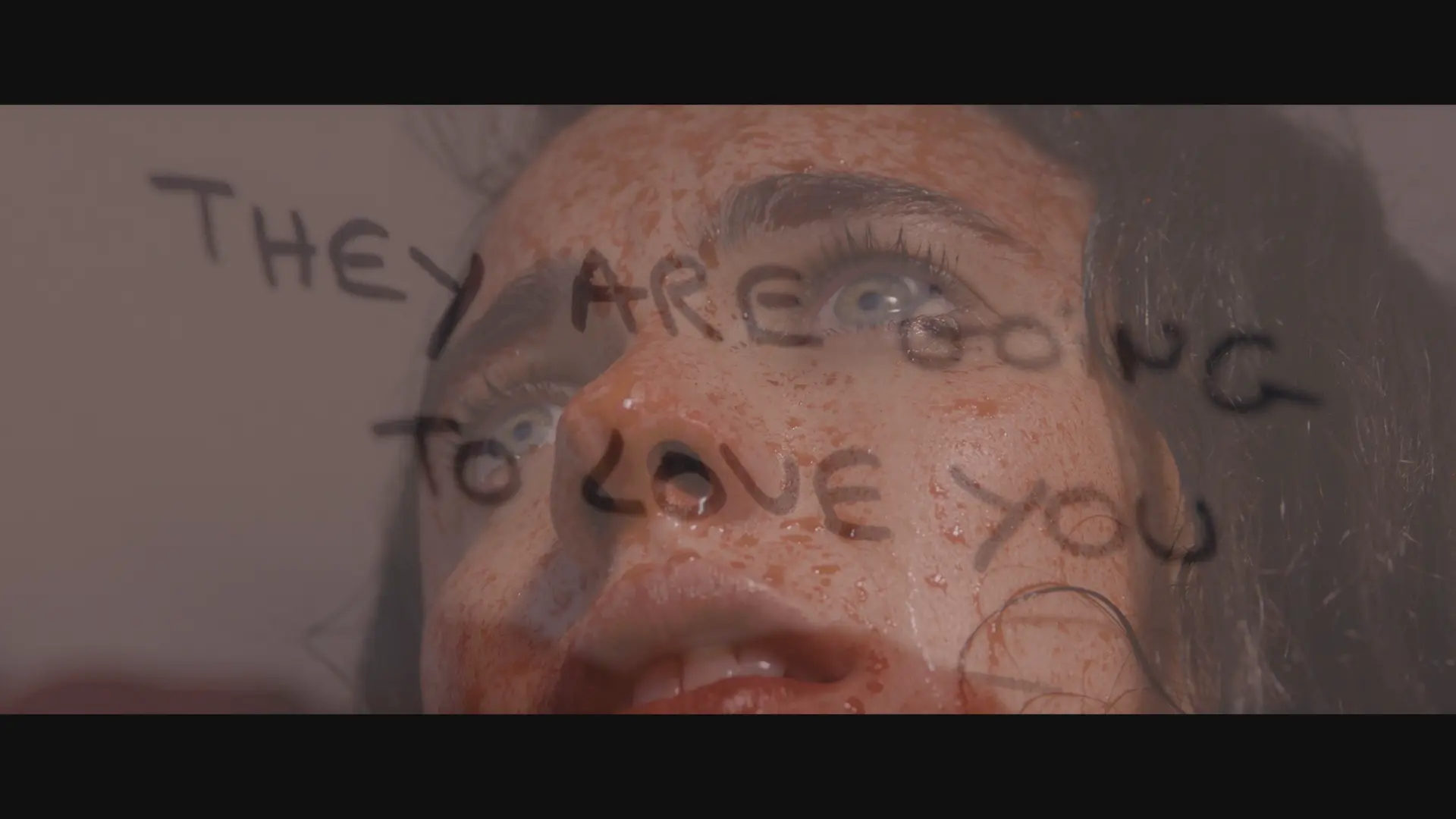
“Remember you are one.” Well then, beating the mother of your being to a bloody pulp was not such a good idea. Sue heads to the studio, hoping to live out the pinnacle of her fantasy, but in the process of backstage preparations, she is stopped in her tracks by the humbling effects of delirium and bodily decay. She is evidently receiving the repercussions of the fight and is synchronised with Elisa's slow death process.
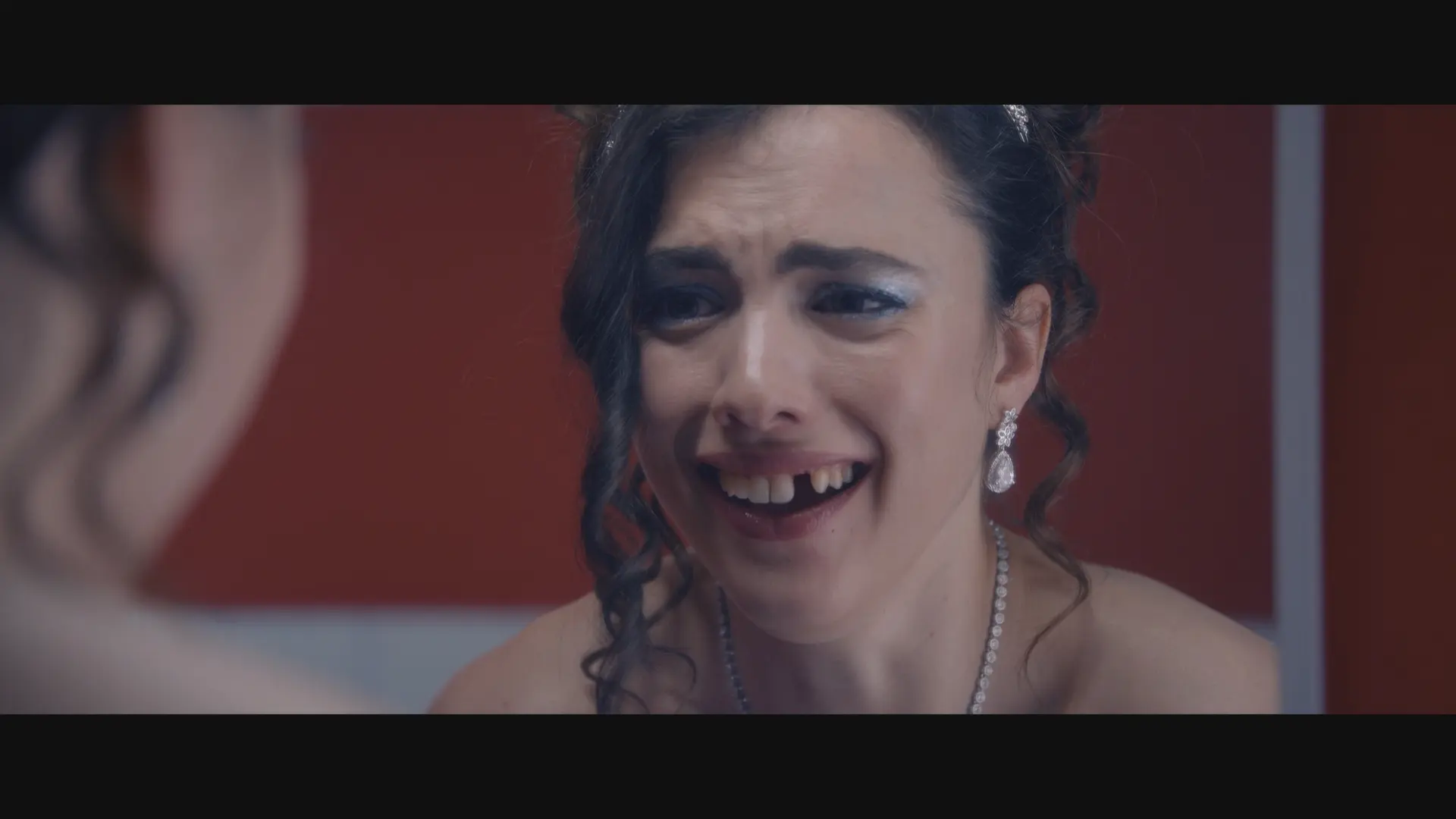
Jumping ahead of the dramatic realisation that she is the walking dead, Sue has the bright idea to use the green “Activator” injection back at home to stop or fix the decay from ruining her night. The girl just won’t quit on the big dream.
Sue: “Give me a better version of myself.”
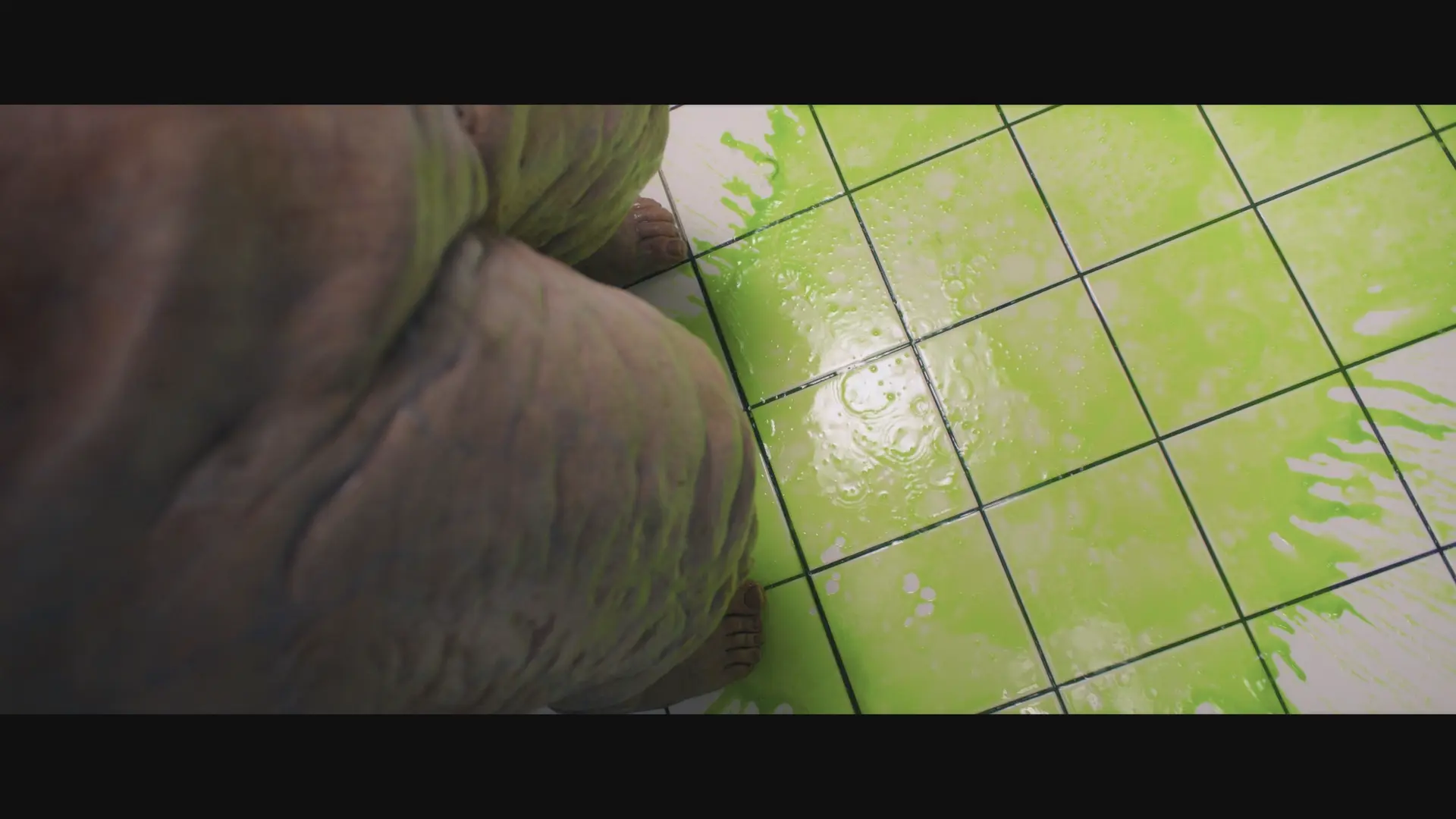
Enter Monstro ElisaSue (Monstro)
The unholy incestuous mutant form of Sue’s unsanctioned rebirth. A chaotic and impure matrix (massa confusa) stirs up a physiognomy which matches the character; however, it becomes clear that Elisabeth seems to be back in the driver’s seat, as she super-glues her real face over the top of the new façade. Not the body she wanted, but a kind of radical self-acceptance and heightened determinism to boldly live out the dream once more.
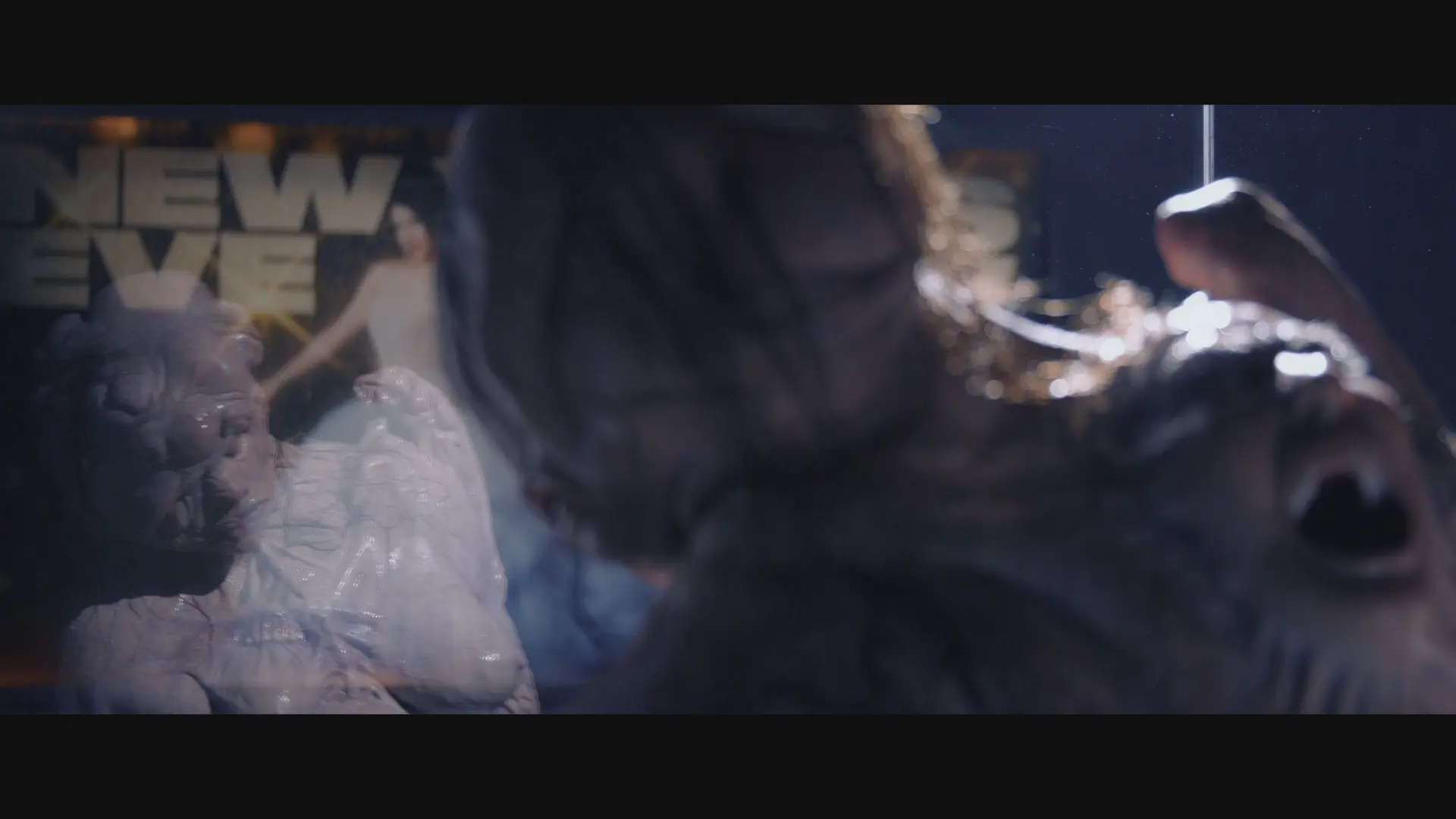
While this is quite an impressive depiction of a dysmorphic creature, the rest of the film with Monstro takes a departure from the tight depictions of beauty and the angst of the protagonist, to a paradoxically easier ride - likely as intended. Monstro is no longer living the lie; she is open-breasted as the ancient Greek women, ready for battle as it were. There is a unique air to this confidence that has not yet been seen before, yet from a meta view, there is an underlying substrate here that feels completely from the unconscious.
While in my initial viewing, I had a sense this cinematic pace change was a deliberate satirical position on the film industry itself. However, there is a great sense that more may be excavated. Whether it is a reflection of the director or not, this sequence says something deep about the transformation of the personality, resulting in a liberation, but identified as hideous and unappealing. Let’s look at the entrance of Monstro on the stage as though it were a dream and veer into the symbols present.
Declaration of soul
Monstro ElisaSue’s mask slips to the horror of all around her. An interesting depiction of the revelation of one’s true face or true self.
Monstro: “Don't be scared! It’s still me! It’s me! I’m Elisabeth! I’m Sue!”
Finally, a recognition of the connection to her counterpart united in monstrosity, or perhaps her real form. Engaging that thought further, the monster-like revelation bares her soul to the audience, by literally birthing an equally grotesque aspect of the Self via the eye-vulva.
The breast-umbilical cord could also be seen as a sperm. In this, both feminine and masculine parts are represented: a complex of opposites (complexio oppositorum), or defined another way, a hermaphroditic composite. The symbol of the hermaphrodite or the androgyne depiction of the inner world is largely a positive one, and a step towards harmonising the balance of gender opposites within. However, in the context of the film, this amalgamation is a shock to human sensibilities.
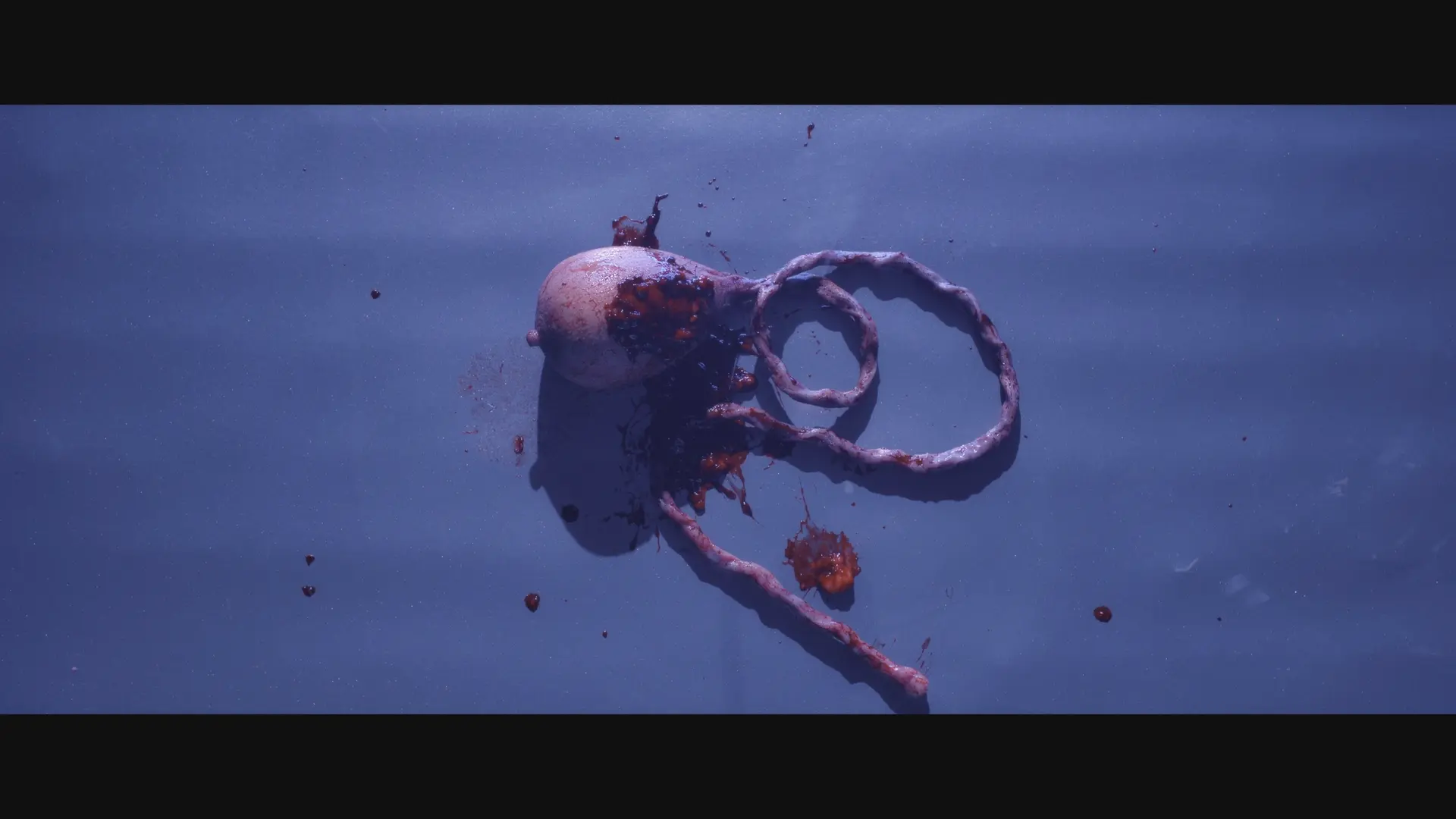
Now, to recall Sue’s “Chicken Leg” nightmare, these two images are related and similar in meaning. The thing that is extracted from the womb (through the belly button) is foul and outrageous — privately done in her dressing room and the other a natural birth, currently in full exposure on stage in conscious light via the camera, as though it were the eye of god.
This detail of conscious awareness and exposure is the difference. The “creative output” is in harmony with Eliza and Sue, as in, they have made a joint effort to birth the malformed anatomy. It symbolises an aspect coming into being; however, it is dead on arrival. Alternatively, the positive depiction of such a profound revelation would be the birth of the divine child (rebirth of the Self, or future potential).
Jumping back to the narrative we find ourselves in, this amalgamation is sickly, unsanctioned, and ultimately a deformity. What is born is alien, as though an aspect of human relatedness has been lost, due to the egoic drives of ambition, greed and vanity, an immorality that colours future potentials and remains undifferentiated in the shadow.
The prophetess – Monstro as potential transpersonal symbol
The score “Thus Spake Zarathustra” plays on Monstro’s entrance, humorous at first, if thinking of the Kubrick film reference, but let's look beyond the song and back toward the philosophical notion in the book, specifically the concepts of Nietzsche’s 'Overman' (Übermensch).
An implication is laid here, Monstro as trans-personal symbol represents the positive idea of the unique ‘self-creation’ image of the individual, released from the dangers of conformity or the stale and stagnant comfort of mediocrity; Monstro is the Übermensch, as defined, superhuman, creative with a life drive and pushes the envelope to a re-evaluation of mankind’s aims – which is this larger-than-life presence, that goes against the grain of society.
However, one major caveat is that Monstro; even as she represents ego-Self acceptance and recognition, is an abomination - who has essentially failed the first step towards individuation and is also physically deformed - in case you missed it, or think I have! This may be due to the negative animus being at the helm of this creation – more on that later.
The bloodcurdling screams of the audience in response to the spectacle indicate a defensive and moral outrage, a judgement upon the unholy reproduction of what should be divine. However, I think their outrage is somewhat justified, given the forbidden alchemy.
“The individuant has no a priori claim to any kind of esteem. He has to be content with whatever esteem flows to him from outside by virtue of the values he creates. Not only has society a right, it also has a duty to condemn the individuant if he fails to create equivalent values, for he is a deserter."
(The Symbolic Life, Carl Jung, par 1095-1096)
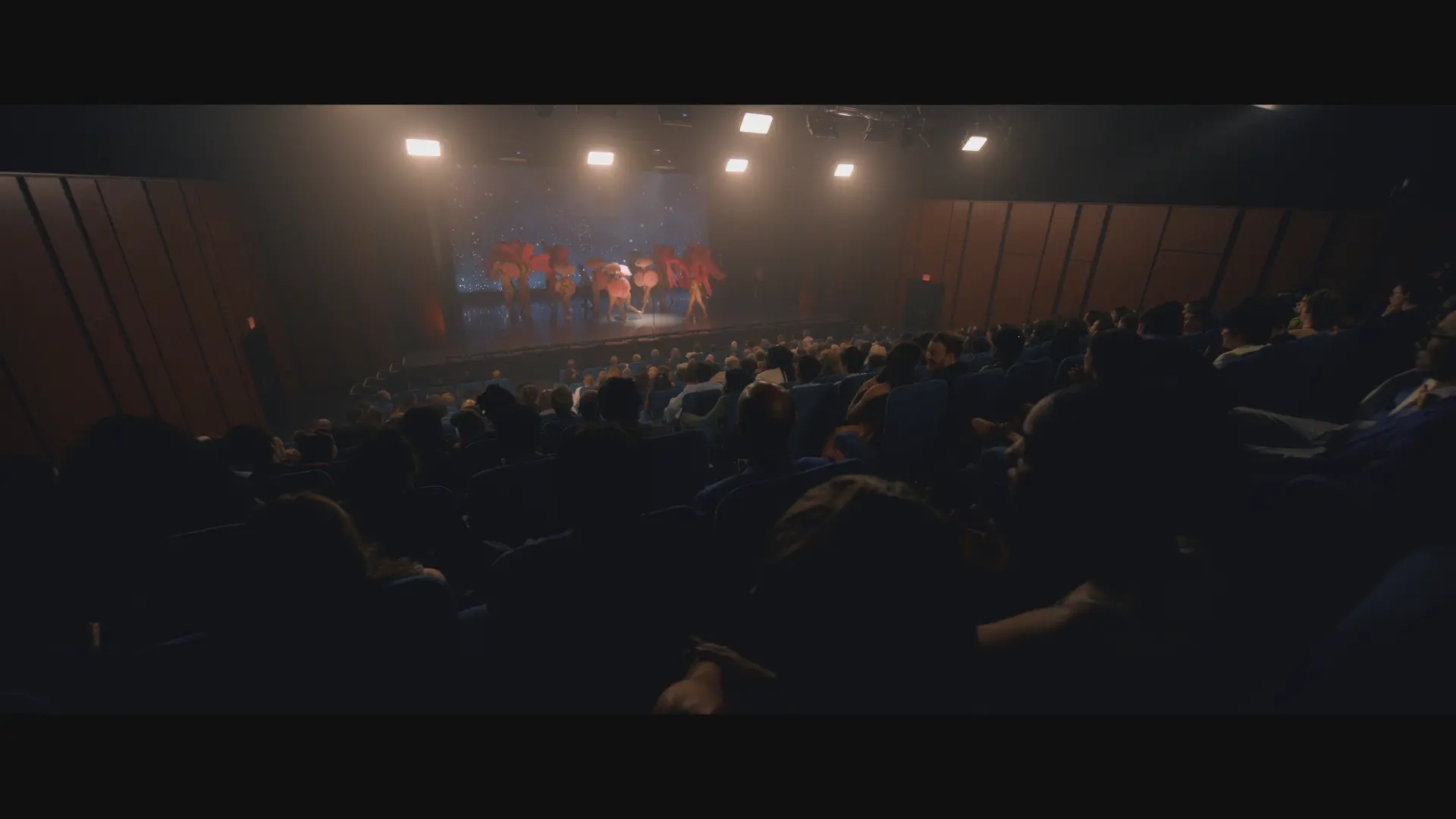
Taking note of the dancers, these women are half-naked with celebratory feathers like the members of Carnival or Mardi Gras. These festivals or parades hold strong cultural and religious significance evolving across time and place – it is a mixture of liberation, revelry, feasting, and ultimately, a time of excess preluding ascetic practice. Cabaret may have been intended as a jab at the bourgeois industry, but the aforementioned is much older and is typical around the end of the year or Saturnalia. A time of renewal, jubilation, resolution and sacrifice.
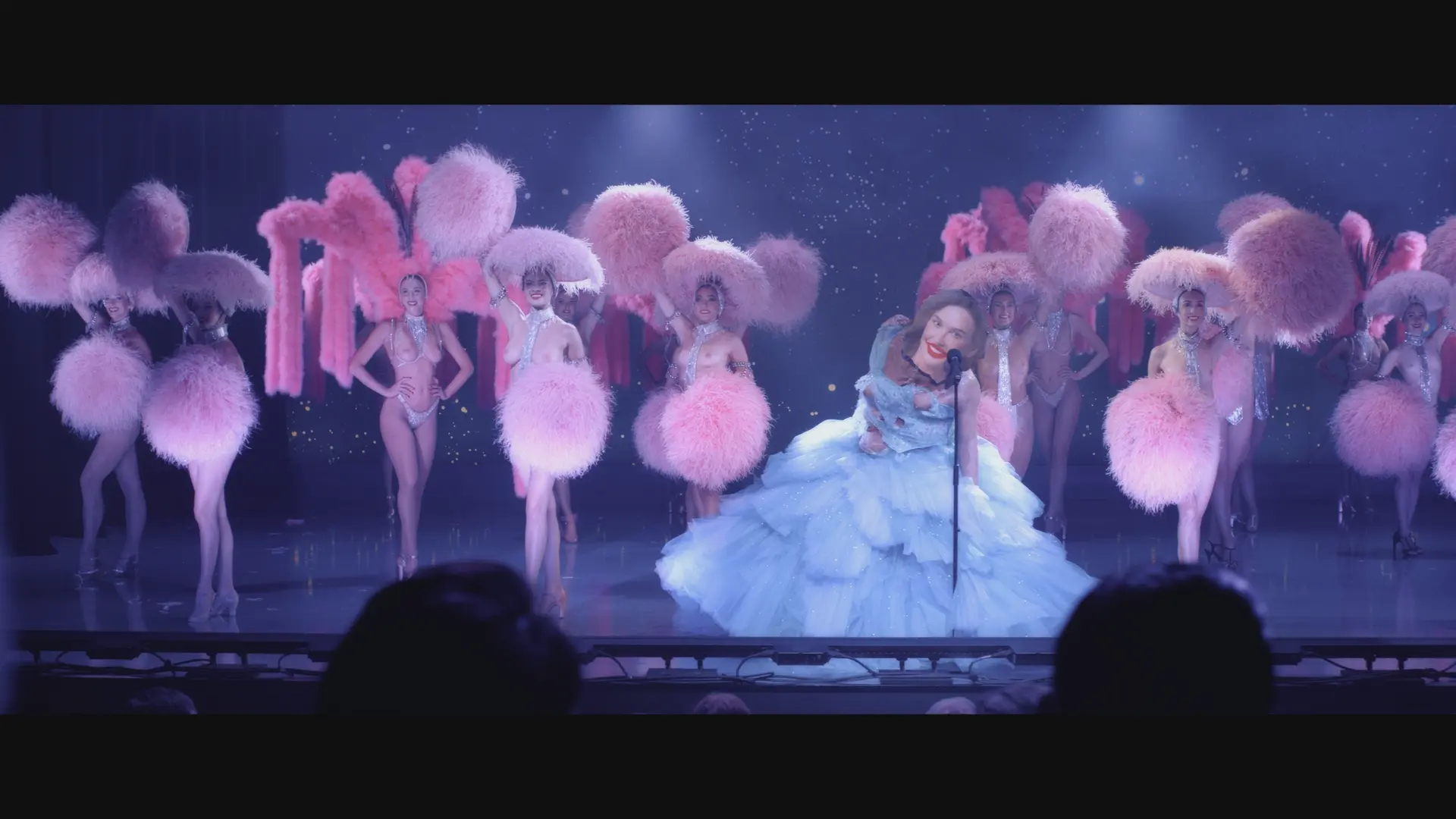
Furthermore, we can refer symbolically to nakedness as representative of the religious or the sacred; the dancers are like angelic messengers delivering the new Self, the Übermensch as Monstro ElisaSue, to the congregation (audience), or in other words, facilitating the becoming process of the new personality and for reasons as stated above, this is obviously too disturbing and intense, so pandemonium ensues.
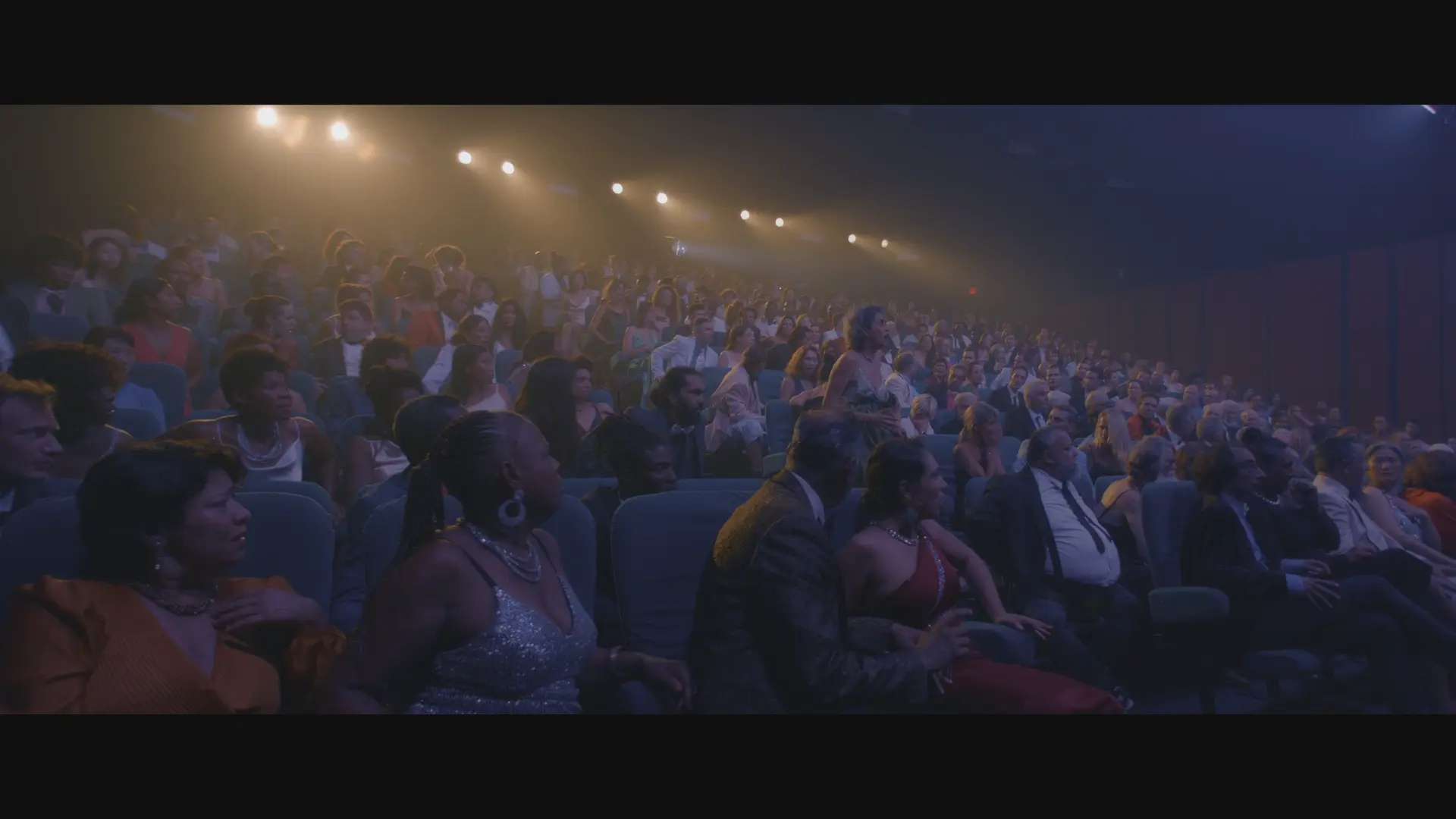
The Fountain of Blood
Monstro is attacked by the men, animus as collective, and takes on a larger-than-life presence (another indication of the Self) when her head is pulverised by one male, decapitated, but in its place another head emerges. I’ve spoken of this decapitation motif before; however, in this instance, it means something else entirely. Monstro has more to give from her body; it is not a mental game, it is coming from the core, which is represented in the oncoming onslaught.
The next quote describes the process that has happened to Sue, where she is now visibly connected with an awake Elisa. Of note also is Elisa’s position on the back of the head, like the Rebis figure encapsulating ideas of united wholeness or the Janus of endings and transition. Effectively indicating the dual nature of their union.
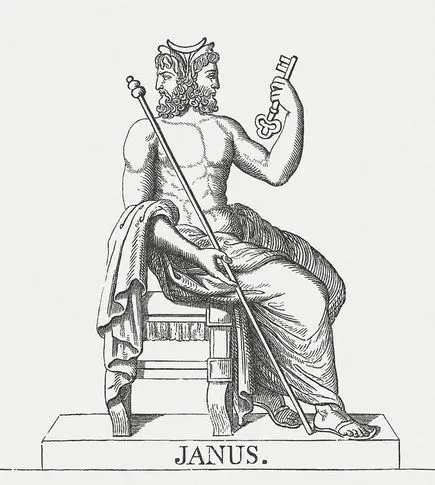
“The alchemist tries to get round this paradox or antinomy with his various procedures and formulae, and to make one out of two... His filius philosophorum, his lapis, his rebis, his homunculus, are all hermaphroditic. His gold is non vulgi, his lapis is spirit and body, and so is his tincture, which is a sanguis spiritualis—a spiritual blood.” (Practice of Psychotherapy, Carl Jung, para 398)
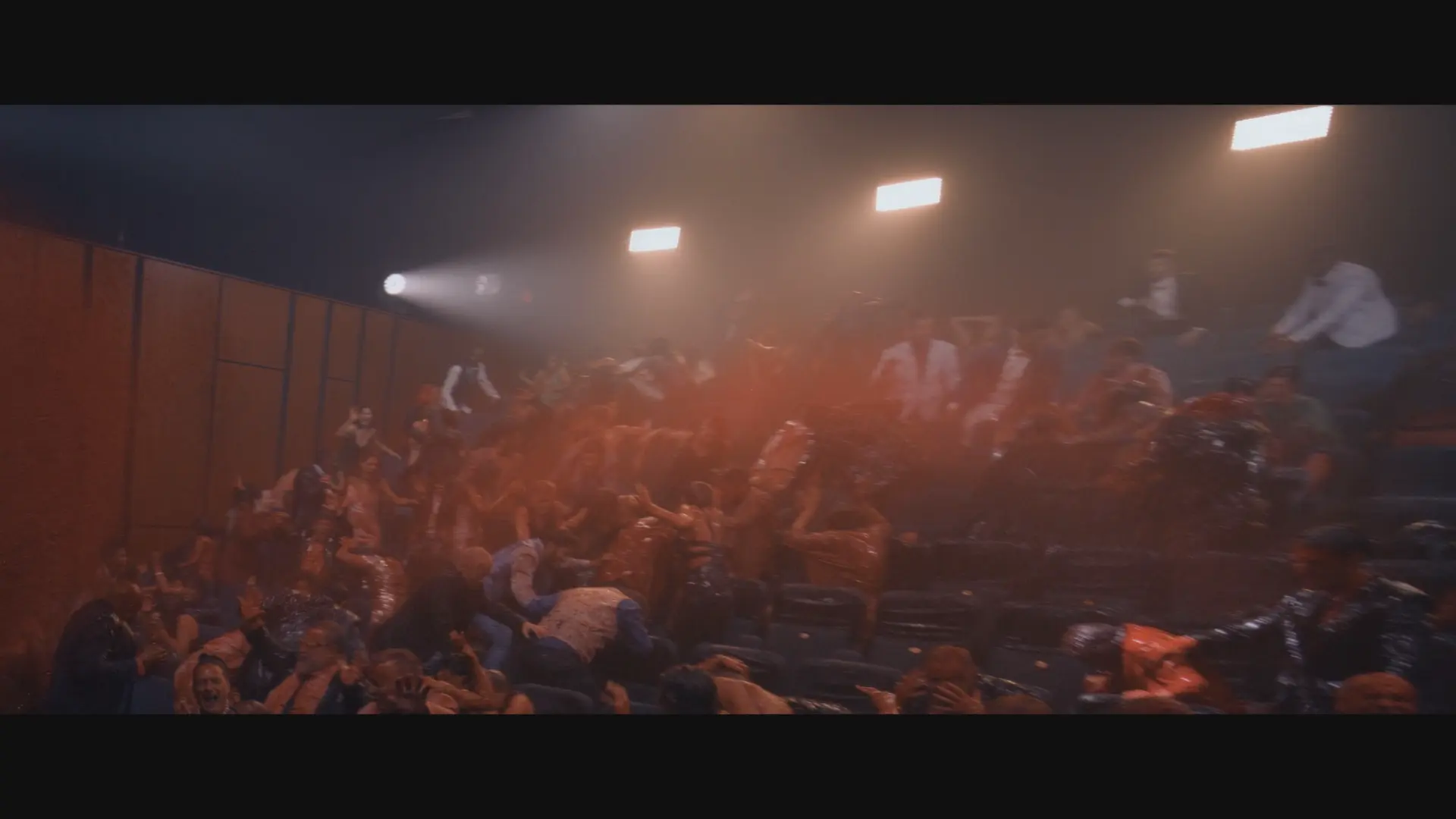
Following this idea of dual nature and then the wildness that takes place, this spiritual blood is transferred from her arm to the aggressor, and then just as quickly to the entire audience; through this makeshift phallic appendage, a great cleansing ritual, or defilement takes centre stage. In this transfer is vitality, consciousness and lifeblood to the unsuspecting masses, not too dissimilar to the “Switch” function, where blood is transferred ritualistically; however, here it is indiscriminate and chaotic, unanimously seen as poetic justice, but we can go beyond this.
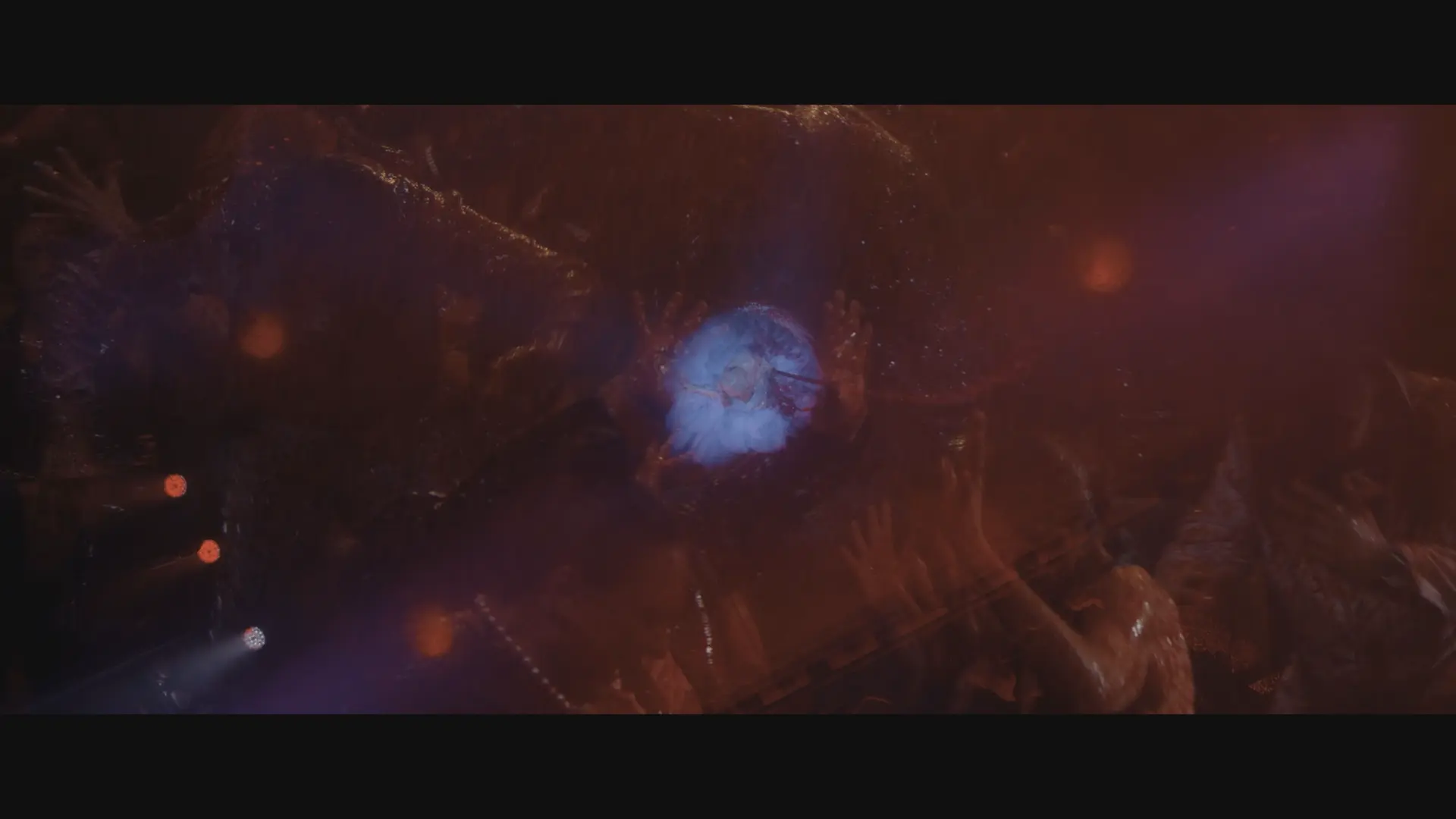
Monstro as personal symbol
There is minimal dialogue in this film, hence why it is significant to pay close attention to it, since these are clues. With that in mind, I'd like to talk about Monstro again, but as a personal symbol, and this blood-exchange specifically from a meta view: it can be seen as Coralie Fargeat’s own Self, or her own inner expression from the unconscious - of the astonishing monstrous within, her own Cthulhu, where she may stress a male has created Frankenstein.
Harvey: “She’s my most beautiful creation, I shaped her for success”. (referring to Sue before Monstro enters on stage)
Effectively, Fargeat has brought forth something new to the world of genre films, as per the request of the animus figure, Harvey, at the beginning of the film, “and people always ask for something new, renewal, it’s inevitable.”
The creative endeavour of procuring this film, at a moment in her life where she had felt persona non grata her self, implies a necessary push-back against the negative animus within –- although still within his standards. This was a sacred and intimate offering made public, as it came from the depths of her unconscious, to a perceived unreceptive class (ironically, reality says different, since this film is a success). It is really a baring of the soul, veiled by what is exclaimed consistently as the unbridled female rage against the patriarchy, especially in regards to this scene. I believe this blood is revelatory, and is personal, not a defilement as such. It shocks and confronts the senses because it’s like uncovering what should remain in the feminine mysteries.
Perfect innocence
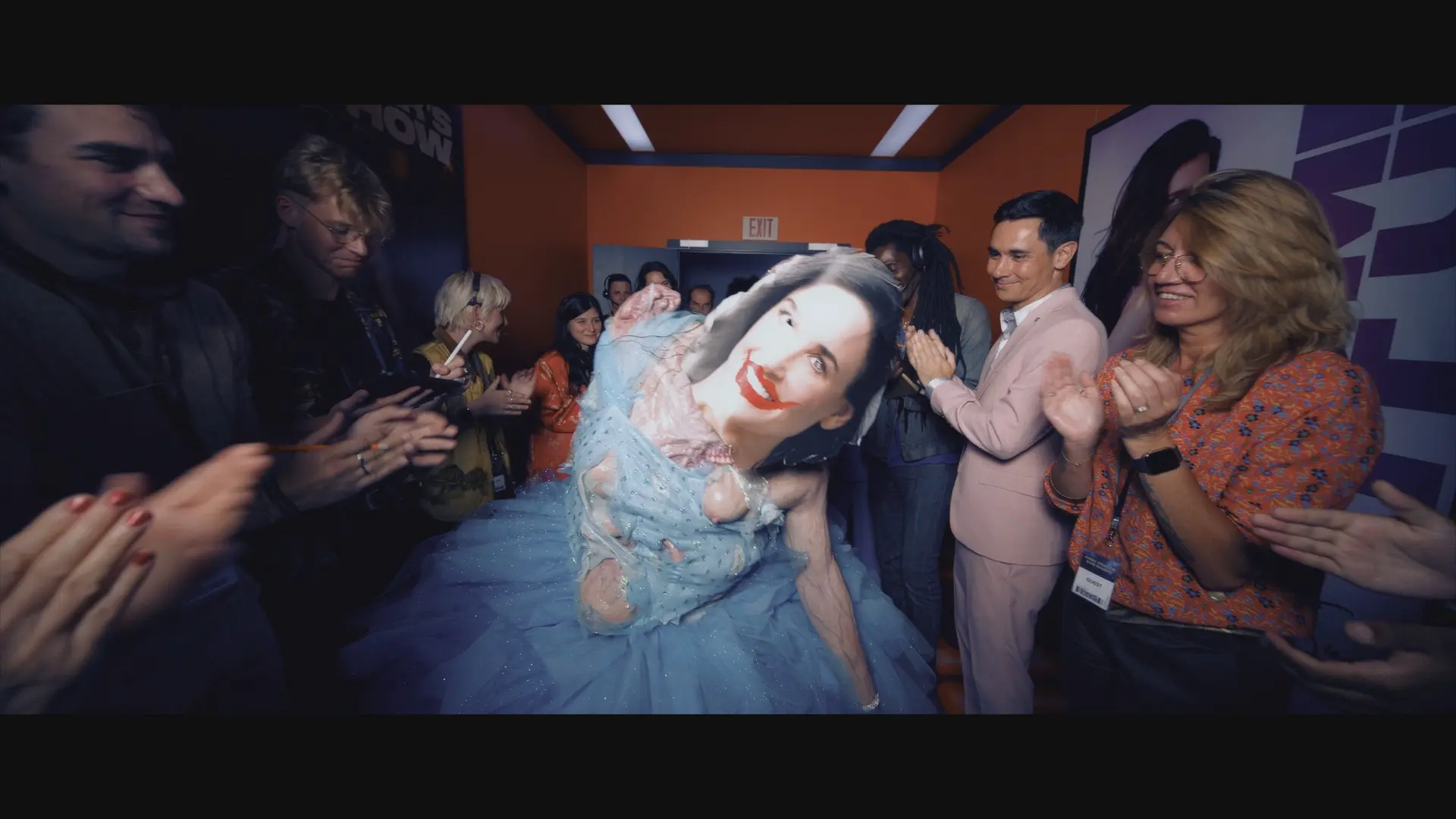
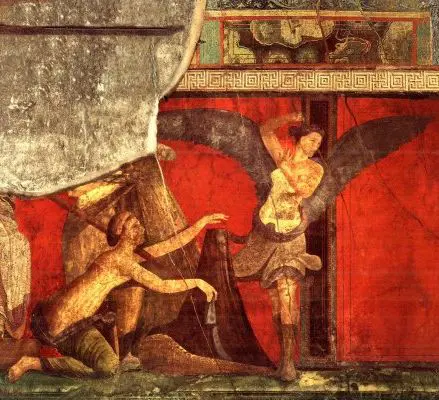
Time to address the child in the room: Youchnovski (costume designer) has also spoken specifically about the positive destruction of the Disney princess as being one of the driving points surrounding the design and colour of Sue’s ball gown.
EY: “... it was very important. It’s like a princess... and we destroyed this Disney princess ... we wanted it to be like Cinderella and light blue, but we want the blood to mark on the light blue, you know?” (Next Best Picture, Interview)
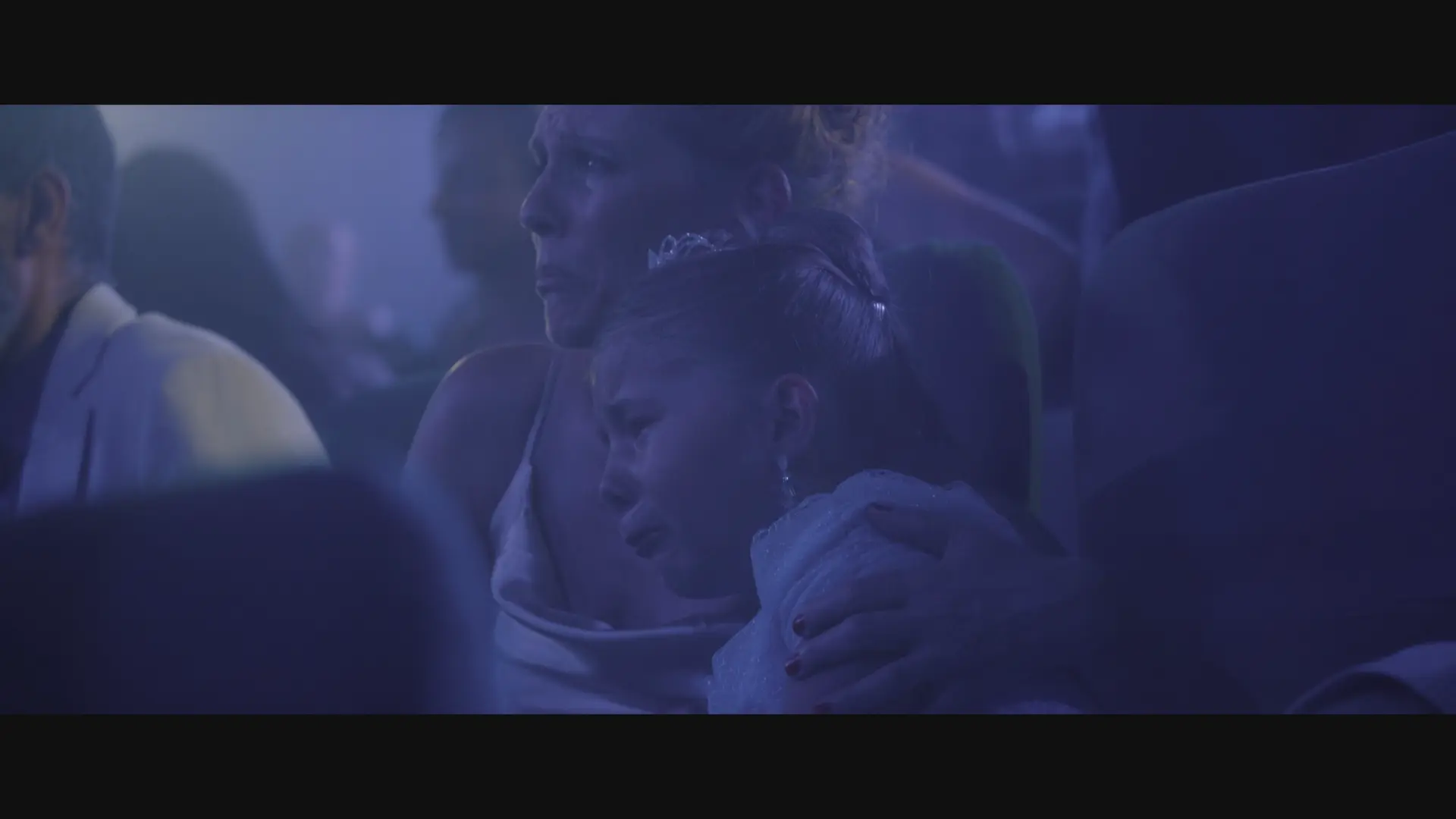
The child innocently idealises Sue, but she is also a psychological mirror. If Monstro is a representation of Fargeat’s inner world, the Self or creative anomaly, then the child not only represents the future of the personality, but depicts laterally the Self in becoming. While this should be a positive image, what is displayed here is a bundle of symbols coloured by personal context.
Since throughout the film, we have only been witness to placeholder depictions of the masculine desire (or anima woman) with the suppression of real femininity — seen as the angel, bad girl, and now the princess. These masks are what Liz and Sue have adhered to as their public persona. So the destruction that takes place, other than the material of the costume, is the perfectionist ideal epitomised with the princess specifically. Now, this could be seen as having a positive and momentous impact on a personal level — however, the end of the film is a tragedy and totals the personality as a result, since what is left is a static void.
If it wasn’t obvious enough, this striving for perfection or embodiment of archetypes has been a major theme throughout the film, perhaps worth underlining that this is ultimately unwise and self-erasing. Ergo, this goes beyond the princess or even the child; it represents the drive that barrels one forth towards self-destruction without conscious effort to recognise the problem of ego, since it aims at inhuman perfectionism; a realm that should be left for gods and fairy tales. Both Monstro and princess are counterpoles of the same corruptible inflation.
Following then from the fountain of blood, this feminine rage is at a cost of such disastrous ambition, and even a misfire of the target. One needs to reflect earnestly on personal responsibility in the allocation of these self-imposed societal ideals that overtake the personality to the detriment of the individual’s authenticity. Since the foundational destruction of this rampage creates an upheaval that is irredeemable.
Hey you, big star
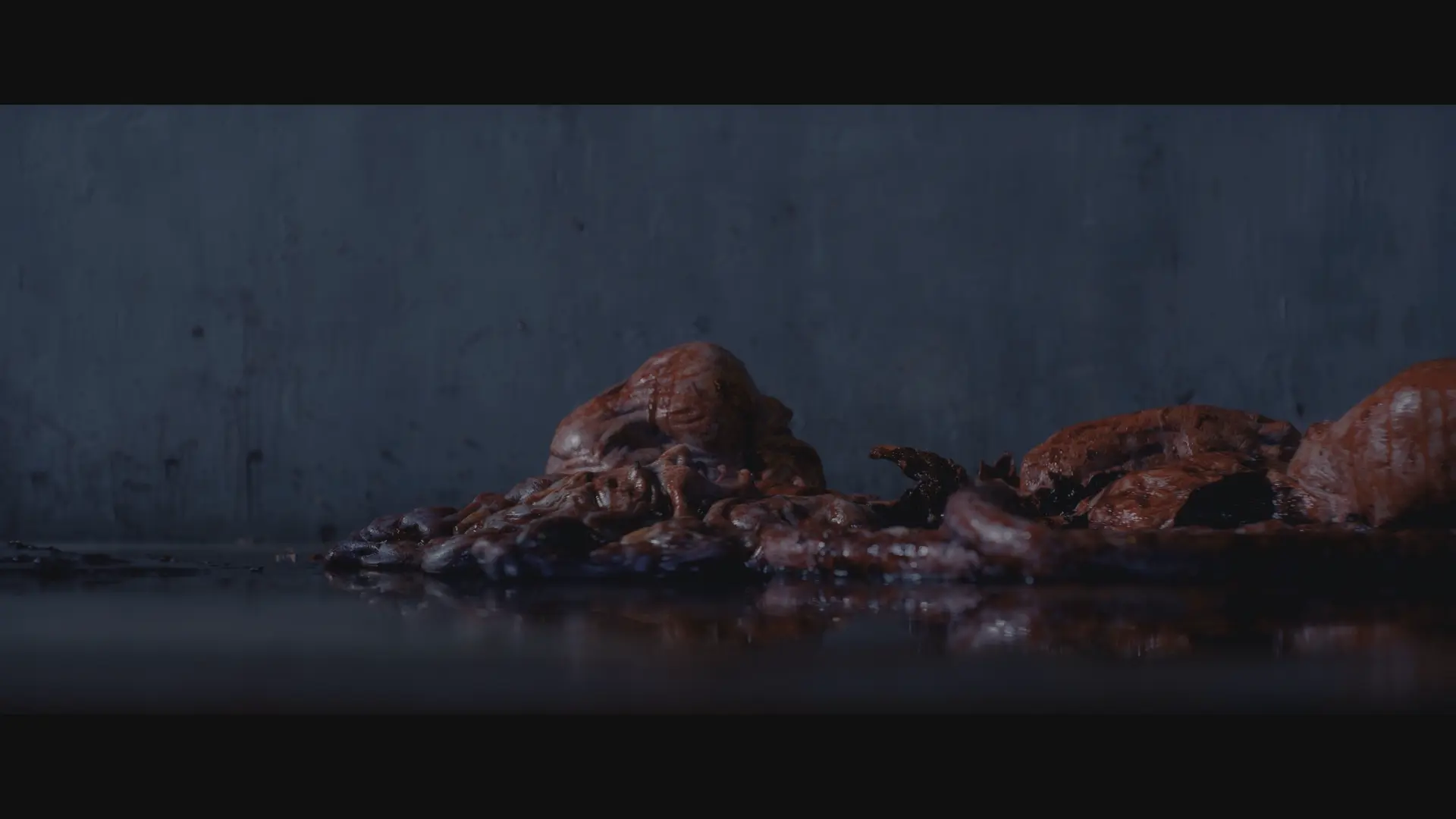
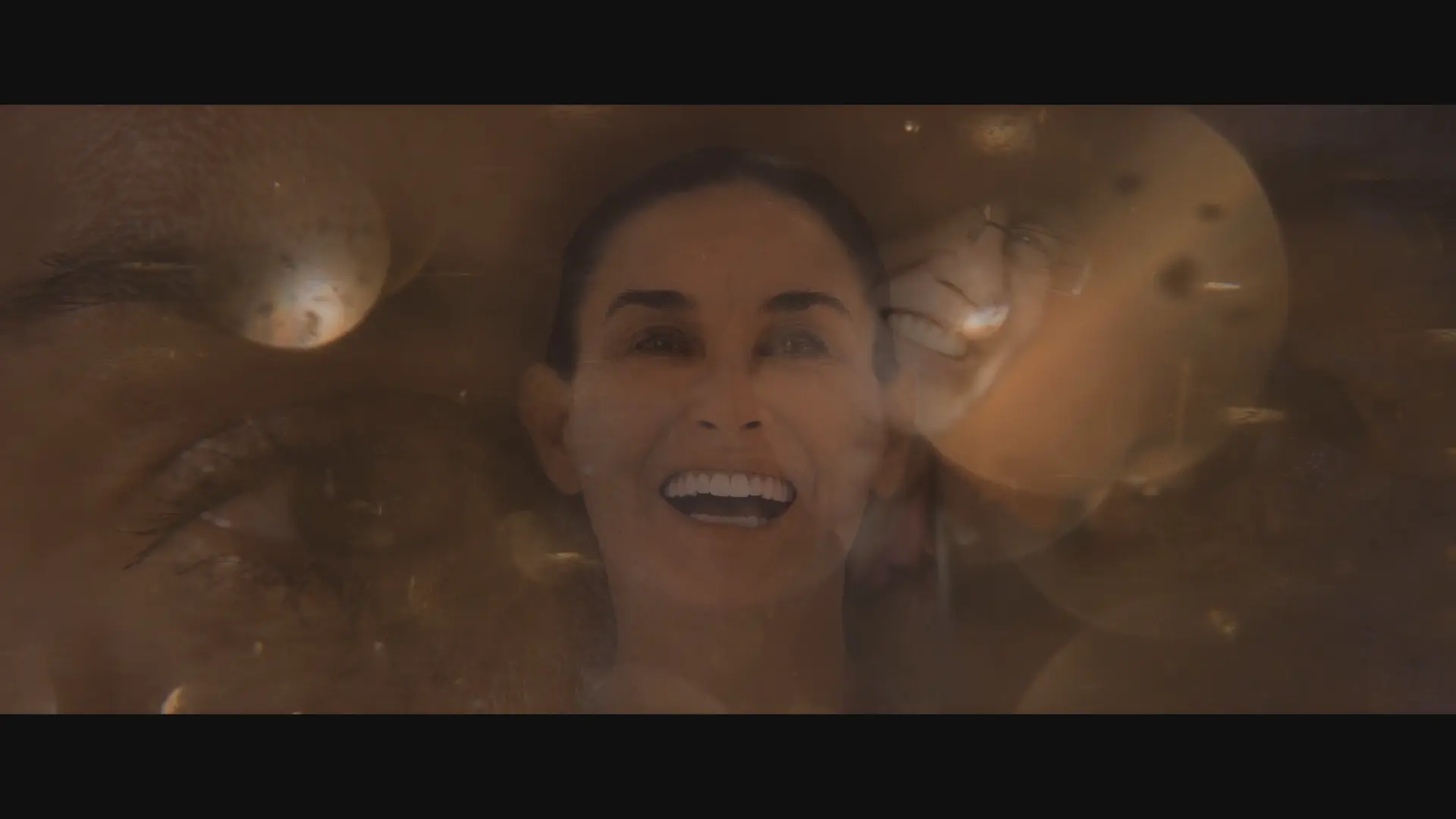
The ending is rather appropriate: MonstroElisaSue escapes to the street, her over-exerted body can no longer sustain itself and pops like a balloon, another link to her inflation and ungrounded state. She explodes on the pavement, reminiscent of the “Unzipped” nightmare, fully exposed and inside-out.
Elizabeth’s head differentiates out of the messy remains and finds its final resting place on her Hollywood Star. The brief moment of despair or anguish is pushed aside to relive the same imagined fantasy sequence while entering the hall as Monstro – but now just as Liz, she has returned to the unconscious state and remains unchanged by her experience.
“One of the problems is that if the puer enters life, then he must face the fact of his mortality and the corruptible world. He must accept the fact of his own death.”
(The Problem of the Puer Aeternus, Marie-Louise von Franz, pg. 160)
All that glitters is not gold
The settling into stone like the head of Medusa in Greek myth is its own horror; the Gorgon on Athena’s aegis can only be faced through a mirror, with the help of reflection. The mirror is a thematic device throughout the film, and now it is a poignant commentary on the necessity of re-evaluation of the perfectionist standard, that we impose on ourselves, an ideal that is ultimately inhuman, and destructive.
“Athena’s mirror, we should remember, is showing us an image of something we dare not look at directly; to grasp what we are dealing with, we need an image of it, we need to see it indirectly, which allows a more objective view.”
(The Eternal Drama: The Inner Meaning of Greek Mythology, Edward F. Edinger, pg. 85)
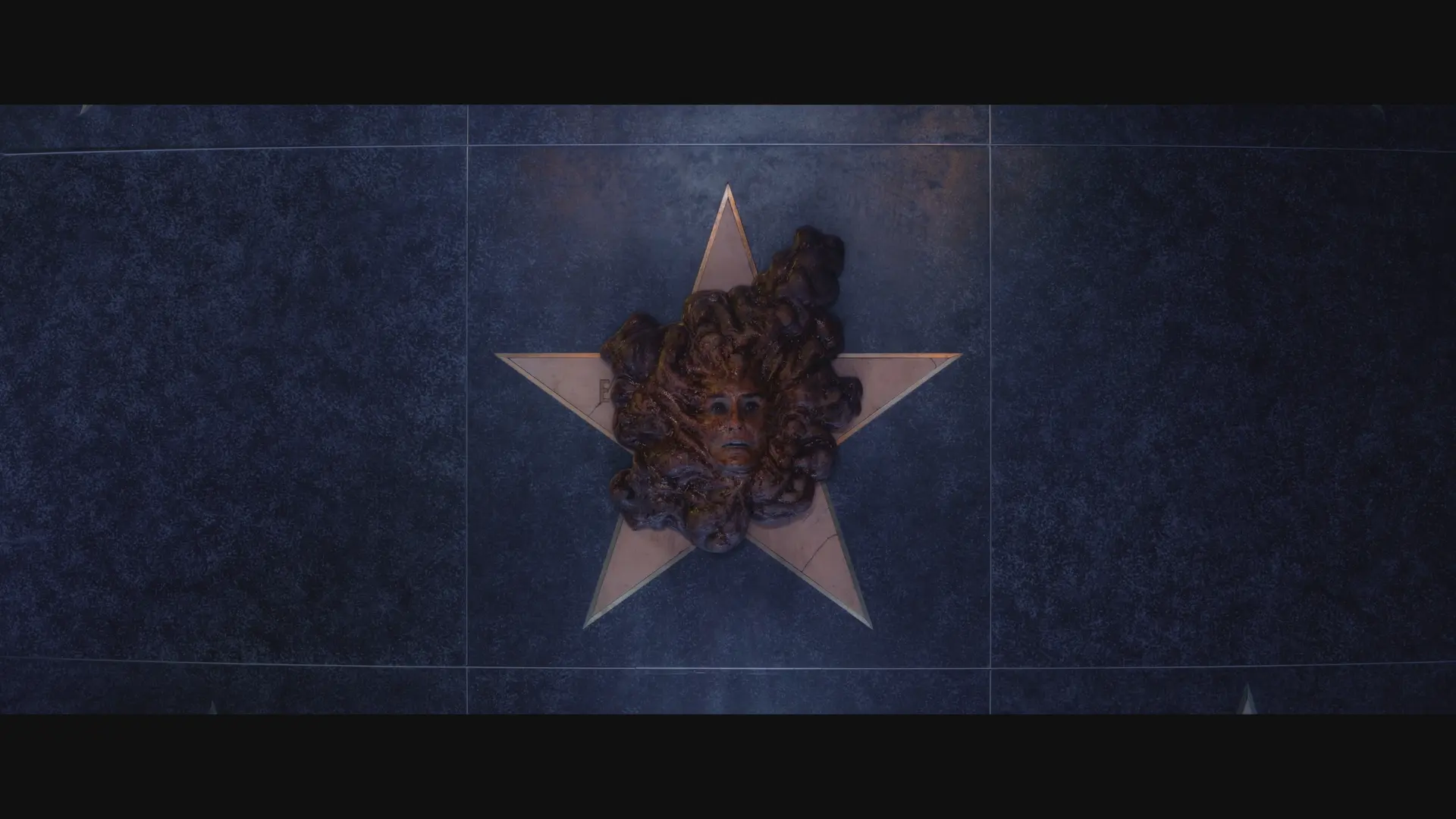
This movie signs off in this reflexive position, indicating its trial of both seen and unseen forces. And to the greater point - to the mesmerisation, shock and captivation of the viewer.
Finally, the star is representative of the Self, which is also symbolic of her return to the beginning, to the primordial cosmos of souls. This life was unsuccessful in the wider sense of consciousness and self-development; the transformation epic failed, and it is doomed to repeat again – especially without this conscious thoughtful reflection of the self and mediation between the world and the personal unconscious.
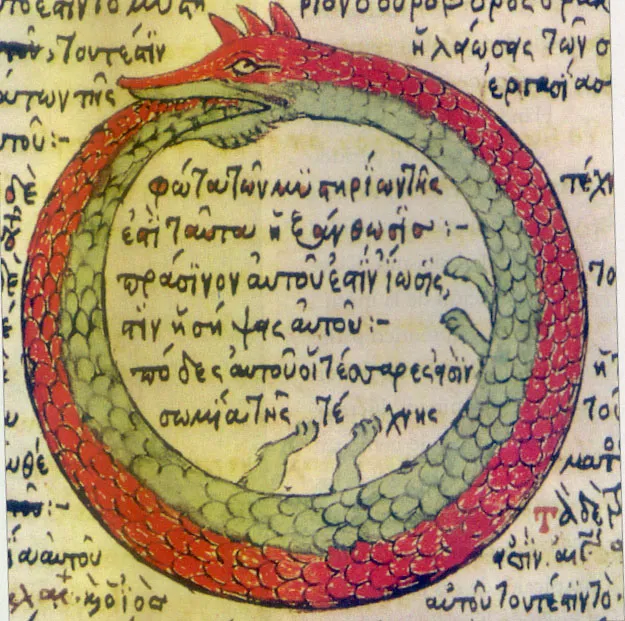
This is an ouroboric pattern, the snake that eats its own tail, unsatisfied and unchanged. It tragically ends as it begins, a closed loop set in stone.
That's a wrap
The film can be summarised by these pivotal arcs: the detrimental relationship between Elisabeth and her negative animus, dictating life behind the scenes. Then later, her hasty return to him as Sue, instead of transforming her identity towards the positive animus – where in an alternate path, she would not need The Substance. The two ego-Self states of Elisa and Sue, battling it out for supremacy, remain neglectful and unconscious of each other. To then the forced amalgamation of these states in Monstro ElisaSue, the abominable result from the totality of the unconscious (animus, Self, shadow aspects). This movie is by no means simple from this psychological vantage and the complexity of these stages indicates a longstanding, multi-layered viewing experience that will likely capture and divide audiences alike.
The Substance kit, at its most basic, was a tool towards transmuting the stasis within the individual, an attempt at making steps towards ego development given a lack of self-esteem. In the case of Elizabeth, this attempt at integration, revealed in Sue her Faustian power drive (“hungering for the infinite”). The same repressed drive exposed in Elisabeth when she could not face Fred in her imperfection, and later as she dealt with consumption, eventually all culminating towards a neurosis. Since the encounter and identification of the Self, as Sue, in her power and beauty, turned to be a quickly destructive allure: towards inflation then grandiosity. All in all, a difficult task and not one that Elisabeth was ready to engage in. The relationship between the ego and the Self needed to be maintained for harmony, as a symbiosis - a psychological truism and also a tenet for the chemical drug itself.
Ultimately, her unwillingness to face suffering, accept reality and give way to the unknown at the pivotal crossroad point with Fred became her downfall. Since Liz and Sue maintain the provisional life and the celebrity persona, the glamour and high rise to fame inflate the personality without ever having to contend with one's true self. Ergo, tragically, in death, she remains as the archetype of the puella aeterna; the renewal of the personality having failed.
The film denotes a cycle - from star to stardust. This is an ouroboric motif and equivalent to being trapped in a repeating unconscious cycle, largely in part to the absence of allocating conscious effort to self reflect and gaze into the darkness behind the mirror.
“The raw honesty of an image from the unconscious can strike us dumb with tears or laughter, often with both, because the image moves on that fine edge of the absurd between tragedy and comedy. If the ego can assimilate the point of view presented by the unconscious and see itself objectively, then it can find a new standpoint. It can observe itself suffering, but at the same time experience the suffering as pangs of birth. The ego that is relating to the soul (rightbrain thinking, if you like) is motivated to reflect the dream images in painting, dancing, singing, sculpting, writing, thus allowing the healing process to transform what would otherwise be dead images into life energy.
Transformation takes place through metaphor. Without metaphor, energy is locked in repetitive patterns; Medusa traps energy in stone. In the creative matrix, the symbol flows between spirit and matter, healing the split.”
(The Ravaged Bridegroom: Masculinity in Women, Marion Woodman, pg. 28)
This film for Coralie Fargeat, feels like just that (and also confirmed in numerous interviews), blocked energy that has been given a chance to flow into something deep for her personally, and also for the collective as a byproduct. However, my hope is that it is not only seen as an allegorical tale of feminine mayhem against the patriarchy, since this does not do it justice. Hopefully in some way it will be healing for some, if the right level of approach is afforded in contemplation of these personal themes, since we should recognise our own responsibility in self-inflicted wounds and our role in the task of individuation.
P.S.
Understanding the Self and all it encompasses, since it is really a container to understand the many aspects that are within us, provides the necessary groundwork for the waves, shifts and manifestations of the unconscious that will hit us during this tumultuous Aquarian age.
“It's important for us to be in touch with our dreams, because most of us have no models. We don't know what the new feminine is going to be, no idea what the new masculine is. We have to depend on our own imagery to guide us.”
(Conscious Femininty, Marion Woodman, pg. 136)
If you enjoyed this article or have found it useful, consider sharing, commenting or even donating. Many thanks!