Ever scroll through Insta and feel that pang of “OMG, I NEED that bag/those shoes/that whole damn lifestyle”? Yeah, us too. One minute you’re vibing on your feed, and the next, someone else’s glamorous haul makes your perfectly good life feel… basic. It’s the endless scroll of consumerism, and it’s like running on a hamster wheel you never signed up for.
But what if we told you there’s a secret level unlocked? What if the real glow-up isn’t about snagging the latest drop, but about dropping some sick beats, painting a fire piece, or crafting something uniquely you?
We’re not here to diss retail therapy entirely—sometimes you just gotta treat yourself—but let’s be real: that fleeting high from a new haul is like a burst of dopamine that fades within about one to two weeks1. Meanwhile, building something from scratch invests in yourself for life.
Level 1: Clay Economics 101 – Creation is the OG Budget Hack
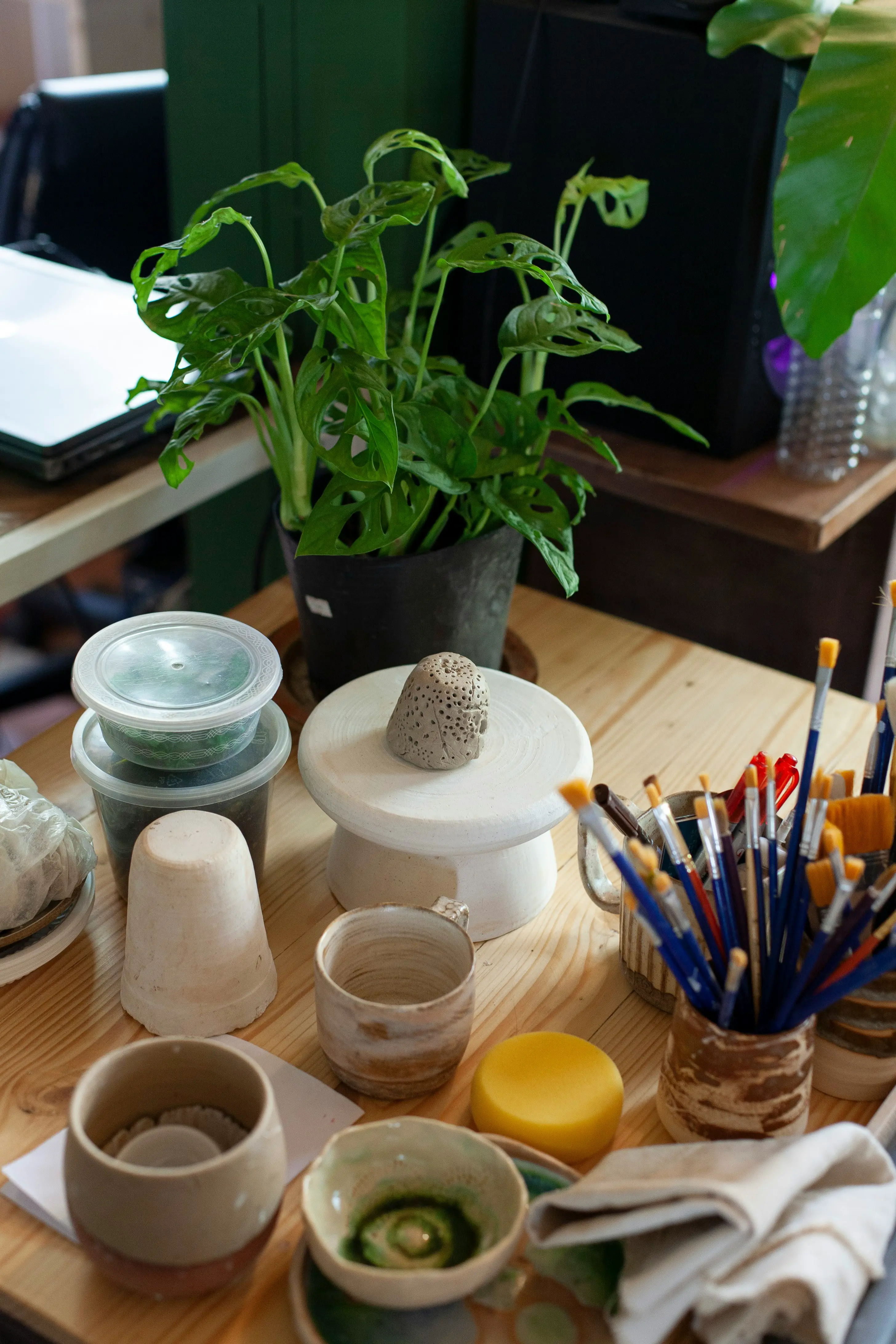
Think about it: a decent art set—paints, canvas, and all that jazz—might cost you around $80 and keep you busy for months. Now, compare that to a boujee designer bag that can set you back thousands. Research on hedonic adaptation shows that the thrill of material acquisition tends to wane rather quickly1.
And here’s another flex: Some tech-savvy folks snag used 3D printers for a few hundred bucks. Six months later, they’re printing everything from phone stands to custom chess sets—the cost per item is pennies, and the creative satisfaction? Infinite.
Sure, a Steinway grand piano might cost more than a used Honda, but for us regular folks, getting creative is way more wallet-friendly than chasing trends. A used keyboard for $50 gets you jamming to your favorite tunes; a calligraphy set for under $10 has you channeling ancient vibes.
Creation is like investing in yourself—with compound interest. Consumerism? It’s more like a savings account with zero returns. Buying a bag gives you a quick dopamine spike that fades fast, but learning a skill? That reward lasts a lifetime23.
Level 2: Dopamine Decoded – Chill Vibes vs. Cha-Ching Chaos
Imagine an experiment where one group works on puzzles while another indulges in online shopping, and their brain activities are recorded. Research into consumer decisions has shown that while shopping activates reward centers like the nucleus accumbens—with a burst of dopamine that’s later countered by anxiety signals from the anterior cingulate cortex4—creative activities tend to produce steadier activation in regions like the prefrontal cortex and hippocampus, fostering a calm, sustained mood5.
In short, creating is like sipping a calming tea that keeps your brain nourished, whereas shopping is like chugging an energy drink that leaves you crashing.
And get this: when you’re in the flow of creating, your brain not only rewards you with dopamine but also releases endorphins—those natural painkillers that boost your immune system and overall mood. Art therapy, for example, has been linked to improvements in pain management and stress relief6.
Level 3: From “Mine!” to “I Am!” – The Existential Dropkick to Consumerism
Remember that story about a rich lady who used to splurge on art until she took a painting class and never bought another piece? That’s the shift—from owning beauty to creating it.
It echoes Erich Fromm’s idea that modern life traps us in “having mode,” where we equate happiness with ownership, rather than “being mode,” where true joy comes from self-expression and creative engagement7.
Even that TikTok grandpa turning soda cans into mini-palaces reminds us: when you’re the creator, you level up beyond the superficial world of consumerism.
Level 4: The Anti-Addiction Hack – Creation Mode Activated
Remember Minecraft? Your little cousin is building castles and muttering about redstone. That’s because creating is the ultimate anti-doomscrolling hack. When your brain’s busy plotting a novel, composing chords, or tinkering with a 3D design, who has time for endless TikTok feeds and “swipe up to buy” nonsense?
And the best part? The joy from creation doesn’t wear off. That wonky clay mug you made yesterday still brings a smile today. That short story you wrote last month might inspire a whole novel tomorrow. Creativity offers a sustainable happiness that outlasts the brief rush of consumer purchases3.
Level Complete: Go Forth and Create (Instead of Consume)
Next time the consumerism monster whispers sweet nothings in your ear, try this:
- Open your shopping cart, then open a “creation inspo” note.
- Allocate just 10% of your shopping budget for art supplies, sheet music, or coding tutorials.
- Make something epic and tag the brand: “Used your stuff to make this.”
Trust us—when brands beg to repost your art as free promo, that’s a dopamine hit way better than any discount code.
At the end of the day, nobody remembers your shopping history, but they do remember what you create. Those ancient cave artists? They left epic cave paintings, not credit card bills. Shakespeare? He might not have rocked a Gucci belt, but he dropped Hamlet—and that’s forever.
Grok Takeaways (Gen Z Edition)
TL;DR:
- Science shows that creativity can counteract the urge to buy everything because it offers long-lasting internal satisfaction rather than a fleeting dopamine spike that fades within 1–2 weeks1.
- Art supplies can be far cheaper than luxury items, and creative investments yield enduring returns.
- Engaging in creative activities improves mental health—studies in art therapy support its benefits for stress and pain management6.
Deep Dive Report
This whole idea of “creation > consumption” is supported by research in hedonic adaptation and neural reward processing. Studies indicate that the brief euphoria from buying something new quickly dissipates1, while creative pursuits foster lasting positive brain states53.
Consumer neuroscience research using fMRI has shown that shopping activates the nucleus accumbens with a rapid dopamine release, but creative activities engage the prefrontal cortex and hippocampus more steadily, enhancing well-being over time45.
And as Fromm famously argued, true happiness lies not in possessing things but in the act of being and creating7. Even popular cultural critiques echo the sentiment that consumerism stifles our innate creativity82.
References
-
Van Boven, L. & Gilovich, T. (2003). To do or to have? That is the question. Journal of Personality and Social Psychology, 85(6), 1193–1202. Link ↩︎ ↩︎ ↩︎ ↩︎
-
Baudrillard, J. (1998). The Consumer Society: Myths and Structures. Sage. More info ↩︎ ↩︎
-
Bolwerk, A., Mack-Andrick, J., Lang, F. R., Dörfler, A., & Maihöfner, C. (2014). How art changes your brain: Differential effects of visual art production and cognitive art evaluation on functional brain connectivity. PLoS ONE, 9(7), e101035. Link ↩︎ ↩︎ ↩︎
-
Knutson, B., Rick, S., Wimmer, G. E., Prelec, D., & Loewenstein, G. (2007). Neural predictors of purchases. Neuron, 53(1), 147–156. Link ↩︎ ↩︎
-
Ellamil, M., Dobson, C., Beeman, M., & Christoff, K. (2012). Evaluative and generative modes of thought during the creative process. NeuroImage, 59(2), 1783–1794. Link ↩︎ ↩︎ ↩︎
-
Stuckey, H. L. & Nobel, J. (2010). The connection between art, healing, and public health: A review of current literature. American Journal of Public Health, 100(2), 254–263. Link ↩︎ ↩︎
-
Fromm, E. (1976). To Have or to Be? Harper & Row. More info ↩︎ ↩︎
-
Schor, J. B. (1998). The Overspent American: Why We Want What We Don't Need. Harper Perennial. More info ↩︎