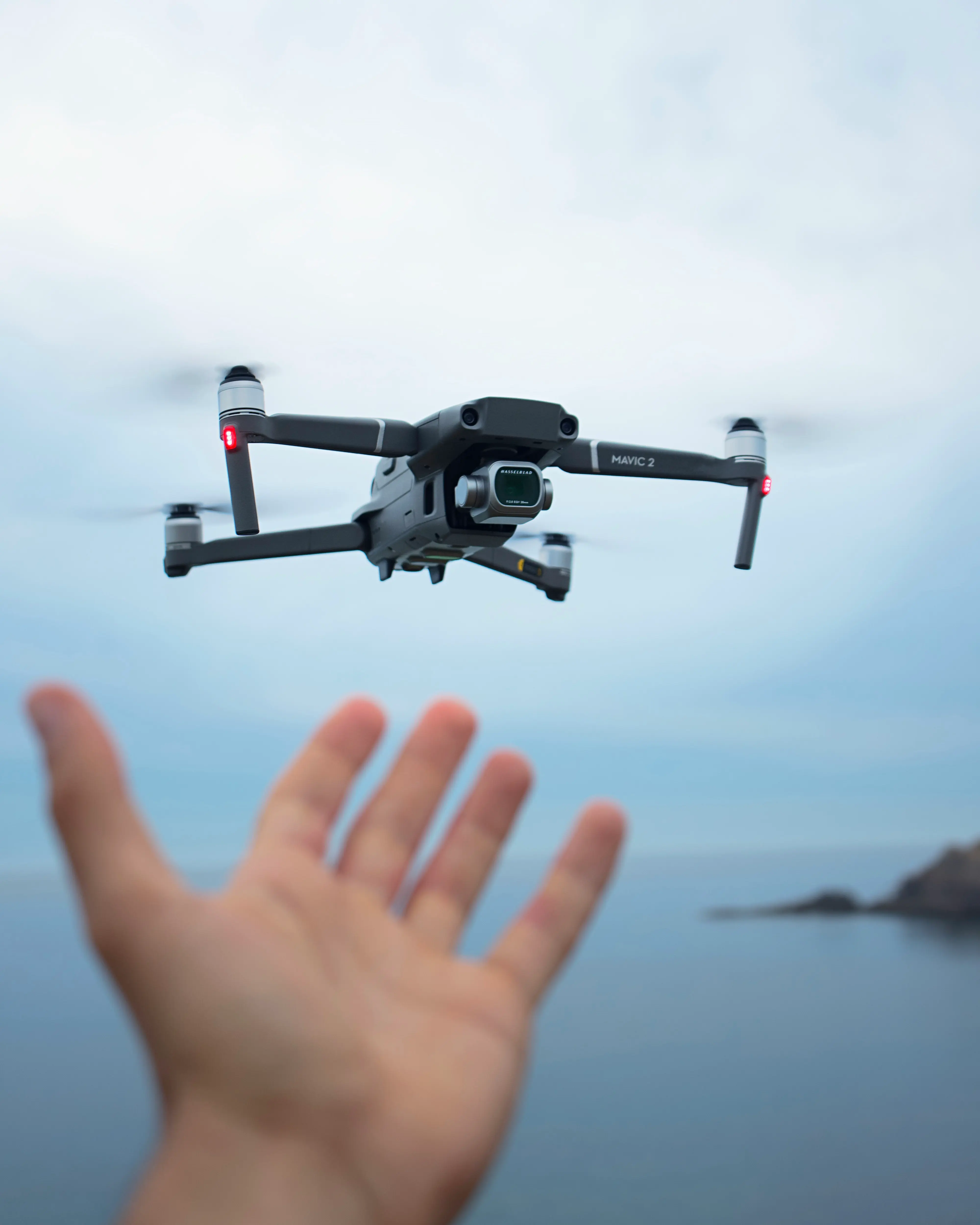
DJI (Dà-Jiāng Innovations) is a Chinese technology company that has grown from a dorm-room startup in 2006 to the undisputed leader of the consumer drone industry. DJI’s camera-equipped quadcopters revolutionized aerial photography, capturing over 70% of the global consumer drone market by the late 2010s (From Startup to Empire: The Evolution of DJI Drones - DRONELIFE) and over 90% by mid-2024 (DJI - Wikipedia). This detailed history explores how DJI achieved market dominance through technological innovation, savvy business strategy, and aggressive competition, while also facing regulatory and legal challenges. Key milestones, product innovations, and strategic moves are highlighted, with references to some of the best sources (articles, interviews, and more) that chronicle DJI’s remarkable rise.
Founding and Early Years (2006–2012)
DJI was founded in 2006 by Frank Wang (Wang Tao), who was born in Hangzhou and studied at Hong Kong University of Science and Technology. Wang’s fascination with remote-controlled aircraft led him to build prototype flight controllers in his college dorm room (DJI - Wikipedia). In these early years, DJI sold flight control components to universities and electric utility companies, using the revenue to relocate to Shenzhen’s tech manufacturing hub and hire a small team (DJI - Wikipedia). Progress was gradual – the young company struggled with high staff turnover, partially due to Wang’s perfectionist and abrasive leadership style (DJI - Wikipedia). A pivotal early achievement came in 2009, when a team using DJI’s components successfully flew a drone around the peak of Mt. Everest (DJI - Wikipedia), showcasing the potential of Wang’s technology.
By 2011, DJI began targeting the growing hobbyist drone market outside China. Frank Wang partnered with American entrepreneur Colin Guinn to establish DJI North America, aiming to bring ready-to-fly drones to mass consumers (DJI - Wikipedia). This set the stage for DJI’s first breakthrough product line – a move from being a component supplier to selling complete consumer drones.
Breakthrough with the Phantom Series (2013–2015)
DJI’s watershed moment was the launch of the Phantom series of drones. In early 2013, DJI released the Phantom 1, an affordable, ready-to-fly quadcopter that was far more user-friendly than earlier hobbyist drones (DJI - Wikipedia). The original Phantom’s intuitive design and built-in GPS stabilization made flying dramatically easier for beginners, helping kick off a wave of enthusiasm for consumer drones (Phantom Drone | V&A Explore The Collections) (From Startup to Empire: The Evolution of DJI Drones - DRONELIFE). Priced around $600, it came with its own handheld controller and could carry a GoPro camera for aerial filming (Phantom Drone | V&A Explore The Collections). This model’s success “opened up drone aviation to a mass audience,” as noted by the V&A Museum’s design collection (Phantom Drone | V&A Explore The Collections).
(Phantom Drone | V&A Explore The Collections) DJI’s Phantom 1 (2013) – the iconic white quadcopter – was the company’s first ready-to-fly consumer drone. Its easy controls and GPS-assisted hovering helped introduce drones to a broad market (Phantom Drone | V&A Explore The Collections). Initially, the Phantom 1 relied on an add-on GoPro camera and had only about 10 minutes of flight time, but it set a new standard for accessibility in aerial photography. (Phantom Drone | V&A Explore The Collections)
Building on that success, DJI iterated quickly. The Phantom 2 (2013–2014) improved flight endurance and added an option for DJI’s new Lightbridge video downlink, enabling pilots to see live aerial footage in HD at up to 1 km away (From Startup to Empire: The Evolution of DJI Drones - DRONELIFE). The Phantom 2 Vision+ in 2014 came with an integrated camera on a 3-axis gimbal, the first consumer drone to offer fully stabilized video out-of-the-box (From Startup to Empire: The Evolution of DJI Drones - DRONELIFE) (From Startup to Empire: The Evolution of DJI Drones - DRONELIFE). This meant users no longer had to jury-rig their own camera setups; smooth aerial footage was possible for anyone. By mid-2014, DJI’s revenues had swelled (from $500 million in 2014 to an expected $1 billion in 2015 (Bow To Your Billionaire Drone Overlord: Frank Wang’s Quest To Put DJI Robots Into The Sky – sUAS News) (DJI Frank Wang Interview With WSJ And DJI Company Information - DroneZon)), indicating how rapidly the Phantom was catching on.
The Phantom 3 (2015) was another leap – it featured a built-in 1080p/4K camera with live HD streaming to a mobile app, and new Vision Positioning sensors for indoor flight stability (From Startup to Empire: The Evolution of DJI Drones - DRONELIFE) (From Startup to Empire: The Evolution of DJI Drones - DRONELIFE). These improvements made the Phantom 3 immensely popular (DJI - Wikipedia). In fact, 2015’s Phantom 3 “catapulted the company to mainstream success”, making DJI the world’s largest consumer drone company and driving many competitors out of the market (DJI - Wikipedia). DJI’s fast-paced innovation was evident: each Phantom generation added important features like better GPS (even dual GPS+GLONASS), longer range, and the introduction of the DJI Go mobile app for easy flight control (From Startup to Empire: The Evolution of DJI Drones - DRONELIFE).
The Phantom 4 (2016) continued this trend with a redesigned gimbal, dual redundant IMUs/compasses for safety, and the first integrated obstacle avoidance system on a consumer drone (From Startup to Empire: The Evolution of DJI Drones - DRONELIFE) (From Startup to Empire: The Evolution of DJI Drones - DRONELIFE). With features like tap-to-fly and active object tracking enabled by onboard sensors, the Phantom 4 showed DJI’s commitment to pushing the boundaries of autonomous flight. Throughout the Phantom series, DJI’s strategy was clear: rapidly improve reliability, camera quality, and ease-of-use to stay “two steps ahead” of any competition (From Startup to Empire: The Evolution of DJI Drones - DRONELIFE).
Not everything was smooth during this explosive growth. DJI’s partnership with Colin Guinn in the U.S. fell apart in 2013 as the Phantom took off – a power struggle led DJI to shut down its Austin-based North American subsidiary and eventually settle a lawsuit with Guinn out of court (DJI - Wikipedia). Despite such hiccups, by 2015 DJI had raised major venture funding (pegging its valuation around $8–10 billion) (Bow To Your Billionaire Drone Overlord: Frank Wang’s Quest To Put DJI Robots Into The Sky – sUAS News) (The World's First Drone Billionaire: DJI Founder Frank Wang - DRONELIFE), and Frank Wang was becoming known as the world’s first “drone billionaire” (Bow To Your Billionaire Drone Overlord: Frank Wang’s Quest To Put DJI Robots Into The Sky – sUAS News). In a 2015 Forbes profile, Wang – then just 34 – noted that DJI’s success stemmed from relentless product development: sales had tripled or quadrupled annually from 2009 to 2014 and the company was on track for $1 billion in revenue in 2015 (Bow To Your Billionaire Drone Overlord: Frank Wang’s Quest To Put DJI Robots Into The Sky – sUAS News).
Technological Advancements and Innovations
A core driver of DJI’s rise has been its technological innovation in drone hardware and software. From the beginning, DJI invested heavily in R&D – by 2016, over 1,500 of its 4,000 employees were engineers (DJI is the world's biggest drone-maker, but it has bigger plans | WIRED) (DJI is the world's biggest drone-maker, but it has bigger plans | WIRED) – to solve the key challenges that made early drones difficult to use. Some of DJI’s pivotal innovations include:
-
Autopilot and GPS Stabilization: DJI’s early flight controllers (e.g. Naza and WooKong) introduced robust autopilot functions. The Phantom 1’s built-in GPS module was revolutionary for a toy-like drone, allowing it to hold position and hover automatically (From Startup to Empire: The Evolution of DJI Drones - DRONELIFE). This dramatically lowered the skill barrier for new pilots and improved safety. DJI also added self-diagnosing software in its app, so users no longer had to interpret blinking LED error codes on the drone (From Startup to Empire: The Evolution of DJI Drones - DRONELIFE).
-
First-Person View (FPV) and Lightbridge: To enable pilots to see what the drone’s camera sees in real time, DJI developed Lightbridge – a digital video transmission system. Before this, long-range FPV was rare. Lightbridge (first an add-on, later built-in by Phantom 3) allowed live HD video streaming to a smartphone or tablet at distances of hundreds of meters (From Startup to Empire: The Evolution of DJI Drones - DRONELIFE) (From Startup to Empire: The Evolution of DJI Drones - DRONELIFE). This was a game-changer for aerial photography, effectively putting a live camera in the sky.
-
3-Axis Gimbals: DJI leveraged its expertise in stabilization to create small, powerful gimbals (the Zenmuse series) that keep cameras steady in flight. The Phantom 2 Vision+ in 2014 was the first consumer drone with an integrated 3-axis stabilized camera, eliminating shaky footage (From Startup to Empire: The Evolution of DJI Drones - DRONELIFE). DJI extended this know-how beyond drones with handheld stabilizers (the Ronin and Osmo series), turning the company into a broader imaging solution provider (A Brief History of DJI – CANVAS, SWOT, PESTEL & BCG Matrix Editable Templates for Startups).
-
Compact, Foldable Drones: In late 2016, DJI introduced the Mavic Pro, a folding drone that offered near-Phantom capabilities in a backpack-sized form. The Mavic’s arms and propellers folded flush, making drones far more portable for consumers. Despite its small size, it boasted a 4K camera, obstacle sensing, and a new long-range transmission system (OcuSync). This “compact drone with foldable wings” marked the start of a new era of consumer drones and reinforced DJI’s reputation as the “Apple of the drone industry,” as one industry magazine put it (Magazine B - DJI by Joh | Goodreads). The huge success of the Mavic line showed DJI’s ability to anticipate market trends.
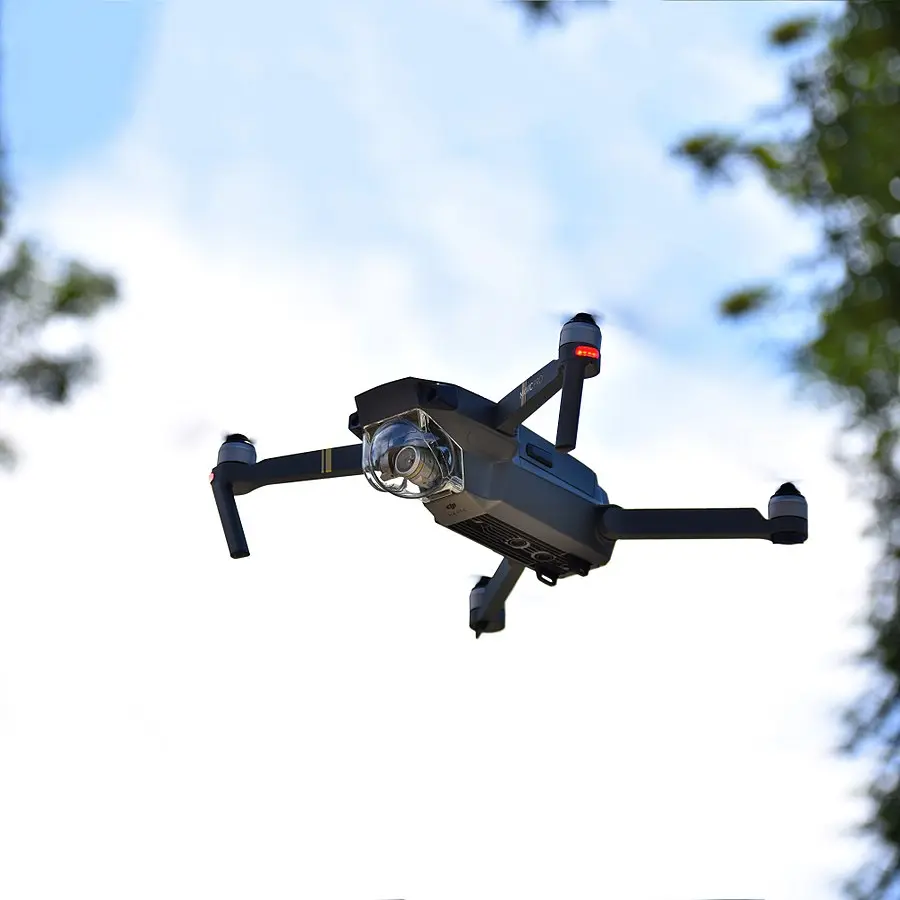
The DJI Mavic Pro (2016) introduced a foldable, travel-friendly design without sacrificing performance. Its popularity proved DJI could disrupt its own flagship (the Phantom) with a more portable format. Industry observers noted that the Mavic helped “the age of consumer drones take off,” cementing DJI’s image as an innovation leader in the field. (Magazine B - DJI by Joh | Goodreads)
- Sensors and Autonomy: DJI continuously added smart features: the Phantom 4’s obstacle avoidance and tracking modes were early steps toward drone autonomy (From Startup to Empire: The Evolution of DJI Drones - DRONELIFE). Subsequent models (Mavic 2 series, etc.) expanded multi-directional obstacle sensing, subject tracking (ActiveTrack), gesture control, and other AI-driven features. DJI also opened up a Software Development Kit (SDK) to allow third-party apps and uses (from drone light shows to mapping) on its platforms (DJI is the world's biggest drone-maker, but it has bigger plans | WIRED) (DJI is the world's biggest drone-maker, but it has bigger plans | WIRED), effectively creating an ecosystem around its drones.
DJI’s commitment to R&D and rapid product iteration kept it consistently ahead of competitors on features, quality, and user experience. As DroneLife summarized, DJI’s ability to “single-handedly push UAV technology forward faster and better than any of their competitors” was fueled by its Shenzhen location (with access to fast prototyping and component supply) and deep engineering talent (From Startup to Empire: The Evolution of DJI Drones - DRONELIFE) (From Startup to Empire: The Evolution of DJI Drones - DRONELIFE). This tech advantage translated directly into market dominance.
Aggressive Growth, Market Dominance, and Business Strategy
By the mid-2010s, DJI had established an enormous lead in the drone market. A 2017 industry report found DJI controlled about 72% of the global civilian drone market (From Startup to Empire: The Evolution of DJI Drones - DRONELIFE) – an astonishing share in a field that, just a few years prior, had dozens of startups. By 2020, DJI’s share of the U.S. market was measured at 77% (with no other competitor above 4%) (DJI - Wikipedia). How did one company achieve this dominance? Several strategic factors stand out:
-
First-Mover Advantage and Fast Execution: While not the first drone maker, DJI was the first to truly productize drones for consumers. The Phantom’s head start, coupled with DJI’s fast release cycle (new models or major upgrades almost every year), meant rivals were always chasing a moving target. “DJI started the hobby UAV market, and now everybody is trying to catch up,” noted a Frost & Sullivan analyst in 2015 (Bow To Your Billionaire Drone Overlord: Frank Wang’s Quest To Put DJI Robots Into The Sky – sUAS News). When upstart 3D Robotics launched its Solo drone in 2015 to compete with DJI, DJI had the Phantom 3 out – and then quickly released three new consumer models in the following year (Phantom 4, Mavic Pro, Spark), covering high-end, mid-range, and entry-level segments (3DR couldn't beat DJI at consumer drones, so now they're partners). This relentless pace kept DJI products front-and-center as “the best you can buy” at multiple price points (3DR couldn't beat DJI at consumer drones, so now they're partners).
-
Vertical Integration in Shenzhen: DJI designs and manufactures its products, giving it control over cost, quality, and speed. Being based in Shenzhen – with its dense network of electronics suppliers and factories – allowed DJI to iterate prototypes rapidly and scale production efficiently. By owning its manufacturing (including automated assembly lines and even building many components in-house (DJI - Wikipedia)), DJI achieved economies of scale and could undercut or out-invest competitors. Former rival Chris Anderson of 3D Robotics remarked on “the speed at which China [DJI] picked it up was just extraordinary”, noting that hardware became commoditized faster than expected (3DR couldn't beat DJI at consumer drones, so now they're partners). Competing against this vertically integrated powerhouse was extremely difficult for startups that relied on outsourcing and slower hardware development cycles (Forbes article on the downfall of 3DR | 3D Robotics Drone Forum).
-
Product Quality and User Experience: DJI earned a reputation for reliable, polished products in a field once known for DIY tinkerers. Investing in customer-friendly features (like the DJI Go app’s simple interface, or adding one-touch return-to-home and intelligent flight modes) made drones accessible to non-experts (From Startup to Empire: The Evolution of DJI Drones - DRONELIFE). This focus on usability, along with slick marketing and global distribution, built DJI’s brand as a premium yet approachable choice – sometimes dubbed the “Apple of drones.” As Wired noted, DJI’s approach was to “simplify what would have taken a year of training, so that now a dad can stream video of the baby walking, shot using a drone.” (DJI is the world's biggest drone-maker, but it has bigger plans | WIRED) That wider appeal dramatically expanded the addressable market.
-
Global Outreach and Community: DJI strategically set up offices overseas – in Los Angeles (to liaise with Hollywood filmmakers), Europe, Japan, etc. – to tap into key user communities (DJI is the world's biggest drone-maker, but it has bigger plans | WIRED). It opened flagship stores in cities worldwide as showrooms (A Brief History of DJI – CANVAS, SWOT, PESTEL & BCG Matrix Editable Templates for Startups). DJI also fostered a large user community online, encouraging feedback and even providing an SDK for developers (DJI is the world's biggest drone-maker, but it has bigger plans | WIRED). This created an ecosystem where third-party apps, accessories, and a base of skilled pilots all coalesced around DJI’s products, reinforcing its market position.
-
Competitive Pricing (and Squeezing Out Rivals): Thanks to its manufacturing muscle and venture capital funding, DJI often priced its drones very competitively. Competitors found themselves in a “race to the bottom” on price while still lagging DJI on features (3DR couldn't beat DJI at consumer drones, so now they're partners). For example, when GoPro launched its Karma drone in late 2016, it was quickly eclipsed by DJI’s Mavic Pro which offered more features for a similar price – GoPro’s drone was delayed, recalled for battery issues, and ultimately discontinued after poor sales (3DR couldn't beat DJI at consumer drones, so now they're partners). The once-prominent French maker Parrot also scaled back consumer drone development after DJI crowded the market. By 2018, the only significant non-DJI option for a ready-to-fly camera drone was arguably the Autel EVO – and even Autel struggled to gain 2nd place behind DJI’s overwhelming share.
A telling case is the rise and fall of 3D Robotics (3DR), once touted as “America’s DJI.” 3DR raised nearly $100 million and launched the Solo drone in 2015 to compete with DJI’s Phantom. But production delays and technical issues (e.g. “flyaway” bugs and camera gimbal problems) hurt 3DR, and DJI’s superior execution and rapid product releases “effectively knocked 3DR out of the drone market after one product” (3DR couldn't beat DJI at consumer drones, so now they're partners) (3DR couldn't beat DJI at consumer drones, so now they're partners). By 2016, 3DR had burned through most of its cash, laid off staff, and exited hardware altogether to focus on software – even partnering with DJI to use 3DR’s drone software on DJI drones! (3DR couldn't beat DJI at consumer drones, so now they're partners) (3DR couldn't beat DJI at consumer drones, so now they're partners). Similar stories played out for others: “DJI has crushed the consumer drone industry” was how one MarketWatch piece put it, as rival models ended up deeply discounted or abandoned.
In short, DJI’s competitive strategy combined innovation leadership, aggressive defense of market share, and global scaling. The result was a classic winner-takes-all scenario in an emerging tech market. By 2017, DJI’s founder Frank Wang, along with early team members Swift Xie (marketing head) and investor Lu Di, all became billionaires from the company’s success (The World's First Drone Billionaire: DJI Founder Frank Wang - DRONELIFE). As of 2020, DJI’s revenue was estimated in the multi-billions (e.g. ~$2.9B in 2017) (DJI Frank Wang Interview With WSJ And DJI Company Information - DroneZon), far outpacing any drone rival.
Legal and Regulatory Challenges
DJI’s dominance has not come without challenges. As drones grew popular, regulators and competitors took aim at DJI on several fronts:
-
Safety and Privacy Regulations: The widespread use of DJI drones forced new rules for airspace and privacy. High-profile incidents – such as a DJI Phantom crashing on the White House lawn in January 2015 – raised concerns. (In that case, DJI swiftly pushed a software update geo-fencing Washington D.C.’s airspace (Bow To Your Billionaire Drone Overlord: Frank Wang’s Quest To Put DJI Robots Into The Sky – sUAS News).) Governments worldwide introduced drone registration requirements, usage bans in certain areas, and “remote ID” mandates. DJI often had to adapt its firmware to comply (e.g. adding altitude limits, no-fly zone databases, etc. (Bow To Your Billionaire Drone Overlord: Frank Wang’s Quest To Put DJI Robots Into The Sky – sUAS News)). While these rules weren’t targeted at DJI alone, being the market leader meant DJI was closely scrutinized. Privacy and data security became a big issue, particularly for DJI as a Chinese company supplying drones globally.
-
Data Security Accusations: Starting around 2017, U.S. authorities grew concerned that DJI drones could send sensitive data (photos, flight logs) back to China. The U.S. Army issued a memo in 2017 barring DJI drone use, citing security fears. DJI denied improper data sharing and even released “local data mode” updates to let users fly completely offline. Tensions escalated in 2019–2020 when the U.S. Department of the Interior grounded its fleet of DJI drones used for wildlife and land management, pending security reviews (DJI - Wikipedia). By 2021, the U.S. Department of Defense and Congress were considering restrictions on Chinese-made drones. DJI consistently argued that bans were misguided and that independent audits have found its data practices secure (DJI - Wikipedia) (DJI - Wikipedia). Nonetheless, political pressure led to DJI being added to the U.S. “Entity List” in December 2020, a trade blacklist, for alleged ties to human rights abuses (DJI was accused of supplying surveillance tech used in Xinjiang) (DJI - Wikipedia). This sanction restricts U.S. companies from exporting technology to DJI (DJI - Wikipedia). As of mid-2023, DJI drones can still be purchased by U.S. consumers, but federal agencies face increasing obstacles to buying them (DJI - Wikipedia). The ongoing ban debate has become a headline issue – DJI even published a “Trust Center” and security audits to allay fears, while U.S. lawmakers weigh legislation to bar federal procurement of its drones (DJI - Wikipedia).
-
Patent Battles: DJI has aggressively protected its intellectual property and also been the target of infringement claims. In 2016, DJI filed a lawsuit against rival Yuneec, claiming Yuneec’s Typhoon drones copied DJI’s patented features (like drone target tracking and an interchangeable gimbal mount) (DJI Files Patent Infringement Lawsuit Against Yuneec - DRONELIFE). DJI stated it “welcomes competition” but would “protect its IP” after investing heavily in R&D (DJI Files Patent Infringement Lawsuit Against Yuneec - DRONELIFE) (DJI Files Patent Infringement Lawsuit Against Yuneec - DRONELIFE). The case was settled without Yuneec derailing DJI’s momentum. Later, Autel Robotics (a U.S.-based competitor) launched multiple patent suits against DJI, including a complaint to the U.S. International Trade Commission in 2018 seeking to block DJI imports. That dispute saw mixed results – at one point in 2020 an ITC judge found DJI infringed an Autel patent, but DJI then succeeded in invalidating that patent (DJI invalidates Autel's drone patent - Smith & Hopen) (Steptoe Secures ITC Win for Autel in Patent Dispute Over Drones). The two companies ultimately settled their claims by 2021. Most recently, in 2023, a U.S. jury found DJI had infringed a patent held by Textron (relating to drone hovering and target tracking), ordering DJI to pay $279 million in damages (DJI - Wikipedia) (DJI - Wikipedia). DJI is appealing and also fighting that patent’s validity. These legal skirmishes show that even as DJI leads the industry, it must constantly navigate IP landmines and defend its innovations.
-
Market Restrictions: Outside the U.S., DJI also faces regulatory hurdles. For example, some European countries set strict rules on drone cameras and radio frequencies, forcing model-specific adjustments. India for a time banned the import of drones (hindering DJI sales there). And in 2022, the Ukraine War spotlighted DJI, as reports emerged of combatants using DJI drones for reconnaissance and even attacks. DJI had to suspend sales to both Ukraine and Russia to avoid being complicit, and it faced criticism about its AeroScope drone-tracking system potentially being misused in conflict zones (DJI - Wikipedia). The company has walked a fine line, trying to remain a neutral commercial entity amid geopolitical currents.
Despite these challenges, DJI has so far maintained its dominance. In fact, many public safety and research users in the West defended DJI, arguing that banning the best technology would “hurt the entire drone ecosystem” (DJI - Wikipedia). DJI’s sheer scale and the lack of comparable alternatives give it resilience – though the company is adapting by increasing transparency and compliance efforts to address legal concerns.
Conclusion: Key Milestones and Sources on DJI’s Rise
In under two decades, DJI transformed aerial photography and established an industry almost from scratch. Some key milestones in DJI’s journey include:
- 2006: Company founded by Frank Wang in Shenzhen, China (A Brief History of DJI – CANVAS, SWOT, PESTEL & BCG Matrix Editable Templates for Startups).
- 2010: Early flight control systems sold; seeds of the Phantom concept.
- 2013: Phantom 1 released – first ready-to-fly consumer drone with GPS (global success) (A Brief History of DJI – CANVAS, SWOT, PESTEL & BCG Matrix Editable Templates for Startups).
- 2014: Phantom 2 Vision+ introduces built-in camera on a 3-axis gimbal (From Startup to Empire: The Evolution of DJI Drones - DRONELIFE).
- 2015: Phantom 3 (live-streaming camera) drives massive growth; DJI raises funding at a $10B valuation (Bow To Your Billionaire Drone Overlord: Frank Wang’s Quest To Put DJI Robots Into The Sky – sUAS News). Starts RoboMaster robotics competition for R&D talent (DJI - Wikipedia).
- 2016: Phantom 4 (obstacle avoidance) and Mavic Pro (foldable design) launched, redefining the drone market (A Brief History of DJI – CANVAS, SWOT, PESTEL & BCG Matrix Editable Templates for Startups) (Magazine B - DJI by Joh | Goodreads). DJI also expands beyond drones with products like the Osmo handheld gimbal.
- 2017: Frank Wang becomes the world’s first drone billionaire (DJI - Wikipedia); DJI wins a Tech Emmy Award for its camera drones’ impact in film/TV (DJI - Wikipedia). Introduces smaller Spark drone for novices.
- 2018: Mavic 2 Pro/Zoom released (including a Hasselblad-partnered camera) (A Brief History of DJI – CANVAS, SWOT, PESTEL & BCG Matrix Editable Templates for Startups). Company reportedly hits nearly $3B in revenue (DJI Frank Wang Interview With WSJ And DJI Company Information - DroneZon).
- 2019–2020: U.S. security concerns peak; DJI added to U.S. Entity List (Dec 2020) (DJI - Wikipedia). Nevertheless, DJI holds ~77% of the U.S. consumer market (DJI - Wikipedia) and ~80% globally.
- 2021–2023: DJI faces patent battles (Autel, Textron) and navigates global political pressures (suspending sales in Russia/Ukraine). It continues releasing products (e.g. Mini series, Air 2S, Mavic 3) and retains a dominant market share into the 2020s.
For those interested in learning more, several excellent sources provide further insight into DJI’s story:
- Forbes profile “Bow To Your Billionaire Drone Overlord” (2015) – A deep look at Frank Wang and DJI’s early rise, including market share and sales figures (Bow To Your Billionaire Drone Overlord: Frank Wang’s Quest To Put DJI Robots Into The Sky – sUAS News) (Bow To Your Billionaire Drone Overlord: Frank Wang’s Quest To Put DJI Robots Into The Sky – sUAS News).
- DroneLife article “From Startup to Empire: The Evolution of DJI Drones” (2018) – Offers a chronological evolution of DJI’s products and innovations (From Startup to Empire: The Evolution of DJI Drones - DRONELIFE) (From Startup to Empire: The Evolution of DJI Drones - DRONELIFE).
- Quartz piece (2017) on 3DR vs DJI – Illustrates DJI’s competitive edge and fast product cycle that outpaced American rival 3D Robotics (3DR couldn't beat DJI at consumer drones, so now they're partners) (3DR couldn't beat DJI at consumer drones, so now they're partners).
- Wired (2017) “DJI has bigger plans” – Details DJI’s R&D culture, international expansion, and comparisons to other Chinese tech successes (DJI is the world's biggest drone-maker, but it has bigger plans | WIRED) (DJI is the world's biggest drone-maker, but it has bigger plans | WIRED).
- Interviews/Documentaries: A brief video interview with Frank Wang by Wall Street Journal (circa 2015) sheds light on his philosophy and DJI’s challenges (DJI Frank Wang Interview With WSJ And DJI Company Information - DroneZon). Also, the YouTube documentary “DJI: World’s First Drone Billionaire” (Luxury Express, 2016) provides a visual narrative of Wang’s journey and DJI’s growth. The company’s own event videos (e.g. DJI’s 10th anniversary at IFA 2016 (DJI Redefines Storytelling with Osmo Mobile at IFA 2016)) recount its history from an internal perspective.
- Academic and Industry Reports: The Skylogic Research reports (cited by DroneLife) and Frost & Sullivan analysis offer market share data and industry context (From Startup to Empire: The Evolution of DJI Drones - DRONELIFE) (Bow To Your Billionaire Drone Overlord: Frank Wang’s Quest To Put DJI Robots Into The Sky – sUAS News). For a broader context, books on the drone industry (such as “Drone Industry: Insights and Perspectives” by Mustafa Al-Dori) include sections on DJI’s impact, and Magazine B’s special issue on DJI (2019) profiles the brand’s ethos and design evolution (Magazine B - DJI by Joh | Goodreads).
DJI’s story is a case study in how a visionary startup can create and dominate a new tech market through innovation and shrewd strategy. From Frank Wang’s dorm room experiments to Phantom drones conquering the skies worldwide, DJI has set the pace in consumer UAVs. Looking ahead, the company faces the task of holding its lead amid tightening regulations and emerging challengers – but its history shows a willingness to adapt and push boundaries. As one analyst said back in 2015, “DJI started the hobby UAV market, and now everybody is trying to catch up.” (Bow To Your Billionaire Drone Overlord: Frank Wang’s Quest To Put DJI Robots Into The Sky – sUAS News) That statement remains as true as ever today.
Sources:
- Forbes – Ryan Mac et al., “Frank Wang’s Quest To Put DJI Robots Into The Sky,” Forbes (May 2015) (Bow To Your Billionaire Drone Overlord: Frank Wang’s Quest To Put DJI Robots Into The Sky – sUAS News) (Bow To Your Billionaire Drone Overlord: Frank Wang’s Quest To Put DJI Robots Into The Sky – sUAS News).
- DroneLife – Ali Crane, “From Startup to Empire: The Evolution of DJI Drones,” DroneLife (May 2018) (From Startup to Empire: The Evolution of DJI Drones - DRONELIFE) (From Startup to Empire: The Evolution of DJI Drones - DRONELIFE).
- Quartz – Mike Murphy, “3DR couldn’t beat DJI… now they’re partners,” Quartz (July 2017) (3DR couldn't beat DJI at consumer drones, so now they're partners) (3DR couldn't beat DJI at consumer drones, so now they're partners).
- Wired – Kevin Kelly, “DJI is the world’s biggest drone-maker, but it has bigger plans,” Wired (2017) (DJI is the world's biggest drone-maker, but it has bigger plans | WIRED) (DJI is the world's biggest drone-maker, but it has bigger plans | WIRED).
- Wikipedia – “DJI,” Wikipedia (updated 2024) (DJI - Wikipedia) (DJI - Wikipedia) (for timeline and market share details).
- DroneZon – Fintan Corrigan, “DJI Frank Wang Interview With WSJ,” (Nov 2020) (DJI Frank Wang Interview With WSJ And DJI Company Information - DroneZon) (DJI Frank Wang Interview With WSJ And DJI Company Information - DroneZon) (for revenue figures).
- DJI Official Blog – “DJI Developers Share the Secret of Our Success,” DJI ViewPoints (n.d.) (DJI Frank Wang Documentary: World's First Drone Billionaire).
- Additional sources as cited in-text (V&A Museum (Phantom Drone | V&A Explore The Collections), DroneLife news on lawsuits (DJI Files Patent Infringement Lawsuit Against Yuneec - DRONELIFE), Dronelife/Forbes on Frank Wang’s billionaire status (The World's First Drone Billionaire: DJI Founder Frank Wang - DRONELIFE), etc.).