
Ridges recede into a pale sky. Nearby rocks remain in shadow while distant cliffs catch the morning light. Curiosity took this view toward Mount Sharp from the surface of Mars.
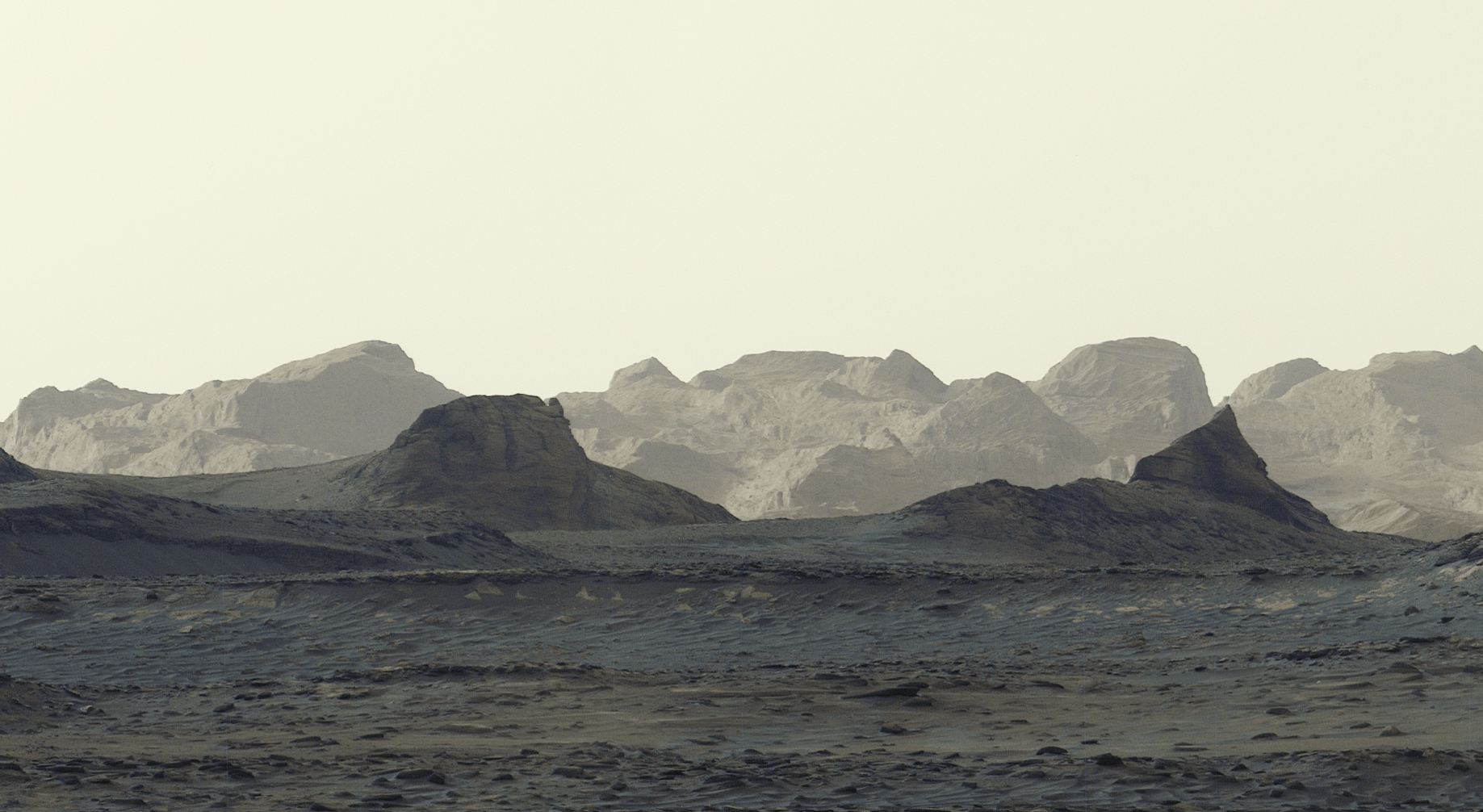
Image: NASA/JPL-Caltech/MSSS | Original page.
NASA selected it as its October 19 Image of the Day. The scene comes from a panorama released on October 6: Curiosity's Mast Camera, or Mastcam, took six photographs on August 11, 2026, the mission's 4,982nd Martian day. They were stitched together after transmission to Earth. This image is a crop of that panorama, with a photographic history that began well before its daily-image appearance.
Wind Carves the Shape
The elongated wind-eroded features in the distance are called yardangs. Wind carrying sand and dust can wear rock into ridges and grooves. Their shapes reveal erosion; what the rock was before that sculpting began is a different question.
The original Jet Propulsion Laboratory report describes a yardang layer extending about 16 kilometers across northwestern Mount Sharp. The mountain itself is about 5 kilometers tall. Curiosity, which began ascending it in 2014, recently passed 1 kilometer of elevation gain. Those measurements describe the layer's extent, the mountain's height, and the rover's climb, respectively.
Layers in the mountain record ancient lakes, streams, and a later drying environment, like pages read from the bottom upward. Scientists think wind may have stripped away some material after deposition ended. But this yardang layer has an unusual color and tilt. Ash deposited by ancient volcanic eruptions is one proposed origin for its material, rather than an established answer.
The name also takes us back to Earth. Yardangs occur around Lop Nur in northwestern China, but similar shapes need not have identical histories. The Chinese Academy of Sciences' account of research there describes roles for episodic rainstorms, floods, and interactions between wind and water. Resemblance helps researchers ask questions; rock layers and field evidence help answer them.
The Choice to Keep the Morning Colors
The panorama was taken at 8:30 a.m. local Mars time. JPL explains that it was processed without the white balancing commonly applied to Mastcam images, preserving its early-morning appearance. That choice does not make it an unprocessed view: six photographs were still assembled, and we are looking at a camera image shaped by processing decisions.
For a rover far from Earth, a camera is also a way to find the next question. The team hopes to reach the base of the yardangs sometime in 2027 and collect close-up data with Curiosity's robotic arm. That is a goal, with no guaranteed arrival date.
Explore Curiosity's raw-image collection to see how a landscape arrives as separate frames from different cameras and times. Then return to these cliffs. Wind can explain how they were carved while leaving the rock's earlier story unfinished.