
Two wolves press their heads together, half hidden in frosted grass. In today's Bing wallpaper, these Yellowstone gray wolves look quieter than their reputation as wilderness hunters might suggest. The photograph does not tell us their names, sexes, or family relationship. It gives us a moment of closeness, not a pedigree.
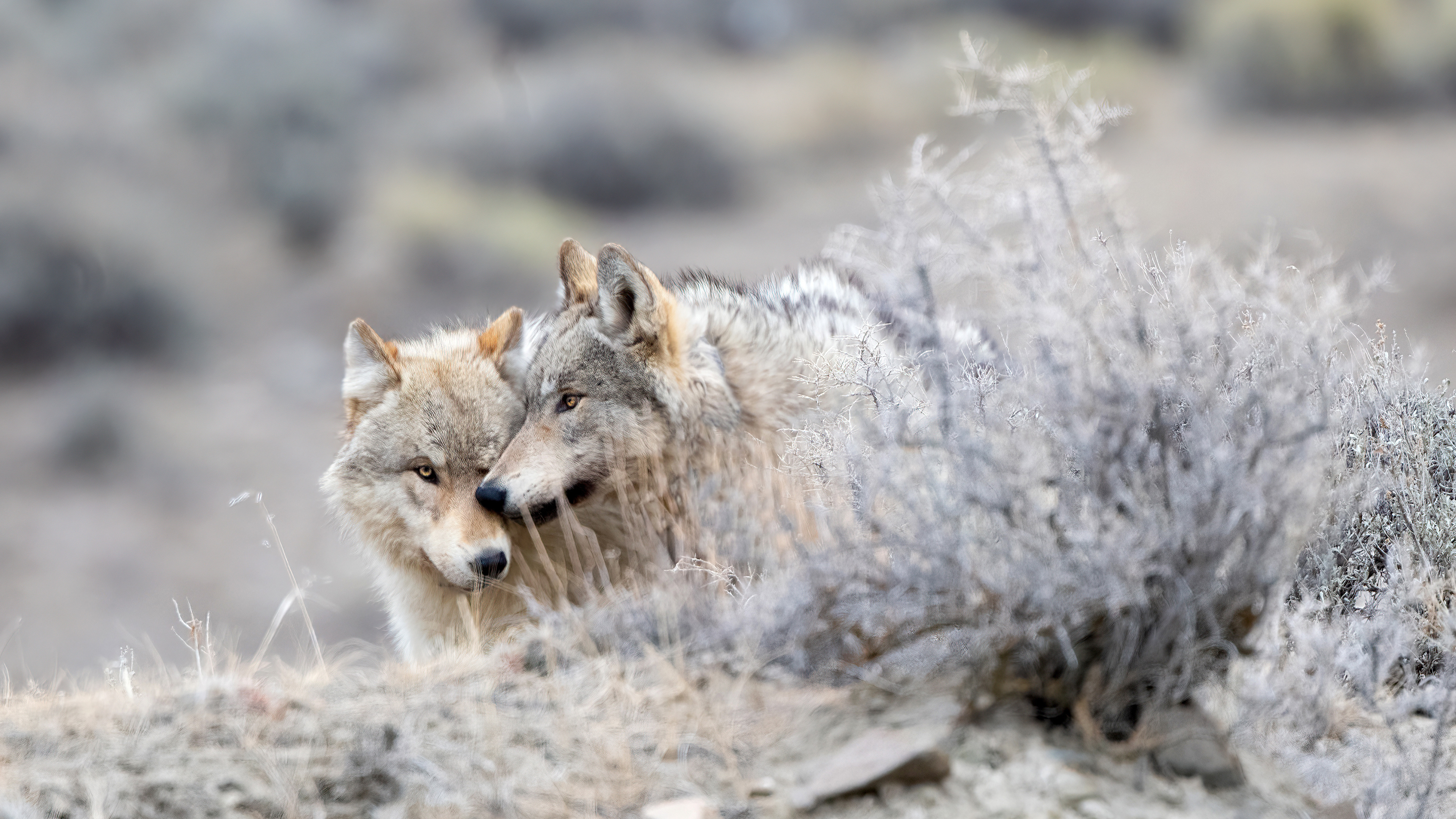
Image: Two gray wolves, Yellowstone National Park, Wyoming, USA (© John Morrison/Getty Images). Original page.
A family with work to share
A Yellowstone pack does more than gather around food. The park's long-running research documents cooperative care of pups, group hunting of large prey, and defense of territory and carcasses. Social living can even benefit infirm pack members. A pack is a social family with different ages and roles, and relationships can change. A fixed chart with a single boss at the top tells us very little about that daily work.
Two of their ways of keeping in touch operate on quite different schedules. Urine scent marks remain on the ground, like messages another wolf can read later. A howl travels now. Both contribute to territorial defense, but that does not mean every long call can be translated into a human sentence.
In their Yellowstone research account, John and Mary Theberge describe wolf 302 moving ahead of his pack, looking back, and howling. At first, the others stayed put. After another howl, a few followed, and eventually the pack moved away. It looked rather like an invitation to get going. Yet the researchers also saw packs leave in silence, or howl without leaving. One compelling scene is a reason to investigate, not enough to write a wolf phrasebook.
The valley sounds different in different seasons
The researchers had more than a handful of calls to work with. They analyzed over 11,000 howls recorded across ten years by the Yellowstone Wolf Project's Rick McIntyre. In those records, howling was about four times as frequent in February as in May. That is a pattern in a particular dataset, not a monthly quota for every wolf.
Who answered was especially revealing. Another 1,509 howling responses showed a seasonal shift: from October through late February, wolves from other packs became relatively more frequent respondents. During denning and summer, almost all answers came from pack mates. The authors linked the change to the shifting demands of breeding, territory, and pup care. A call can help companions find one another while also revealing a caller's location to rivals.
Yellowstone wolves are most active around dawn and dusk, and the open northern range offers good opportunities to watch them. Bring binoculars and notice how they wait, move, and respond to companions. Park rules require at least 100 yards, about 91 meters, between people and wolves. Do not approach, feed them, or imitate their howls. The park's wolf pages also offer films you can watch from home. When the animals act together, and when they go about separate tasks, can be more interesting than trying to decide who is in charge.