
Catch, eat, repeat: an autumn menu helps decide how the winter will go.
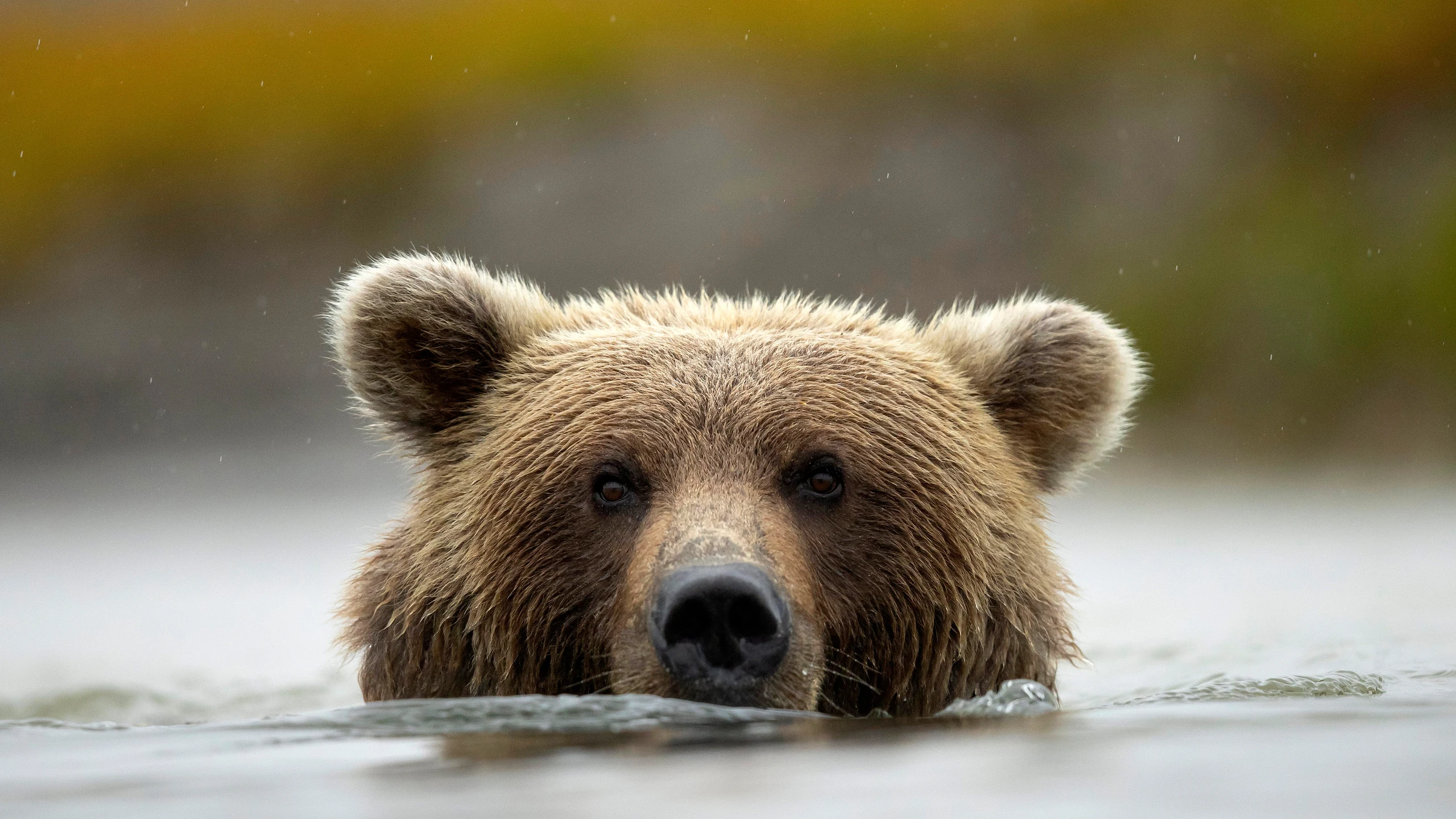
Image: Bing Wallpaper | Silver Salmon Creek, Lake Clark National Park and Preserve | Copyright: Danny Green/Nature Picture Library | Original page

Silver Salmon Creek lies on Alaska's Cook Inlet coast, without road access. The National Park Service says most visitors arrive by small plane on the beach; boats are another option.
Its bears change their menu with the season: sedges in early summer, clams exposed at low tide, and salmon entering the streams in late summer and early autumn. Those different foods all contribute to the reserves needed for winter.
Gaining Weight Is Not Adding Two Kilograms of Fat Every Day
The intense autumn feeding period is called hyperphagia. The U.S. Department of the Interior's account of Katmai bears says some can gain up to four pounds, about 1.8 kilograms, in a day. That is a possible gain, not a daily average for every bear, and not a claim that all the added mass is fat.
Katmai bears generally enter their dens in October or November and rely on stored energy through a winter without feeding. Females can also give birth in the den, with milk production drawing on those reserves. The department says bears can lose up to a third of their body fat during winter. That proportion should not be relabeled as a third of body weight.
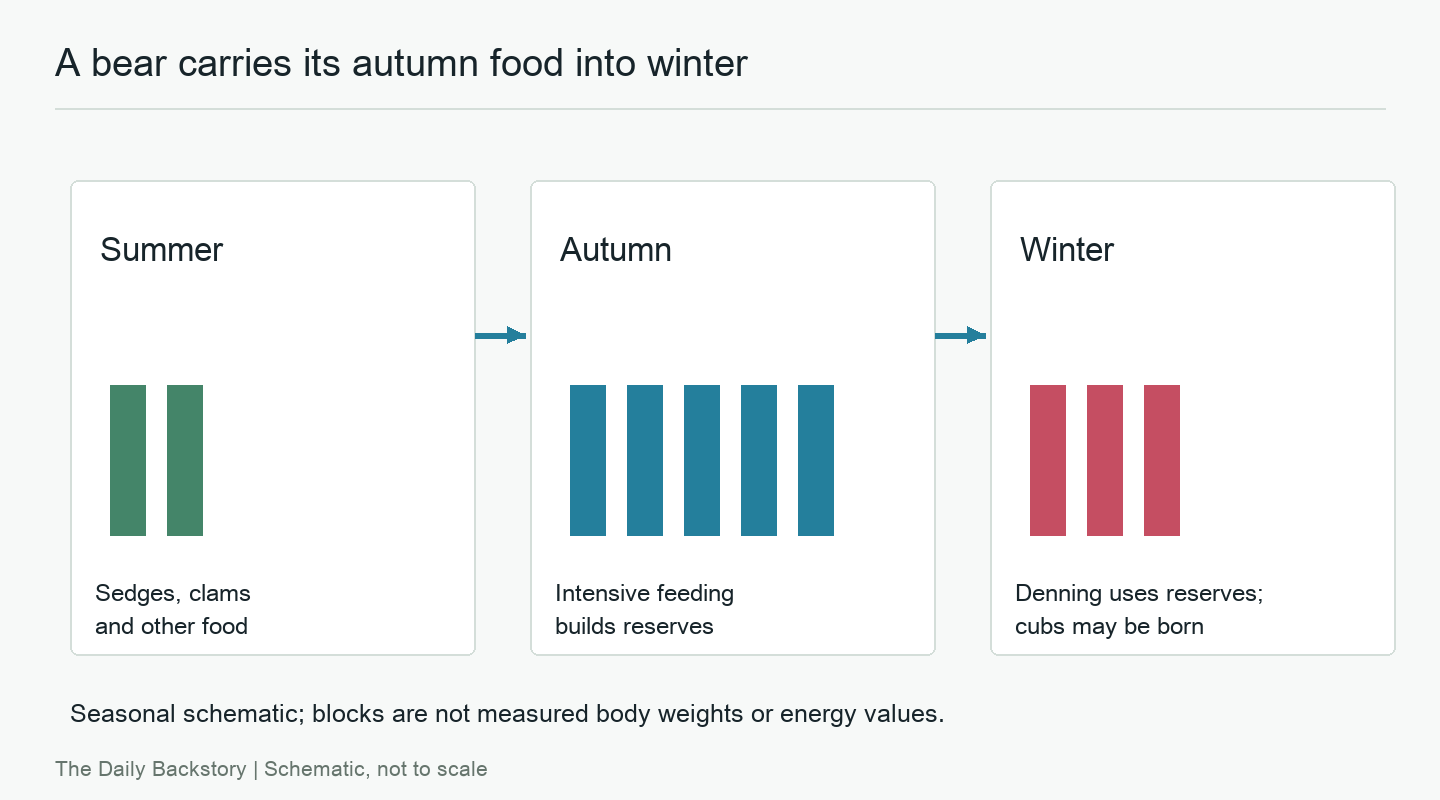
Diagram: The Daily Backstory; a seasonal schematic, not measured changes in an individual bear's weight.
An autumn fish is more than that day's meal. Some of its energy becomes a reserve carried into winter, and potentially the milk a newborn cub first drinks.
Trees Keep Seasonal Records Too
Day length, temperature and food availability shape seasonal animal activity. Phenology records the timing of such responses, including plant budding and flowering as well as animal behavior.
China's phenological observation tradition is closely associated with the scientist Zhu Kezhen. In 2021, the Chinese Academy of Sciences' Institute of Geographic Sciences and Natural Resources Research described an automated system with ten multispectral cameras and 25 multispectral probes across 11 stations. Those figures describe that particular system at the time, not the size of the entire Chinese phenological network.
An Alaskan bear and a tree in China use different physiological mechanisms, but both respond to the seasons. Recording their responses as time series makes comparisons between years possible.
Katmai's 2026 Fat Bear Week voting was scheduled for September 22-29 and had ended when this article was prepared. It also takes place somewhere other than the wallpaper's creek. Silver Salmon Creek belongs to Lake Clark; the well-known Brooks Falls broadcasts come from Katmai. They are not two names for the same stream.
Sources
National Park Service: Silver Salmon Creek and 2026 Fat Bear Week; Department of the Interior: Katmai's bears; Chinese Academy of Sciences institute: automated phenological monitoring.