
A great sweep of rock reaches overhead like a roof built before anyone arrived. Beneath it, stone walls divide the sheltered space into rooms, with doorways opening toward a wooded canyon. Bing's November 16 wallpaper takes us to Gila Cliff Dwellings National Monument in New Mexico.
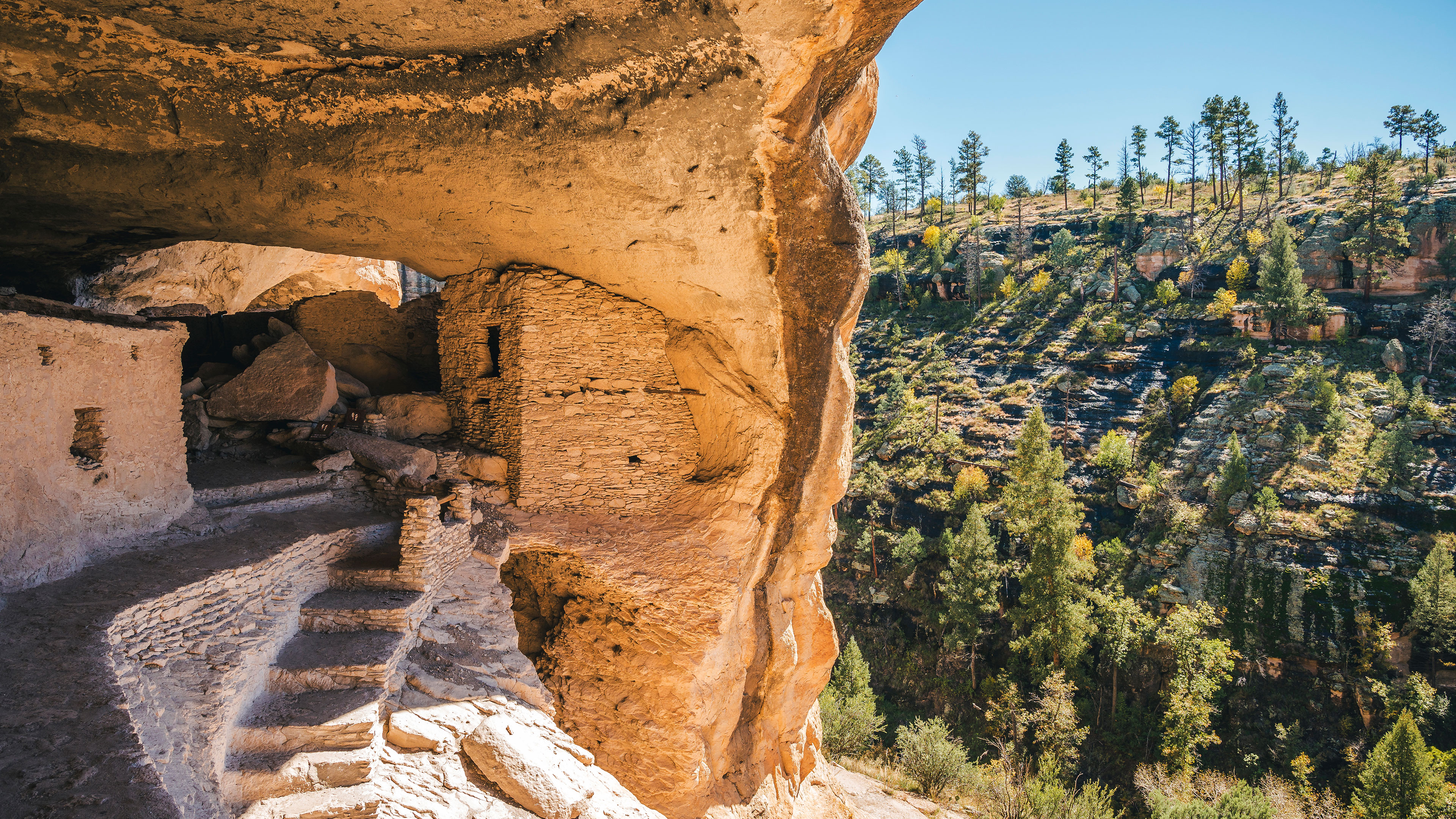
Image: Gila Cliff Dwellings National Monument, New Mexico, USA (© Chiara Salvadori/Getty Images) · Original page
Look closely and you can distinguish the constructed walls from the cave ceiling above them. The builders used a space the mountain already provided, adding stone, timber, and sandy clay mortar to make a home. The National Park Service calls these people the Tularosa Mogollon, an archaeological name rather than a name we know they used for themselves.
The setting offered practical advantages. The south-facing caves sheltered people from the weather and helped moderate temperatures through winter and summer. A perennial stream ran through the canyon below, with useful plants and animals nearby. In a dry mountain landscape, access to water could matter much more than the view.
Why people came here, and why they left, cannot be settled by a photograph. Archaeologists think a severe drought in the late thirteenth century was probably an important part of the story, but the exact reason for their arrival remains unknown. The rooms were occupied for only about thirty years, from the 1270s into the early 1300s. The buildings have outlasted that brief period of domestic life many times over.
The wooden beams hold a kind of calendar: tree rings. Researchers can match patterns in the rings of different timbers to date them. The earliest cutting date found here is AD 1276. A cutting date, however, does not necessarily mark the start of construction. Timber supplies evidence, not a dated building permit. Narrow growth rings also preserve evidence of the dry conditions.
Soot on the cave ceilings reaches further back into the human story. Hunter-gatherers used these shelters before the stone rooms were built, so the history of people in the caves is much longer than the life of this settlement. Nor did the later residents simply vanish. The park describes their dispersal into other pueblos in southwestern New Mexico and Mexico, while acknowledging that their exact destinations remain uncertain.
For a visit, start with the park's trail and guided-tour information and check current access before setting out. Once there, look first for the natural ceiling, then for the walls people added. Without air conditioning or running water, what would you look for in a place to build a home?