
The boardwalk bends between enormous trunks. Around it lie moss, fallen wood, and layers of green, with only a little light filtering through in the distance. Bing's photograph takes us to the Trail of the Cedars in Glacier National Park, Montana.
The path brings people into the forest while helping them stay off the damp ground beside it. Slow down here, and the story becomes one of water, shade, and the ways a forest keeps growing.
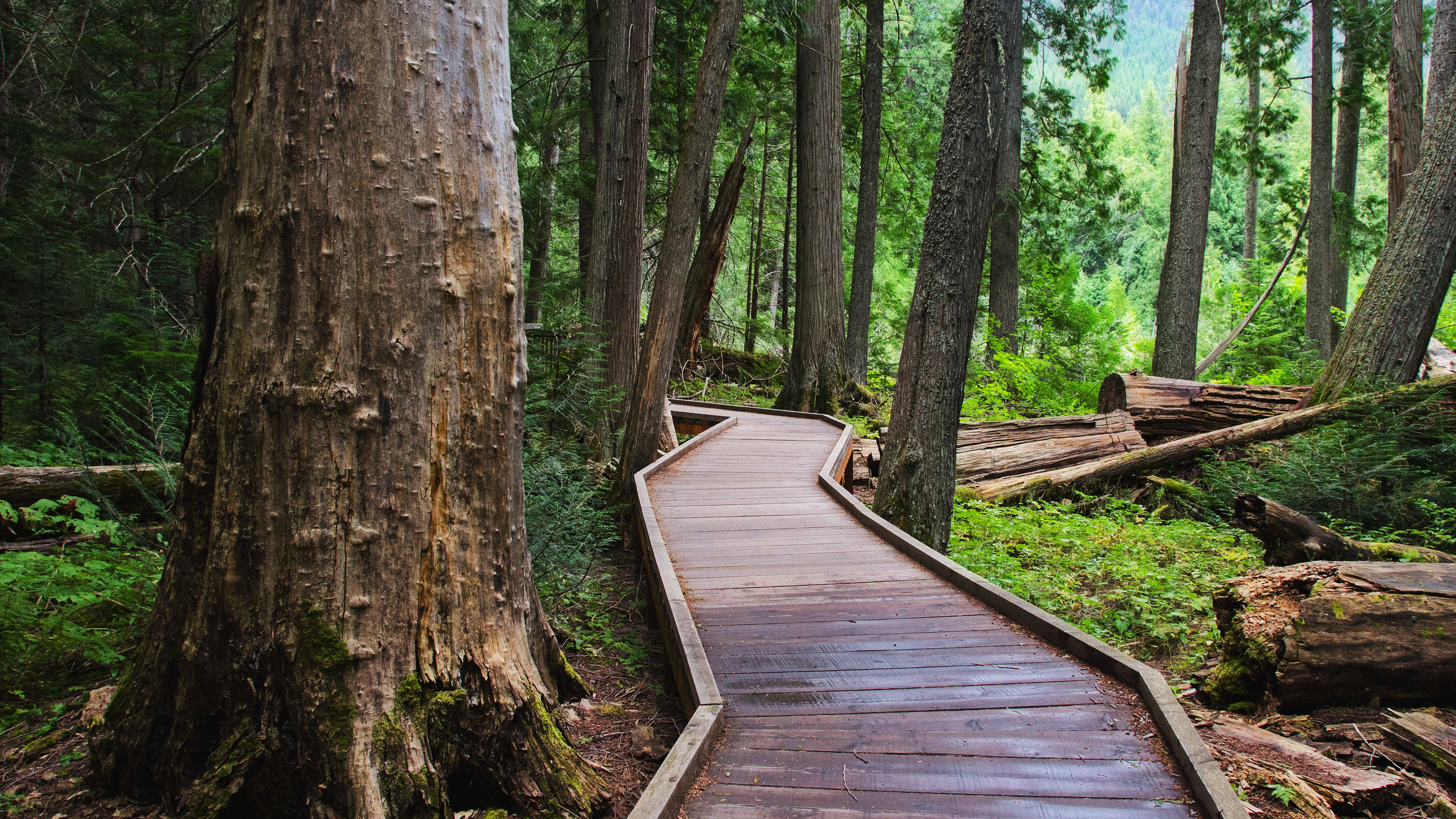
Image: Trail of the Cedars, Glacier National Park, Montana, USA (© DBushue Photography/Getty Images). Original page
Why is this corner so green?
Not all of Glacier looks like this. The National Park Service's forest guide names this trail among the park's shadiest woodland walks. Huge western redcedars, western hemlocks, and cottonwoods spread their canopies overhead, intercepting much of the direct sunlight.
Despite its name, western redcedar is not a true cedar in the genus Cedrus. The U.S. Forest Service's species account identifies it as Thuja plicata, a member of the cypress family. A common name can offer a clue without telling you a tree's full family history.
Water supplies the other half of the explanation. The park's Avalanche Creek audio tour describes clouds trapped by the Continental Divide bringing rain to this unusually moist habitat. Trees and plants grow in those conditions, while the canopy shades the ground beneath them. The moss and fallen logs in the photograph are good places to begin looking at that relationship.
A fallen tree can be a beginning
Western redcedar wood is soft but highly resistant to decay. The Forest Service lists uses including shingles, siding, canoes, and boats. Its account also describes how Indigenous peoples of the Northwest Coast used the tree for shelters, clothing, dugout canoes, and fishing nets. One forest species could help furnish much of daily life.
The same account recommends leaving some fallen logs in these forests as seedbeds for western redcedar and western hemlock. The trunks lying on the right of the photograph need not mark only an ending. A tree's fall and a seedling's beginning can share the same piece of wood.
Water also carves stone
The trail follows Avalanche Creek. At the bridge, the view changes from bark and leaves to Avalanche Gorge, where flowing water has rounded and smoothed the rock walls. A single passing stream of water cannot explain the whole shape. The work accumulates through repeated flow over time.
That is part of the pleasure of a short walk. You do not have to reach a distant summit to notice something: rough bark beside the path and smooth rock beside the creek hold very different traces of time.
The park's accessibility page lists an accessible loop of about 1.1 kilometers, starting at Avalanche Picnic Area, with boardwalk and paved sections. Check current road and trail conditions before visiting; a green photograph is not a live report of November access. At the creek, listen for American dippers, which the trail description includes among the walk's attractions.