How Bright is the Sun at Sunset Compared to Noon?
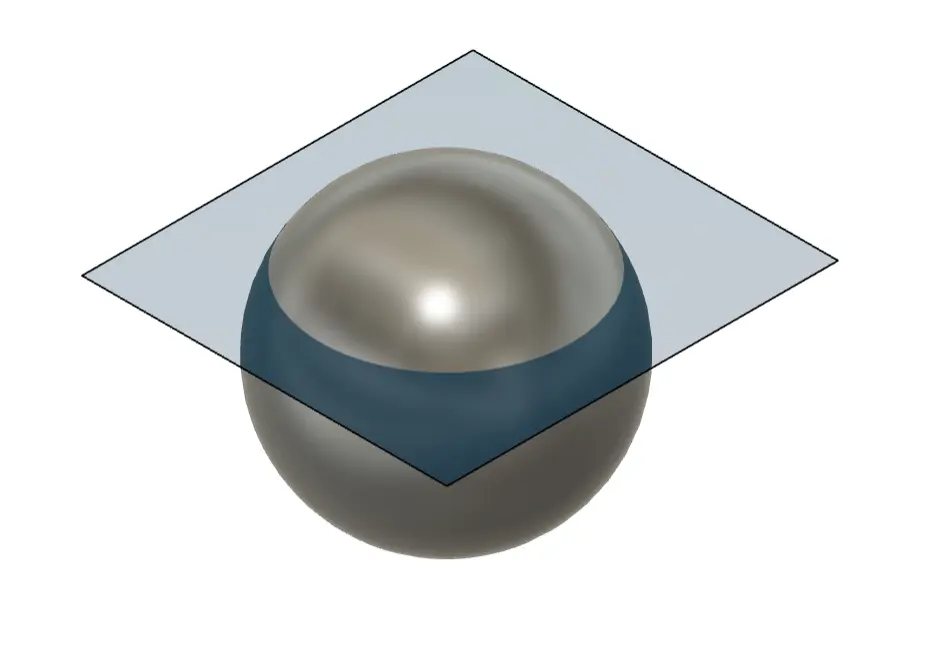
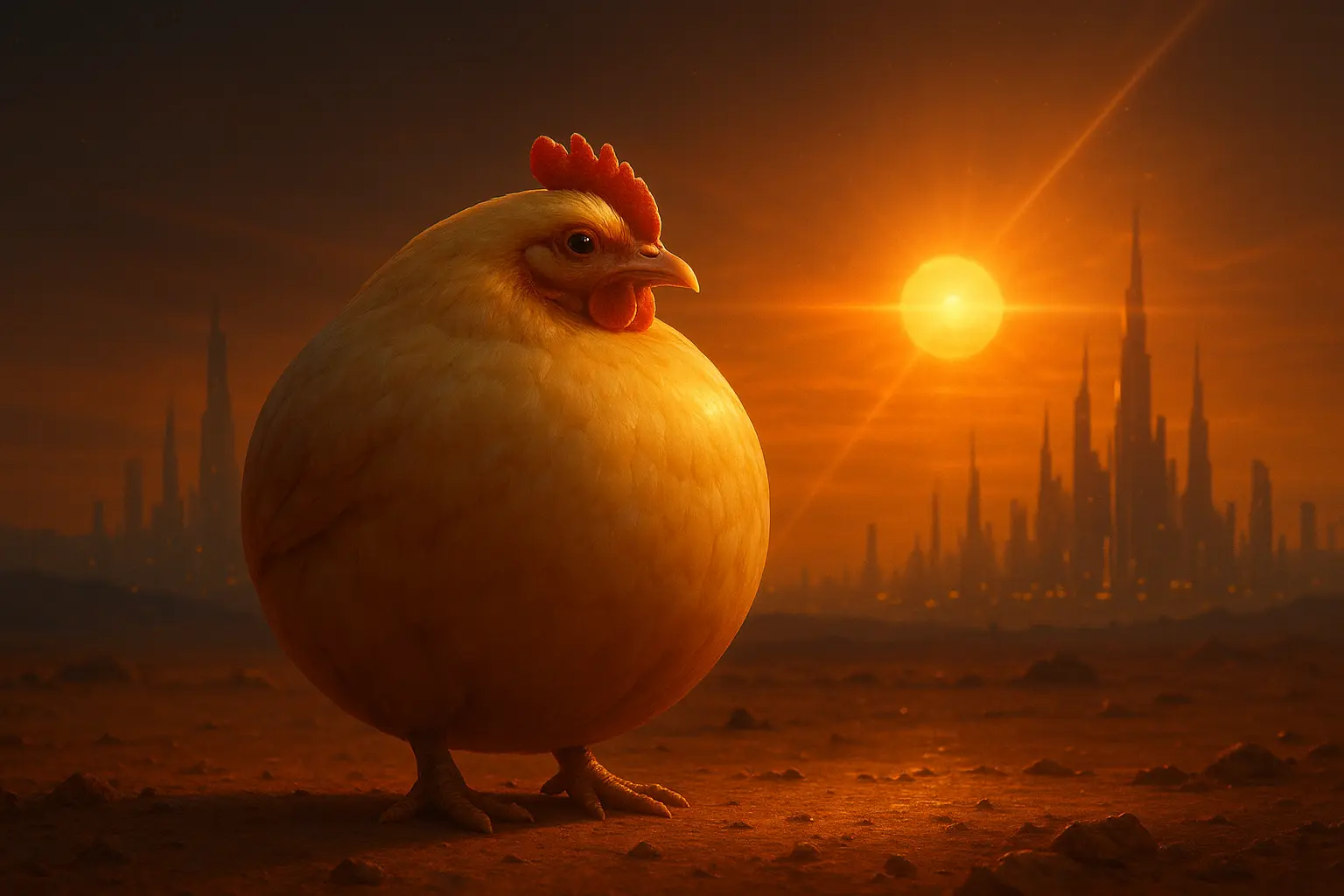
Consider a perfectly spherical chicken standing on Earth's surface, basking in direct sunlight at noon and again at sunset. If the brightness at noon is 100%, how intense is the sunlight it receives at sunset—defined precisely as the moment when the Sun's lower limb touches the horizon?
To answer this intriguing yet playful question, let's walk through a straightforward calculation. We will focus solely on direct sunlight, ignoring scattered sky radiation, and consider only the atmospheric absorption and scattering effects without accounting for geometric projection factors.
1. Calculating Atmospheric Mass
"Air mass" quantifies the atmospheric path length sunlight traverses compared to its shortest path at the zenith (directly overhead, air mass = 1). A reliable empirical formula, given by Kasten–Young (1989), expresses air mass as a function of the solar zenith angle :
At noon (zenith angle ), . At sunset, when the solar disk just touches the horizon, the zenith angle reaches approximately (including atmospheric refraction), yielding .
2. Beer–Lambert Law: Attenuation by the Atmosphere
The Beer–Lambert law describes how the atmosphere attenuates sunlight intensity due to scattering and absorption:
Here, represents the wavelength-averaged optical thickness, incorporating Rayleigh scattering, ozone absorption, and aerosol scattering. Taking noon intensity as 100%, the relative intensity at sunset becomes:
3. Typical Optical Thickness Values
Based on AERONET observations, typical optical thickness values for different atmospheric conditions are:
| Optical Thickness (τ) | Atmospheric Condition |
|---|---|
| 0.10 | Extremely clear oceanic atmosphere |
| 0.12–0.15 | Typical clear sky |
| 0.20 | Slight haze |
| 0.30 | Noticeable haze or urban air |
4. Numerical Results
Using , the relative sunset intensities are:
| τ | Relative Intensity (%) |
|---|---|
| 0.10 | 2.5 % |
| 0.12 | 1.2 % |
| 0.15 | 0.4 % |
| 0.20 | 0.06 % |
| 0.30 | 0.002 % |
Thus, under common clear-sky conditions (τ ≈ 0.12–0.15), the direct sunlight at sunset drops sharply to around 1–3% of noon levels. In extremely clear conditions, such as at sea or high mountains, the intensity might reach closer to 2–3%, while urban haze could diminish it to less than 0.1%.
5. Important Considerations
- Brightness Perception: Human eyes perceive brightness logarithmically. Even a drastic drop to 1–3% intensity remains visually intense, causing the sunset to appear bright.
- Scattered Sky Light: As direct sunlight fades at sunset, scattered radiation from air molecules and aerosols increases, softening the overall drop in total illumination.
- Atmospheric Refraction: Refraction slightly adjusts the effective solar position, marginally reducing the true air mass. This subtlety is already factored into our calculations.
- Wavelength Dependence: Blue light scatters more strongly, while red passes through more easily, giving sunsets their characteristic reddish hue.
Extended Implications for Human Vision
The spherical-chicken model also approximates the human eye's exposure when directly viewing the setting sun, useful for estimating safe viewing durations to avoid solar retinopathy.
Estimating Safe Viewing Duration
Eye safety standards (ICNIRP, ANSI Z136.1) suggest a maximum "blink-response" duration of about 0.25 seconds at noon-level intensity. At sunset, pupils dilate (about 5 mm diameter, increasing retinal exposure area roughly 6 times compared to noon's constricted pupils).
| Scenario | Retinal Exposure Intensity (compared to noon) | Safe Viewing Time Estimate |
|---|---|---|
| Extremely clear (τ≈0.10) | ~19% | ≈1.3 s |
| Typical clear (τ≈0.12–0.15) | ~6–13% | ≈2.5–4 s |
| Slight haze (τ≈0.20) | ~0.4% | ≈60 s |
In typical clear conditions, the safe duration to directly stare at the sunset is remarkably short—only 2 to 4 seconds, substantially lower than most people assume. Even in slightly hazy conditions, though the safe window lengthens significantly, prolonged direct exposure remains unsafe.
Medical case studies indicate permanent retinal damage after just 30–60 seconds of direct exposure, underscoring the risks involved.
Safety Recommendations
- Limit direct sunset viewing to just a few seconds.
- Be cautious—sunsets appear deceptively gentle, making prolonged viewing tempting.
- Use proper solar filters or projection techniques for extended observation or photography.
- Avoid optical magnification without professional-grade filters; magnification drastically intensifies retinal exposure.
In essence: While the setting sun may seem harmless, it provides only seconds of safe viewing. To protect your eyesight, always use proper protection rather than testing your vision's resilience.