
A note left above a search box became a project that outlasted the weekend it announced.
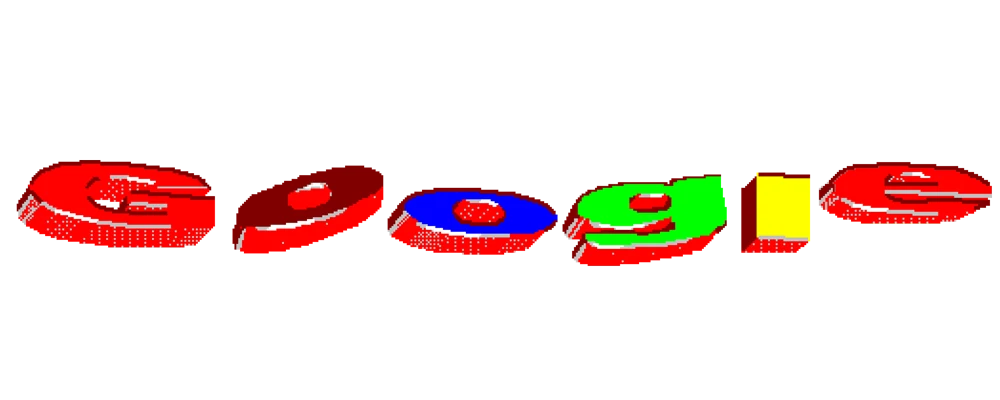
Image: Google Doodle, "Google's Birthday 2026" | Original page
Google's September 27 birthday Doodle reaches back to an early logo. The official description is brief: a nostalgic design to celebrate the company's 28th birthday.
The project itself began with something less formal than a branding campaign. In 1998, Larry Page and Sergey Brin were heading to Burning Man in the Nevada desert. They added a stick figure behind the homepage logo to tell users that the founders were out of the office. Google's own history describes it as an out-of-office message. The company had not yet been incorporated.
From a Note to a Regular Feature
Another turning point arrived on Bastille Day in 2000. The founders asked Dennis Hwang, then an intern, to make a Doodle. Its reception helped turn occasional alterations into a recurring feature. Illustrators were eventually joined by engineers, designers and cultural advisers; still images expanded into animation and playable games.
The homepage acquired a second job. Above the search box, it could introduce a person, discovery or tradition that a visitor had not thought to look up.
A company's birthday also reveals two different uses of time. The date of legal incorporation and the day chosen for a celebration need not be identical. A birthday is a commemorative choice. The time on a clock requires a traceable measurement.
Where Beijing Time Is Kept
China's National Time Service Center, part of the Chinese Academy of Sciences, is based in Shaanxi rather than Beijing. Its timekeeping laboratories use atomic clocks to establish and maintain a time scale; transmission systems distribute the resulting signals.
"Beijing time" names the country's standard time. It does not mean that every second must originate in Beijing. Behind the changing digits on a phone are clocks that run continuously, comparisons between them and repeated calibration.
A company's anniversary can follow a commemorative convention. Science and communications need time maintained through measurement. A nostalgic logo brings those two meanings of a date into the same small space.
Sources
Google Doodles: Original page and project history; National Time Service Center: institutional introduction.