
Snowy peaks, golden trees, and their reflections almost divide the picture into matching halves. Bing's November 3 wallpaper, dated for its Chinese audience, features Lake Braies in Italy's Dolomites.
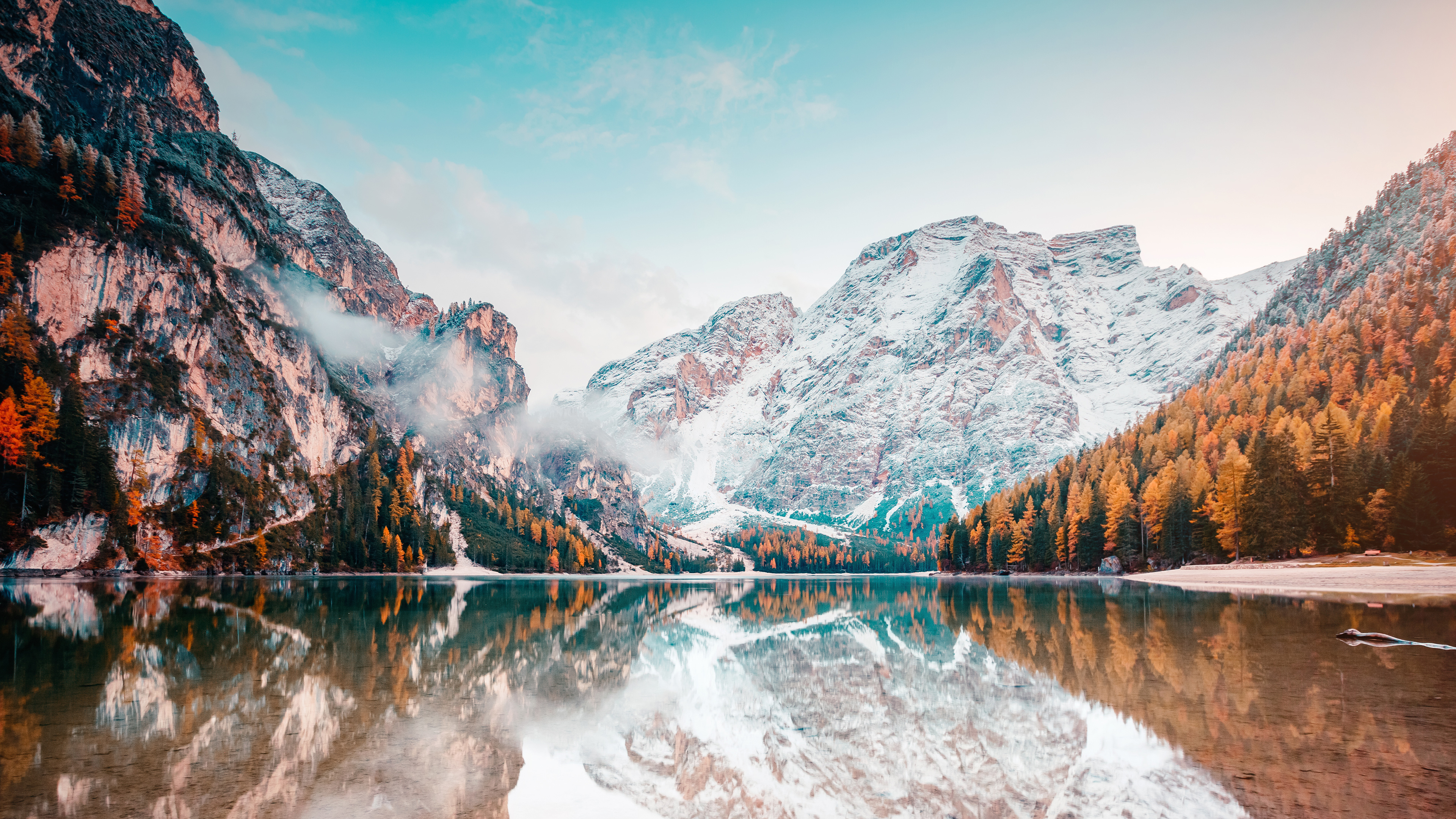
Image: Bing daily wallpaper | Lake Braies, Fanes-Sennes-Braies Nature Park, Dolomites, Italy (© leonid_tit/Getty Images) | Original page
A landscape like this invites words such as clear and pure. The people monitoring a lake ask questions a photograph cannot answer.
South Tyrol's environmental agency records Lake Braies at 1,496 meters above sea level, with a maximum depth of 36 meters. Within Fanes-Sennes-Braies Nature Park, this calcareous mountain lake stays below 15 degrees Celsius throughout the year.
It is classed as oligotrophic: relatively poor in the nutrients that support algae. That describes nutrient conditions, not an absence of life. The same record notes that visibility through its water is not always especially high. Algal growth affects transparency, as do suspended particles following heavy rain.
Why measure phosphorus, algae, and dissolved oxygen together? They influence one another. More nutrients can support more algal growth, while photosynthesis changes oxygen levels in the water. Algal biomass and occasional oxygen supersaturation are among the clues scientists use to watch for changes in the lake's nutrient status.
Color, transparency, and ecological health are different things to investigate. Assigning the wallpaper's blue-green water to glacial flour without evidence from this lake would skip that investigation.
Before visiting, check the official lake information for current roads, paths, and transport. Bringing your own boat or paddleboard is prohibited in the protected area. You can also begin closer to home: from one safe spot beside a local lake, record its color, the weather, and what you can see beneath the surface through several spells of sun and rain. The changes between photographs may prove the most interesting part.