
The center looks as if someone scattered a handful of fine lights across the image. Only farther out do the stars become easy to pick apart. NASA's November 6 Image of the Day shows M30, a globular cluster about 27,500 light-years away in the direction of Capricornus.
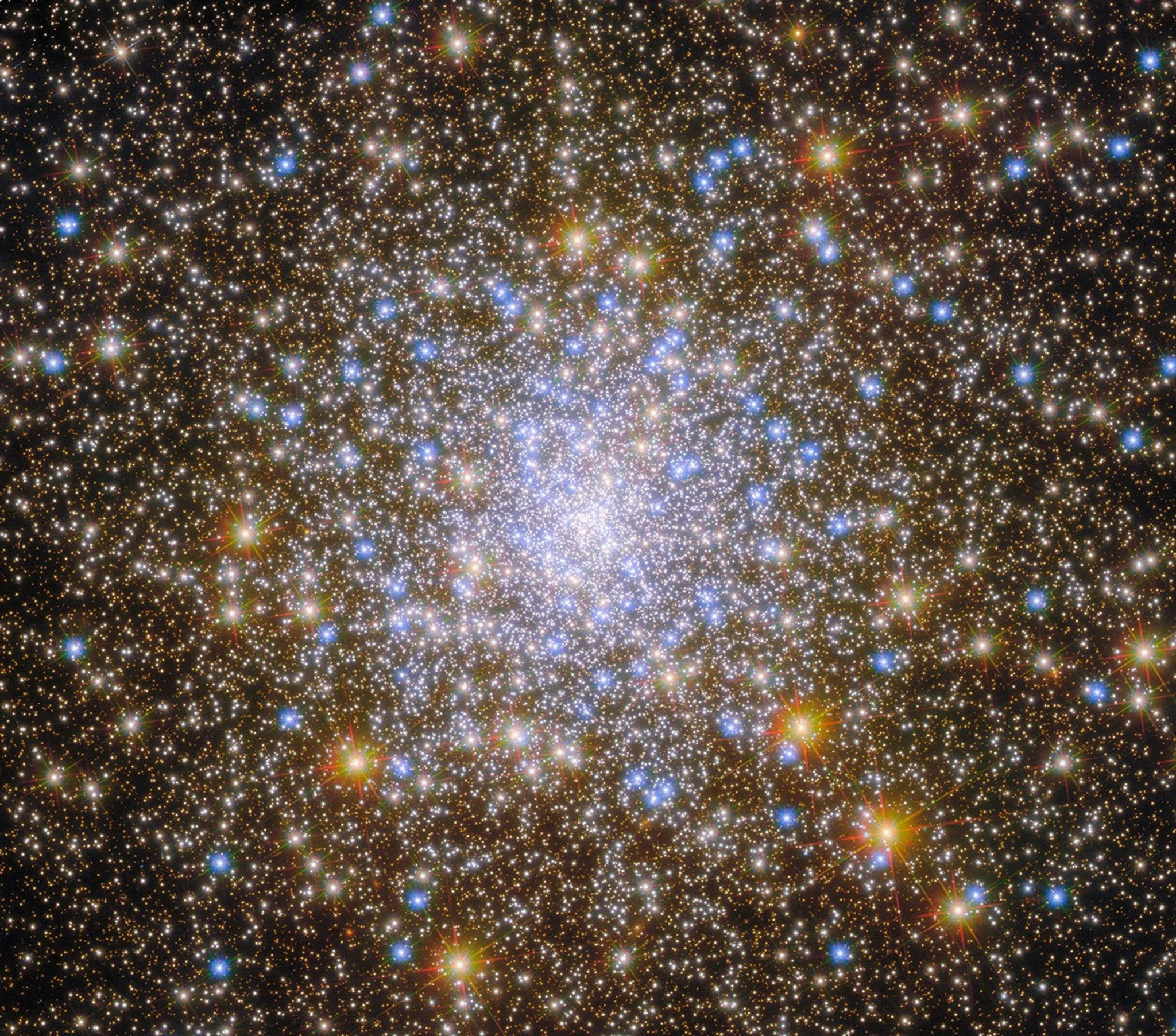
Image: NASA Image of the Day · Image credit: ESA/Hubble & NASA, M. Libralato, G. Piotto, A. Sarajedini · Original page
ESA/Hubble released the image on November 5; NASA featured it the next day. The cluster is named for Charles Messier, the French astronomer who cataloged diffuse objects that early telescope users might mistake for comets. What once helped observers avoid confusion now invites a deeper historical question.
NASA's account of Hubble research describes comparing observations separated by about 15 years to track how different groups of stars move. This image also combines ultraviolet, visible and near-infrared data. Tiny changes become evidence only when observations taken years apart can be aligned and compared carefully.
ESA/Hubble notes that M30 travels around the Milky Way in the direction opposite to our galaxy's rotation. That suggests it may have been captured long ago; it is not a direct photograph of an ancient merger. Zoom into the image and try following individual stars toward the center. The crowding itself hints at how difficult this work is.