
The bison nearly fills the frame. Its heavy shoulders and short curved horns make it look like a small hill that decided to move. Bing's November 7 photograph comes from Theodore Roosevelt National Park in North Dakota.
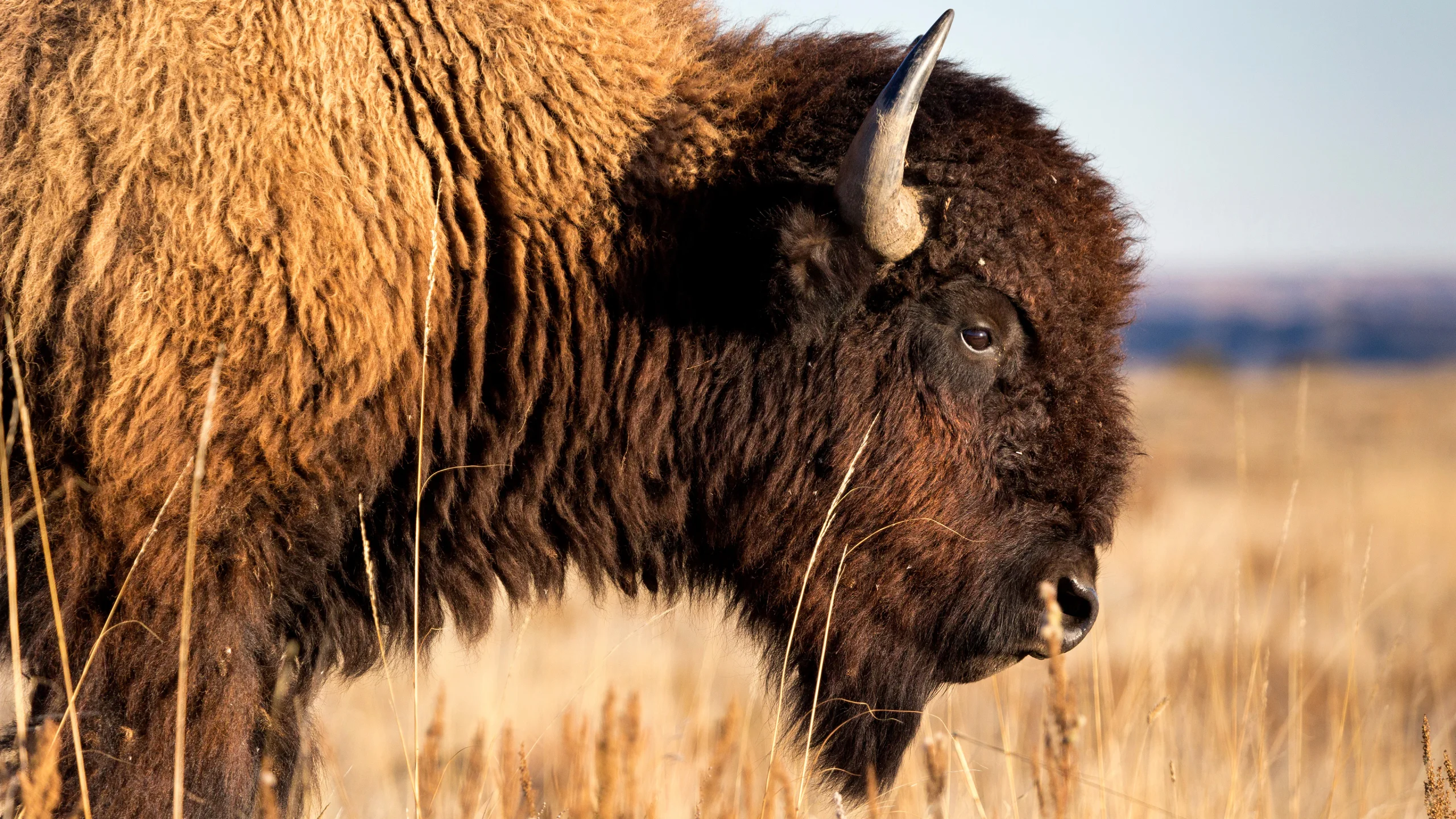
Image: Bing daily wallpaper · Credit: A bison on the prairie, Theodore Roosevelt National Park, North Dakota, United States (© Tandem Stock/Adobe Stock) · Original page
There is a specific conservation history behind that view. The park records that 29 bison were introduced to its South Unit in 1956. Another 20 were moved to the North Unit in 1962. A bison seen here today is part of that story; the park's herd should not be described as having lived here without interruption.
Bison mostly eat grasses and other herbaceous plants. The park says they often graze near prairie dog towns, where fresh grass shoots grow, and roll in loose soil. In its broader account of bison ecology, the National Park Service explains how grazing, movement and wallowing affect vegetation and soil. Dung returns nutrients, while seeds caught in a bison's coat can travel elsewhere. The animal in the photograph is participating in a much larger prairie system.
Give bison room if you visit. The park's wildlife-viewing guidance calls for at least 25 yards of distance from wild animals. Look at the ground around them, too: grass height, bare patches and tracks all carry part of the story.