
The edge of the Moon looks like a battered horizon. Rising beyond it in NASA's November 7 Astronomy Picture of the Day is the de Gerlache-Kocher massif, close to the lunar south pole. The formation stands about four kilometers above the surrounding terrain.
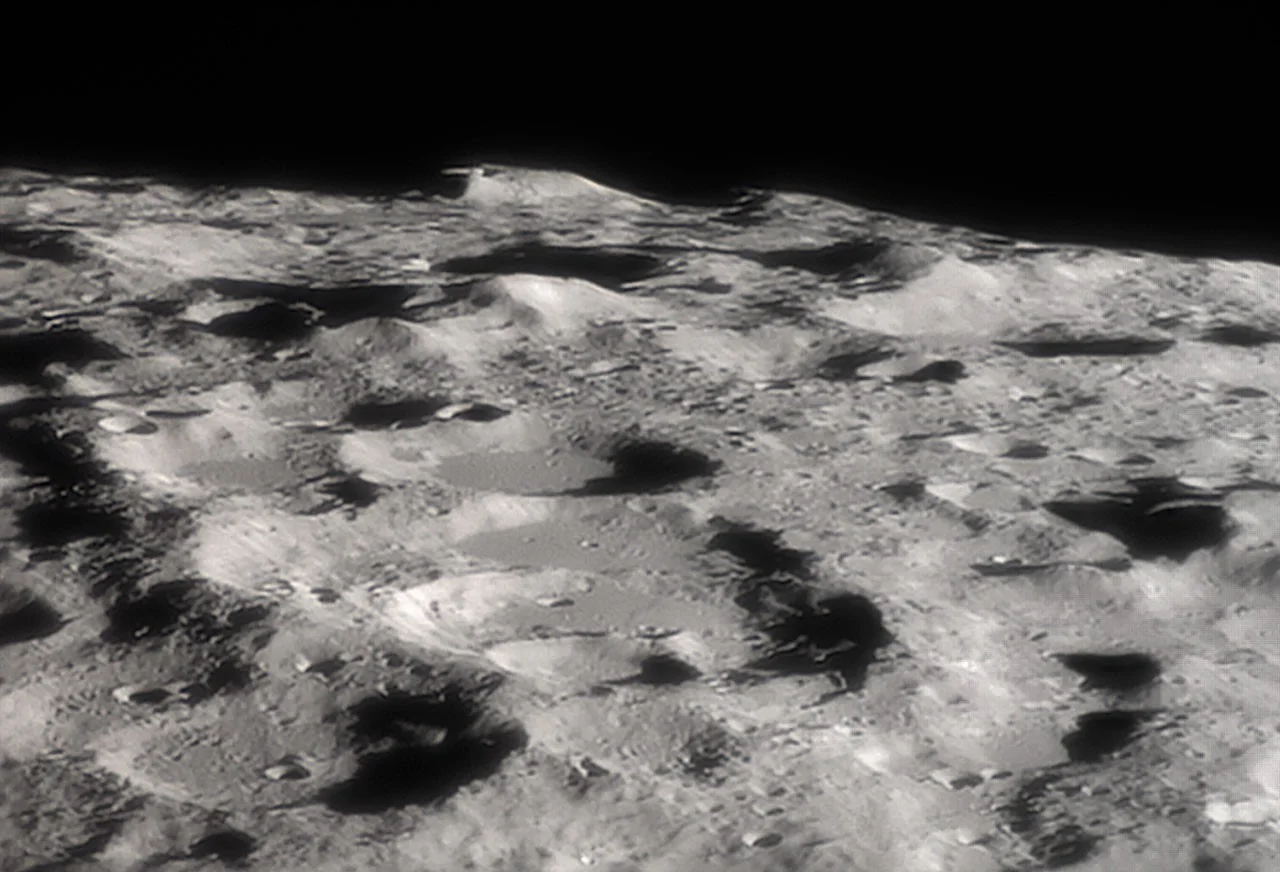
Image: NASA Astronomy Picture of the Day · Credit: Alejandro Sanz · Original page
At the lunar south pole, the Sun skims the horizon. NASA's lighting visualization puts it within about 1.5 degrees above or below that line. Some deep crater floors receive no sunlight and may preserve water ice, while nearby heights can receive light almost continuously, a useful prospect for solar power. That combination draws researchers to the region. It does not mean every dark crater in this photograph has confirmed ice.
The photograph was taken on October 31, not on its November 7 publication date. A favorable libration, the small apparent wobble in our view of the Moon, gave the photographer an unusually good oblique look toward the pole. The Moon keeps almost the same face toward Earth, but its edge does not look exactly the same every night.
NASA says the massif has been considered as a potential landing site for a future crewed Artemis mission. Considered is the key word; it is not a confirmed destination. The next time you see the Moon, look at its light-dark boundary and imagine the Sun hovering low over its polar horizon.