
NGC 4449 looks like a small patch of light beside the Milky Way. NASA's November 11 Astronomy Picture of the Day shows why size is not the same as influence.
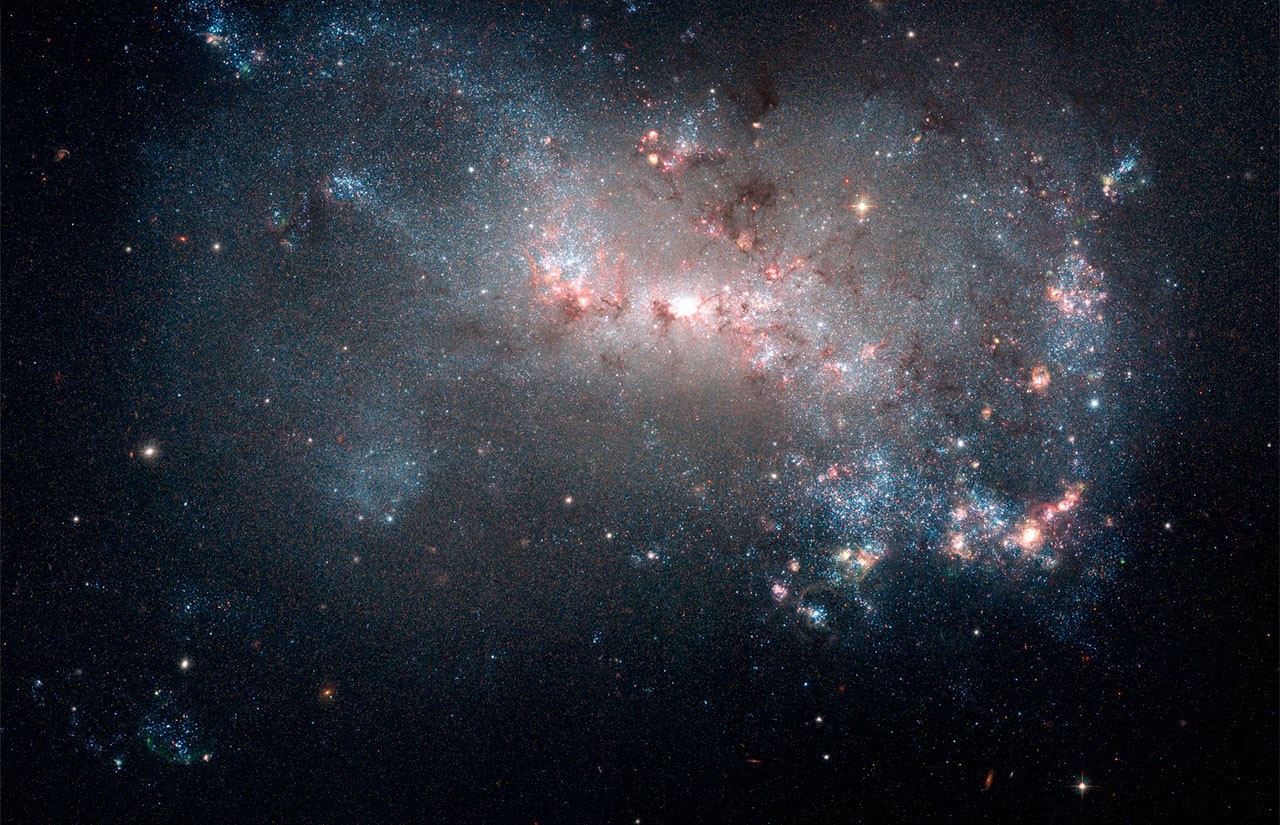
Image: NASA, ESA, A. Aloisi, and the Hubble Heritage (STScI/AURA)-ESA/Hubble Collaboration · Original page
The Milky Way is about 100,000 light-years across and contains hundreds of billions of stars. Dwarf galaxies are roughly one-tenth its size and are the most common galaxy type.
NGC 4449 and similar dwarfs contain less oxygen than models predict. That suggests stellar winds and supernovae may be effective at blowing oxygen and other heavy elements out of these shallow gravitational wells. Those elements later become ingredients for stars, planets, and life.