
Red roofs overlap above colorful walls. Beyond them, the bay curves around the shore, while apartment buildings climb the distant hillside. Bing's November 21 image shows Nice, a city that spreads upward as well as along the sea.
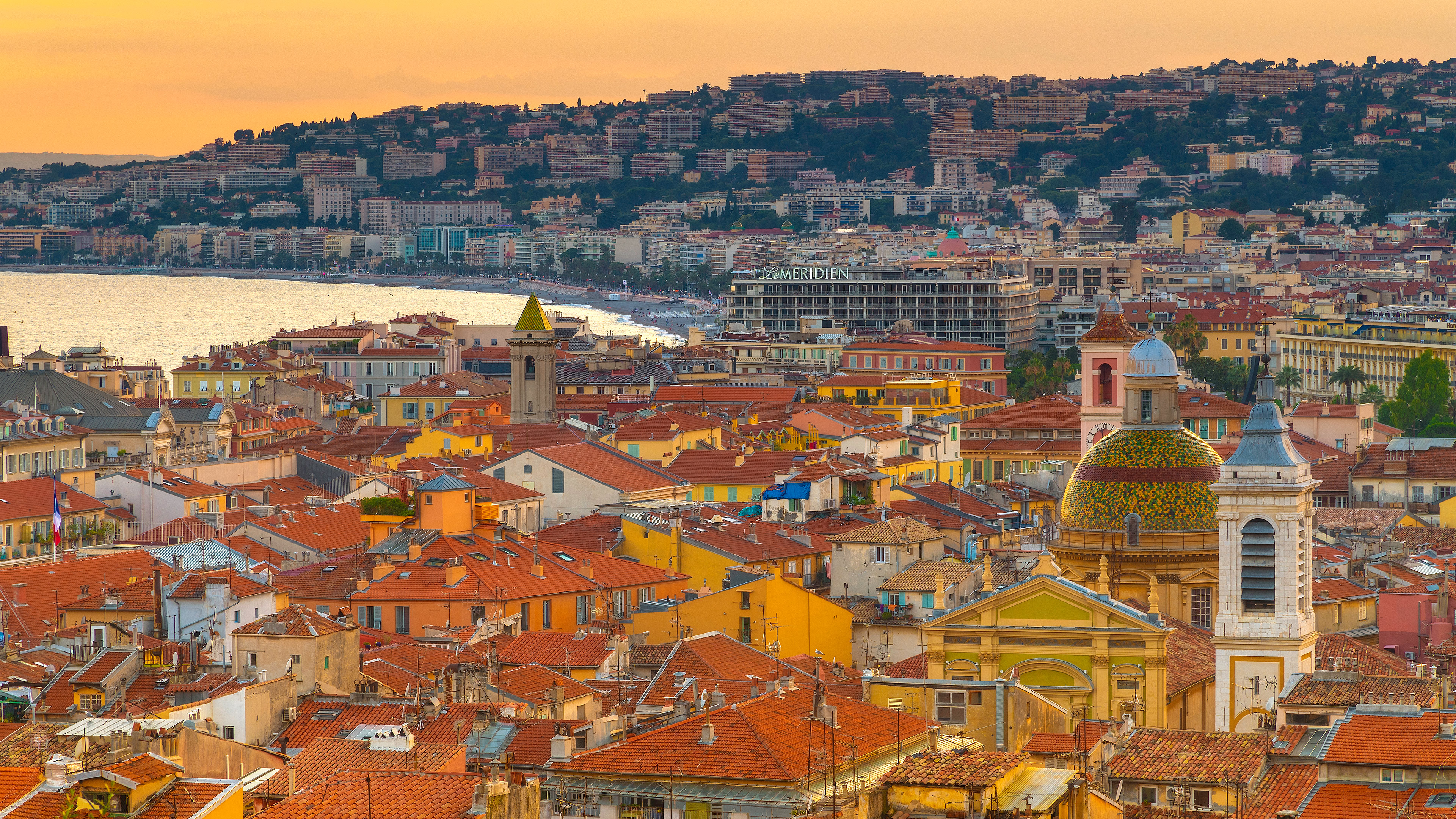
Image: Nice, Provence-Alpes-Cote d'Azur, France (© Siripong Kaewla-iad/Getty Images). Original page
It looks like a place built for summer. Yet winter helped make Nice an international destination.
According to UNESCO, growing numbers of visitors began spending the winter here in the mid-18th century. Many of the earliest were British aristocrats. A mild Mediterranean climate, mountains, and a coastal setting encouraged people to stay for a season. Promenades, gardens, and places to live gradually became part of a city shaped around those extended visits.
Visitors brought their tastes with them. British, Italian, French, Russian, and other influences met in the city's buildings and public spaces. In 2021, UNESCO inscribed "Nice, Winter Resort Town of the Riviera" on the World Heritage List, recognizing the urban landscape that grew out of this international exchange.
Look again at the photograph's tightly packed tiled roofs and the broad ranks of buildings farther up the hill. A panorama can hold many periods at once. The view is not evidence that every building belongs to the same era or forms part of the World Heritage property.
To move from the panorama into the streets, the official Nice visitor guide offers a few starting points. Place Rossetti has ochre facades, fountains, and a Baroque cathedral. Cours Saleya is known for flowers and fresh produce, with an antiques market taking their place on Mondays. Or begin with the map on UNESCO's page: trace the heritage area between the shore and the slopes, and see how a winter resort became a city.