
Three polar bears rest close together. A cub presses its nose toward the larger bear. There is no chase or long trek in this photograph, selected for Bing's November 2 wallpaper along Hudson Bay in Manitoba, Canada.
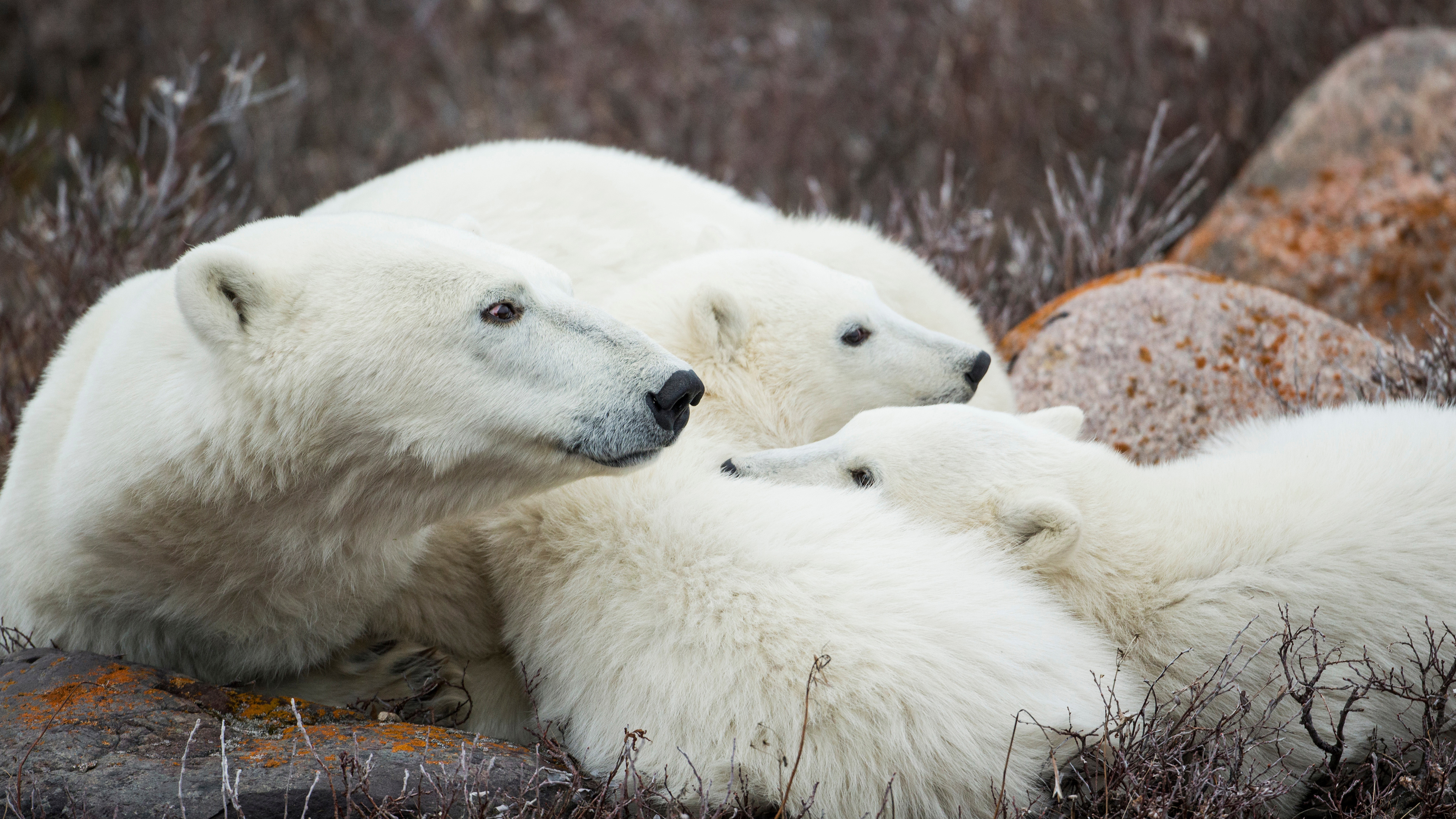
Image: Bing daily wallpaper | Polar bear and cubs by Hudson Bay, Manitoba, Canada (© Danita Delimont/Adobe Stock) | Original page
Autumn here brings a question closely tied to food: when will the sea freeze again? Ice gives polar bears a platform from which to hunt seals.
A Seal Has to Come Back for Air
Polar Bears International's guide to diet and prey describes the crucial opening. Seals use the sharp claws on their front flippers to maintain breathing holes in the ice. They live underwater but must return for air. Polar bears locate the holes by smell and wait, sometimes for hours or even days.
Bears also stalk seals resting on the ice. Waiting is one hunting method among several; the shared advantage is that ice lets a bear get close to an energy-rich animal in the water.
Spring, when seal pups are born, is an important feeding season. Seal blubber supplies energy that bears can store as body fat, helping them through leaner periods.
Hudson Bay is a seasonal sea ice habitat: summer melt is followed by autumn freezing. Its bears' time ashore should not be treated as the pattern for every polar bear region. Bears may eat birds, eggs, and other foods on land, but these supplies are generally less dependable and cannot replace seals' energy contribution across an entire population.
A shorter ice season therefore changes more than the ground beneath a bear. It can lengthen the period without adequate feeding and put greater pressure on fat reserves. The photograph alone cannot tell us how long these particular bears have waited or assess their condition.
Watch the Waiting
You can follow the story through the association's livestream hub, which connects autumn polar bear cameras, expert conversations, and recorded highlights. Its bear tracker lets you compare movements with sea ice. Tracking updates can lag; a stationary point may simply mean a device has not reported.
Under Manitoba's new time rules, the province no longer puts its clocks back in November and now remains on UTC-5 year round. Churchill is 13 hours behind Beijing: 9 a.m. there is 10 p.m. in Beijing. Check the camera's own live status when you open it. Spend a few minutes watching rest, sniffing, and slow movement. Conserving energy is part of waiting, too.