
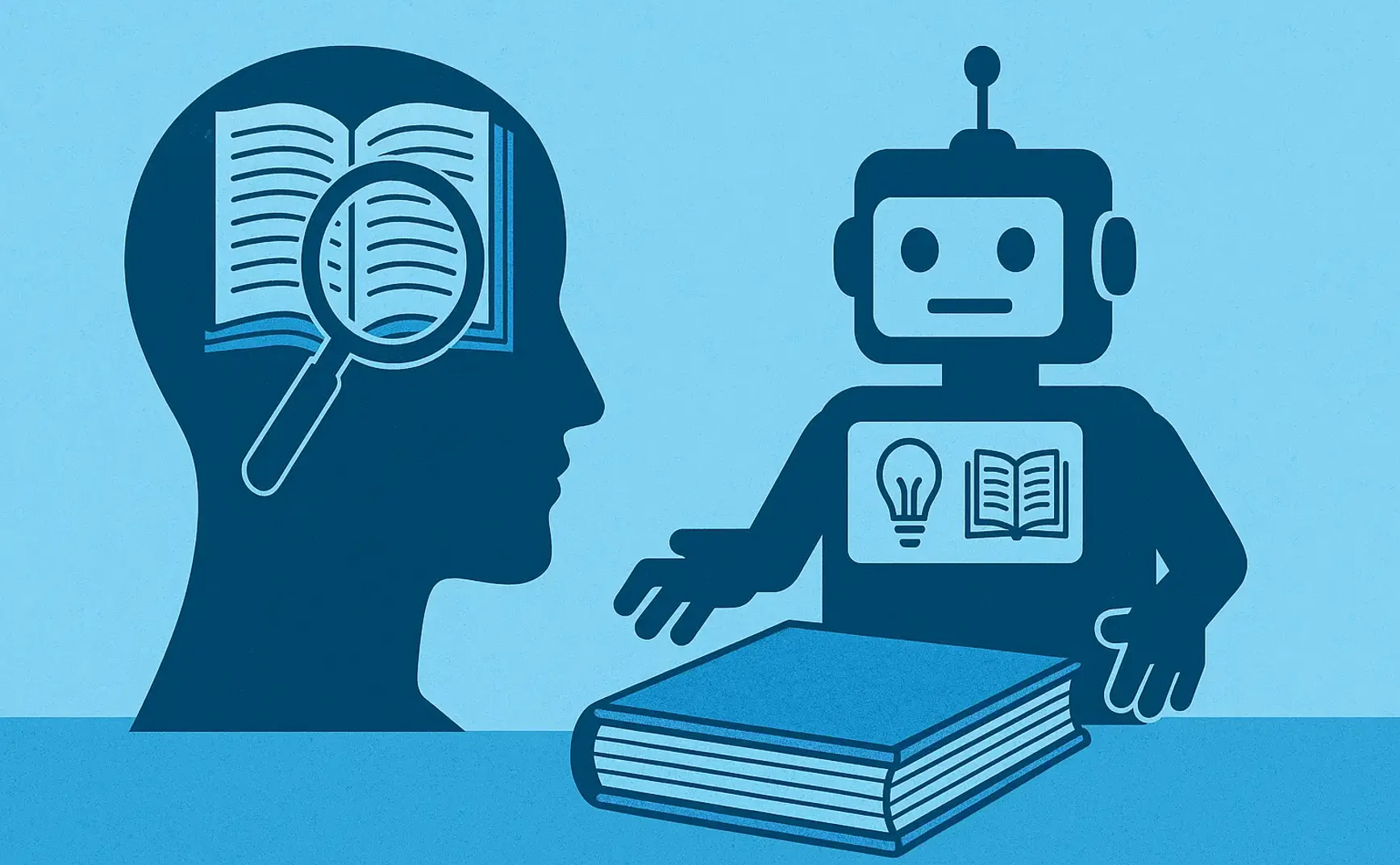
April 23 is World Book Day. I saw someone online pose a question, and indeed, in the AI era the ways in which we acquire knowledge and structure our thinking are undergoing profound transformation.
From paper books to e-books, and now audiobooks—a thick paper book can be read on a slim tablet or listened through apps like Dedao and Fandeng Reading in just ten minutes—and now with tools like Doubao and DeepSeek, a simple command like “Help me summarize this book” can produce a concise overview.
What is the purpose of reading?
We need to reexamine the meaning and value of “reading”: in an age when AI can rapidly supply information, why should humans still read? And how should we read? This is a challenge posed by technological progress as well as a philosophical question about the essence of human thought.
According to the National Literacy Survey, in 2010 the average Chinese adult read only about 5 books per year, but by 2022 this had increased to 8.1 books—a growth of over 60%. Particularly in the latter half of the 2010s, as nationwide reading campaigns took off and mobile internet became widespread, per capita reading surged. From 2019 to 2023, the annual combined reading of paper and e-books among Chinese adults stabilized at around 8 books with only slight growth.
Ongoing advocacy has generally improved Chinese reading habits: more people are reading, and the volume is steadily increasing. Of course, many challenges remain...
Why Read?
“Tang Seng is defined not by the scriptures he carries, but by the journey to obtain them.” I once came across this saying.
Applied to the act of reading, it highlights the value of the process—the exercise of critical self-reflection, the transmission of cultural spirit, and the sheer pleasure of engaging with the text.
Reading is not solely for obtaining information; it is an experience that shapes our thoughts and emotions. AI tools (like Doubao and DeepSeek) can efficiently provide book summaries or condensed overviews, and features such as WeChat Reading’s AI outline can even reveal a book’s structure beyond the table of contents. These tools are valuable for quickly grasping the framework of information.
There are many ways to access information, but reading also teaches us how to write, and writing is crucial for generating and deepening thought. By reading, we learn how an author contemplates an issue or theme and how he articulates his ideas clearly.
Great writers uncover new insights during the writing process—a depth of thought that mere reception of information cannot achieve. As the saying goes, “To think well, you must write well; to write well, you must read well.”
Currently, AI cannot fully replace the profound thinking and creative process that comes from the combination of reading and writing.
Research shows that deep engagement with literary works activates brain regions associated with language, sensory perception, and emotion, helping us understand complex concepts and empathize with others. Some studies even suggest that reading literary fiction improves our ability to comprehend others’ emotions—a key aspect of fostering empathy.
These cognitive and emotional abilities, developed through deep reading, embody a “human warmth” that AI has difficulty replicating.
In the AI era, the value of reading transcends the mere acquisition of knowledge; at a higher level, it serves to protect human independent thought and spiritual freedom.
The Impact of AI on Reading Methods and Cognitive Structures
There is no doubt that AI is reshaping our reading methodologies.
In the past, we typically acquired knowledge by reading entire books or systematically studying literature. Today, with powerful dialogue models like ChatGPT, people can directly receive answers in a Q&A format or have AI generate book summaries and key points.
This highly indexed retrieval method diminishes the importance of the text’s structure—readers can bypass the original material and jump directly to conclusions.
For example, I once encountered a website called 3min that uses AI to directly summarize a book by generating a mind map, key arguments, and core insights.
This model of human-AI co-reading compresses a reading process that once took hours into a matter of minutes, enabling learners to grasp a book’s essential concepts with just 1% of the time. For efficiency-seeking readers, it serves as a shortcut to knowledge.
However, this habit of rapid reading may also intensify the tendency toward fragmented consumption. Studies indicate that, while the human attention span averaged about 12 seconds in 2000, it has now fallen to 8 seconds. Digital media has made it harder for us to maintain prolonged focus. AI tools may further amplify this trend—when every question can be answered immediately, people become less patient with lengthy, original texts and lean toward “fast-food” style information.
Multitasking and constant context switching can lead to cognitive overload, impeding deep understanding. In his book The Shallows, Nicholas Carr notes that the internet encourages superficial browsing of fragmented information, sacrificing opportunities for deeper thought.
If we rely entirely on AI to screen and summarize, we risk falling into a “fragmented context” trap: piecemeal information lacking cohesive structure, where readers obtain only a collection of fragmented associations rather than a systematic, coherent knowledge framework.
Over time, readers’ brains might adapt to this superficial mode of engagement, potentially leading to a “use it or lose it” effect regarding deep thinking.
If we uncritically accept AI’s secondhand conclusions presented as “knowledge without insight,” it is like eating food already chewed by someone else—over time, we may lose our ability to independently chew and digest complex material.
Deep reading requires full engagement with lengthy, challenging texts, inviting us to critically reflect and imagine beyond the written words—a stark contrast to the fast pace of digital life. If we habitually delegate the task of distilling key points to AI, we risk losing the patience and capacity for genuine “solitude with a text.”
The Benefits of Deep Reading
The following matrix, derived from an extended Johari Window in knowledge management, shows that the value of deep reading lies in continuously transferring the content of the right column to the left, and progressively moving the unknown into the realm of the known.

The meanings of the four quadrants and their related explanations are as follows:
| Cognitive Quadrant | Meaning | How Deep Reading Contributes | New Risks in the AI Era |
|---|---|---|---|
| Known Knowns (Clearly Known) | Knowledge you are confident you understand | Reinforcement through recitation and transfer (using pen and paper annotations, retrieval practice) | Over-reliance on AI “outsourcing memory,” leading to an illusion of familiarity |
| Known Unknowns (Known but Unmastered) | Gaps you are aware of | A question framework in deep reading: identify doubts → consult original texts → use Socratic or heuristic inquiry | AI summaries shorten the reading chain, making it easy to underestimate the true extent of gaps |
| Unknown Knowns (Tacit/Intuitive) | Unconscious knowledge not yet made explicit | Awakening implicit models via resonance with an author’s detailed arguments; writing reflections to verbalize intuition | Rapid, segmented reading lacks contextual cues, hindering the process of making tacit knowledge explicit |
| Unknown Unknowns (Blind Spots) | What you don’t even know that you don’t know | Deep reading across disciplines; encountering unfamiliar concepts can reveal new questions | Algorithm-driven echo chambers might further conceal true blind spots |
A neuroscience study found that slow word recognition activates the “deep reading circuit” in the prefrontal and temporal lobes, aiding in logical integration and emotional empathy. On the subject of empathy, this is one key difference between humans and AI. Deep reading enhances our ability to empathize, whereas AI lacks emotional understanding. If we end up only receiving answers, knowledge, or content provided by AI, how will we come to truly experience empathy?
Some people say, “I chat with my ‘AI boyfriend’ and I feel he’s so understanding.”
Simply put, what AI displays is generated based on the data accumulated from your interactions. The more you converse, the more data it gathers about you, which it then uses to generate responses by applying learned patterns. In reality, AI does not feel; it cannot truly grasp or experience emotions—it merely transfers knowledge based on its existing data and your input.
When we read, we not only grasp the author’s emotions but also follow along with his narrative logic and writing style. Reading becomes a shared journey through the author’s chain of thought.
Both our conscious and unconscious experiences—whether explicitly recognized or not—are compared and calibrated as we read. The author’s expression can inspire us to develop our own framework, gradually shifting information from unconscious to conscious, moving unknowns into the domain of the known. In other words, deep reading moves our understanding upward and leftward in the matrix.
Only when you know what you understand and recognize what you don’t—that is, when you are aware of your Known Knowns and Known Unknowns—can you pose clearly defined questions. This enables you to ask AI more precise, insightful, and valuable questions, guiding it to offer truly useful information rather than superficial Q&A. Otherwise, your questions might be overly broad or off-target due to a lack of background knowledge.
For example, if you immediately ask AI, “What is private domain traffic and how should I manage it?”
AI might provide a fairly broad, generic definition along with common strategies such as setting up WeChat groups, posting on social media, or running promotional campaigns. But such an answer might not address your deeper, underlying needs or reveal knowledge gaps you weren’t aware of.
After reading several articles or chapters on private domain traffic, however, you might first understand that it refers to traffic that a brand or individual exclusively owns, controls, and reuses freely. You would also learn its key differences from public or commercial traffic.
You would encounter specific methods and frameworks—for example, the process “attract → retain → activate → convert → replicate,” along with key metrics like community engagement, repeat purchase rates, and virality coefficients—concepts you were previously unaware of, the things you “didn’t know you didn’t know.”
For instance, refined operations might require user segmentation, standardized processes need SOPs, building trust may involve creating a personal brand (IP), and data-driven decisions might call for a CDP. Vague questions like “How do I manage private domain traffic?” then evolve into much more specific ones, such as how to design SOPs for high-value users, or how to measure the effectiveness of IP creation.
With this deeper understanding, you can ask more focused, targeted questions rather than broad ones. You might, for example, specify an industry—say, beauty—and ask for detailed strategies and case studies regarding user segmentation in private domain traffic. This narrows the context and operational aspects, ensuring that the response is tailored and detailed rather than a generic overview.
Keep in mind that AI’s output is inherently limited in length, and it strives to address all your questions. The broader your query, the more superficial each individual point may be treated.
Comparing direct AI answers with reading a book, recall that AI provides conclusions without detailing the underlying logic. In contrast, a book might signal transitions at the end of chapters—perhaps leaving a cliffhanger—to guide you into the next section. This technique exposes you to gaps in your knowledge first, which are later filled with complete arguments in subsequent chapters.
Studies indicate that exposing a “knowledge gap” before providing a full explanation can significantly enhance memory and transfer outcomes (retrieval-practice research shows improvements of around 50%). The extended narrative and detailed context of deep reading effectively amplify this mechanism of delayed gratification.
In summary, in the AI era deep reading offers three significant incremental benefits:

The first dimension concerns problem design: deep reading helps you establish hypotheses for deconstructing and arguing points, so you can craft more precise prompts. For instance, when writing a research proposal or analyzing competitive business dynamics, you will know exactly which aspects to have AI consider and how to angle your inquiry, rather than simply asking for a generic proposal.
The second dimension involves bias screening. In my earlier writings on human cognitive biases, I mentioned how AI can help us identify and correct these biases. However, we cannot rely solely on AI for this because it too can experience errors. The human brain’s slower, more deliberate System 2 thinking can cross-reference multiple sources of evidence. Engaging with deep reading materials alongside online data helps eliminate bias; the more comprehensive our information, the more we can mitigate these biases.
The third dimension is about metaphor and cross-domain associations. Reading literature or philosophical texts trains our metaphorical thinking and enhances creative transfer—helpful, for instance, in product naming or crafting marketing narratives.
Information by itself is not insight; connections between pieces of information yield wisdom. When you only know isolated facts, they are just disconnected dots. Through reading, by following an author’s reasoning and analysis, you gain a network of interconnected ideas, which, when combined, stimulate cross-disciplinary creative thinking.
Metaphor is not only a rhetorical tool but also a core cognitive mechanism (for those interested, delve into psychological studies on metaphor). We use metaphors to connect unfamiliar concepts (A) with familiar ones (B) to foster understanding and innovation—for example, likening a computer desktop to a real desk, or describing malicious software as a “virus.”
An added benefit of metaphors is their linguistic efficiency: a well-chosen metaphor can convey rich and complex information and emotion with just a few words. For instance, using “bitter winter” to describe an economic downturn instantly evokes notions of hardship, stagnation, and struggle—far more efficiently than a lengthy explanation. In times when input tokens are limited, precise wording can convey more information in fewer tokens.
In an era of “ten-minute audiobooks” and “one-click summaries,” the significance of deep reading has not diminished. Instead, it has evolved from a mode of information acquisition to a means of honing one’s thinking.
AI can compress a book into a one- or two-page PDF, but only deep reading can decompress knowledge into insights and wisdom.
A Model for Effective AI-Enhanced Reading
With AI assistance, we can adopt a four-layer reading model.

The first layer is the initial step: spend 30 seconds determining whether the book is worth your time. For example, you can prompt AI to generate a summary based on the book’s content or compile user reviews using a tool like DeepSeek. However, do not rely solely on this summary to make your decision. The judgment is not about whether the book is inherently good, but whether it fits your current needs and whether its knowledge justifies the time investment.
The second step is to spend about ten minutes constructing a mind map of the entire book. There are many tools available—AI can generate Markdown that converts into a mind map, or dedicated software can create one from a book. This mind map provides a clearer overview of the book’s structure, helping you recognize which sections contain information worth a more in-depth reading.
The third step is to deeply read the core chapters—or even the entire book—guided by your mind map. Identify the chapters that seem most relevant to you. However, beware of your own biases: what initially seems irrelevant might still offer valuable insights. Avoid confining yourself to a self-constructed “knowledge bubble.” My suggestion is to read as extensively as you can if you believe the book merits attention. Every chapter has its rationale and logical flow. During this process, take notes, write commentaries, and ask AI for clarifications on any uncertainties.
The final step is to produce output. I believe the best way to learn is to externalize your insights—be it through writing articles, forming projects, or developing your own arguments—and then use AI to test or refine these ideas. Alternatively, publish your work publicly so others can evaluate your reading outcomes. Teaching others forces you to truly internalize what you have learned.
Much like Tang Seng’s arduous journey to obtain scriptures, it is perhaps the challenges and hardships along the journey that are of greater value than the destination itself. Reading an entire book to gain knowledge is as much about training our thinking as it is about acquiring information.
In closing, let us inspire ourselves with the words of writer Jorge Luis Borges: “Heaven should resemble a library.”