

Learning from 61, I created a Quaily channel to post my blog logs.
Email subscription: https://quaily.com/jiayifunblog
RSS subscription: https://quaily.com/jiayifunblog/feed/atom
I recommend using Folo to subscribe to my RSS.
💬 Deep Dive
In August 2022, I was deeply moved by a podcast featuring Meng Yan, founder of Youzhi Youxing, and Huang Hai, a consumer investor, titled “Inspire More People to Know You or Let Those Who Love You Love You Even More.”
Between 2022 and 2025, I often ponder these two different choices: one focuses on the quantity of exposure, and the other on the depth of connection.
Since the beginning of the year, as I produced nearly 10 video episodes, I realized that I am not cut out for content that aims to “quickly let everyone know me.”
I believe this is partly due to my mild temperament and partly due to my distaste for exaggerated expressions. So, although I cannot be certain whether my content will make those who already love me love me even more, I am sure that everything I create will not lose its integrity in pursuit of “more exposure.”
Over the years, my deepest insight into content and product growth—and the outcome I most desire—is to invest genuine effort, maintain patience, provide value to users, and then reap the corresponding rewards.
1
After using many products, I’ve developed a habit: before using a product, I first check its landing page and user interface to see if the creators have put their heart into it and whether they pursue detail and quality.
You see, the font, color scheme, copywriting, and punctuation all convey the essence behind the product. For example, whether or not to add a space between Chinese and English, and if omitted, whether it’s done consistently across the board—the most frustrating scenario is when it’s added in some places and not in others 🤦♂️
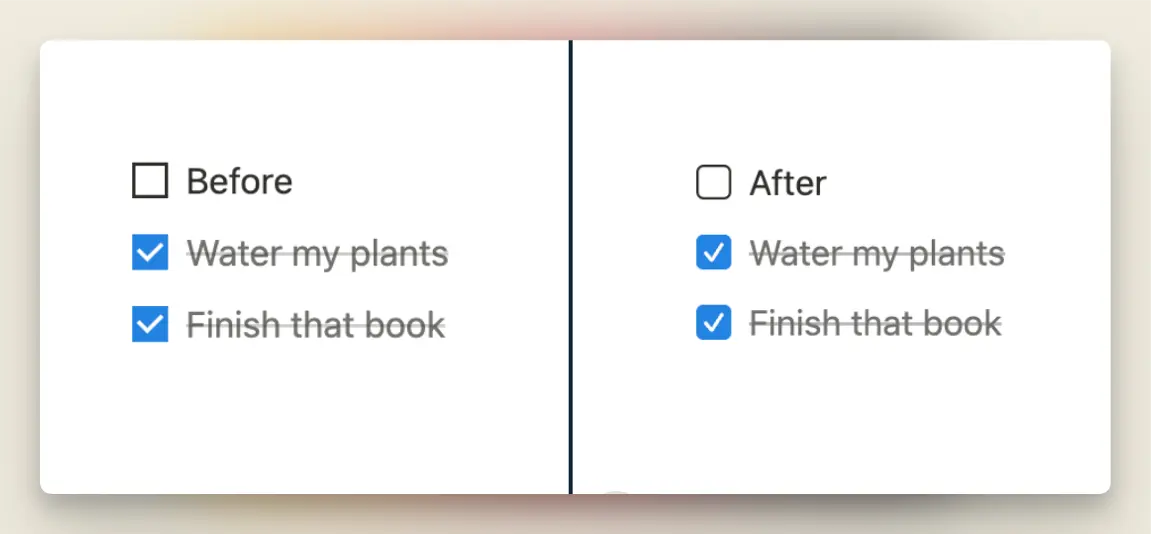
Recently, Notion optimized the design of its to-do checklist by rounding the corners to align with the rest of its UI. This may be a small detail, but it made me feel that Notion is once again putting genuine effort into its design, reinforcing the loyalty of those who love it.
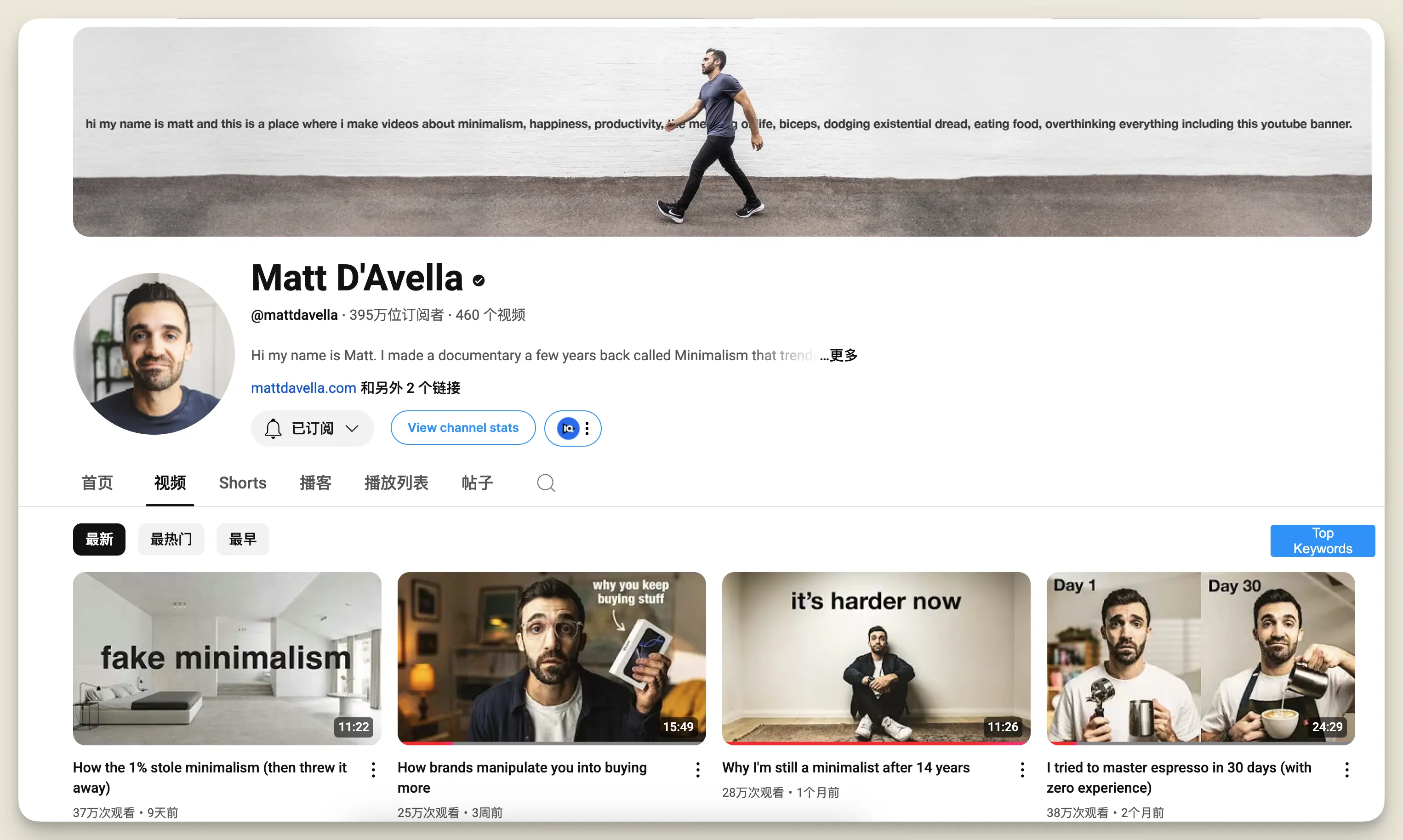
In content creation, I have a particular fondness for work that doesn’t rely on templated routines. For instance, Matt D'Avella often uses several different background music tracks in a single video to match various sections. The right BGM is crucial for setting the vibe of the content, and at my current stage, I feel that choosing the right BGM is the most challenging part of video creation—it demands a lot of time, testing one’s taste and patience.
Matt’s cover art is also crafted with care, and the fact that he produces all his content alone, without a team, only strengthens my trust in his creative methods. When I feel his commitment to quality, I gladly invest my attention in his videos.
A complete work should reflect careful thought at every touchpoint with the user, conveying a vibe that enables an immersive experience and creates a connection.
In Starbucks CEO Howard Schultz’s book, Pour Your Heart Into It, I learned how Starbucks meticulously designs its spaces. Everything that customers come in contact with—the style of the chairs, the placement of the condiment and utensil cabinets, and even the texture of the floor—is thoughtfully arranged to complement the warm coffee in their hands.
I understand that such attention to detail is very luxurious. In many jobs, you simply don’t have the conditions to change team habits or control the quality of your colleagues' output.
That’s why having a side project is so valuable—it lets you act according to your own principles.
2
Investing genuine effort doesn’t mean insisting on complete originality. Frankly, the best way to learn about content and product growth is still through imitation.
Apple’s graphical user interface and mouse-driven interaction were inspired by Steve Jobs’ visit to Xerox PARC. However, Apple introduced graphical icons, drag-and-drop, double-clicking, window scaling, and the clickable “desktop” concept, making the interface intuitive, easy to learn, and aesthetically pleasing—setting the standard for future interactions in macOS and Windows.
Starbucks initially sold only coffee beans. Today, it offers freshly ground coffee and Italian beverages like espresso and cappuccino—a result of Howard Schultz being inspired by Italian coffee culture during a 1983 trip and then replicating the concept in America, though later it was adapted to local tastes.
The key is that the imitation by Apple and Starbucks wasn’t about copying blindly; it was about capturing elements that resonated, then adapting and enhancing them thoughtfully.
I have seen in the online education industry how many established instructors and aspiring IP creators add an identity card in their videos to establish credibility—transforming themselves into industry experts or seasoned teachers. They use similar scripts and editing techniques to produce their videos. Many scripts prove effective simply because you know how to speak and deliver the message, irrespective of who appears on screen.
While this approach can quickly “get you known,” what is the cost? At the very least, when users see another video that’s identical, it undermines trust. I’m quite averse to such uninspired work.
I appreciate, and strive for a type of imitation that involves identifying refreshing and outstanding elements in content or products, collecting them, and then integrating them into my own creative work—not forcefully, but in a blended manner.
These imitated elements might be a design style, a material, or even a registration process flow…
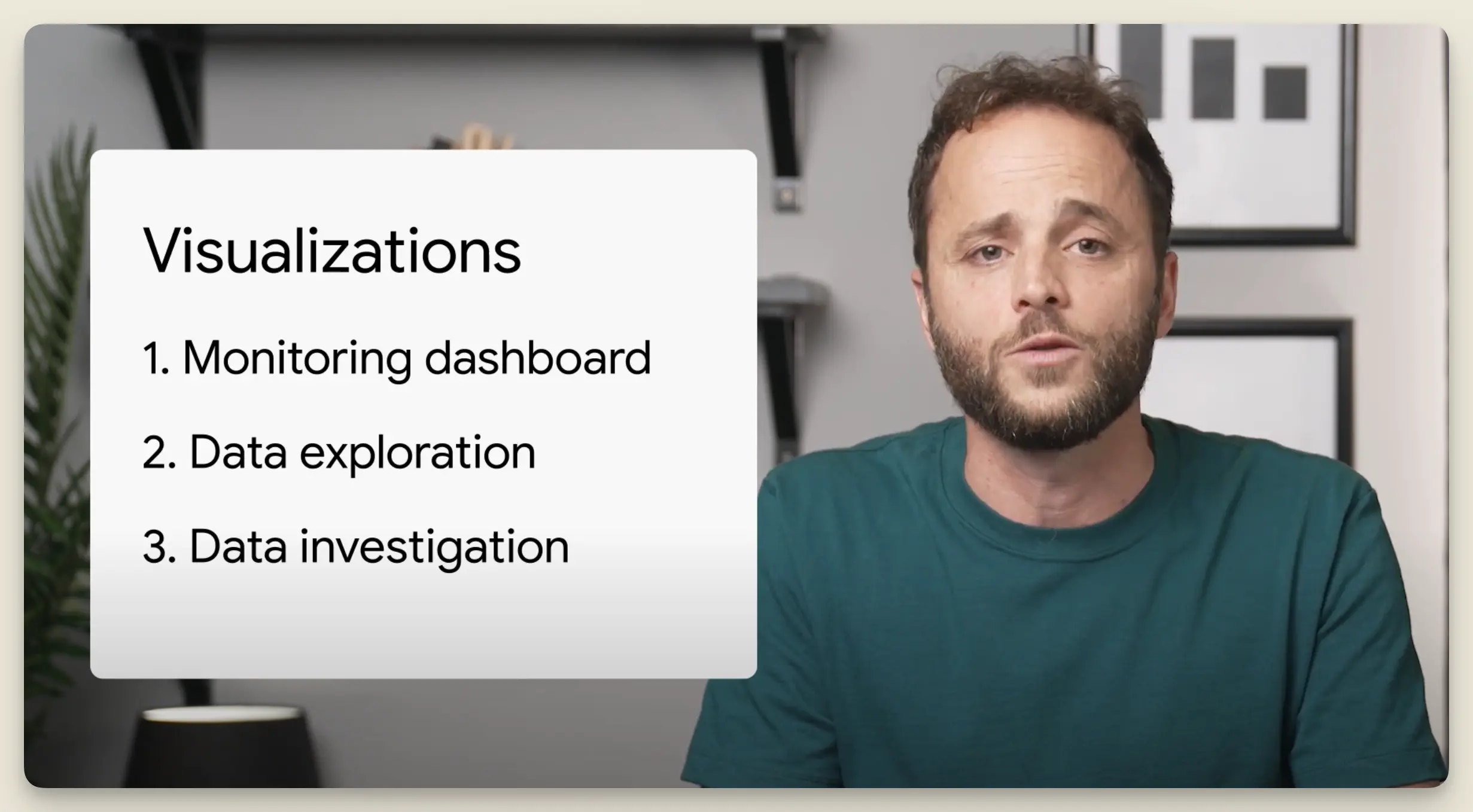
For example, when I was watching a Google Search Console tutorial, I noticed the clarity of the cards outlining key points. I took note of it, and when I need to list similar points in my videos, I might consider using that style.
Not aiming for an exact replica but rather a reorganization and integration of elements may slow down progress. Achieving noticeable results from doing the right things requires endurance and optimism.
3
Last week, while chatting with one of my early mentors, he once again said:
Be patient. Stick to doing the right things; don’t wait.
I saved that quote, but the real challenge is: how does one cultivate patience? How do you consistently do the right thing?
My feeling is that, given ample resources, the key to sustaining patience is having sufficient self-efficacy. Self-efficacy is a psychological concept referring to your confidence in your ability to complete a task or achieve a goal—a belief that "I know I can do it."
When you believe that a method will work and have confidence in your ability to succeed, you can steadfastly follow through with your strategy.
Reflecting on my early team, when we were gripped by growth anxiety, we attempted to polish our content meticulously. However, when short-term results were not immediately apparent, we gave up and reverted to shortcuts. In essence, we lost faith in our ability to innovate independently, trapped by our habitual dependencies.
I experienced the same thing: in the past two years, I repeatedly halted my creative efforts—even though I had strong wishes to continue—because I didn’t believe I could succeed. I thought of myself as someone who easily gives up. This mentality is a manifestation of low self-efficacy and continually hinders me from pursuing what I want to do.
If you’re not a born entrepreneur or an innately ultra-optimistic and confident person, merely relying on “believing to see” won’t carry you through the “long dark nights.” Most people need to use certain methods to gradually build up their confidence and sense of self-efficacy.
I’ve found two methods particularly helpful in boosting self-efficacy:
First, accumulate successful experiences.
Lower the bar for completion in your side projects to build a sense of “I did it.” For example, when I first started writing a newsletter last year, I only aimed to write three short reading snippets of just a few hundred words each week—just ensuring they got published. Each publication reinforced my belief, gradually building my self-efficacy so that now I can update with a 2,000–3,000-word article every four weeks.
Second, learn from others’ experiences.
Immerse yourself in communities to observe how others create and refine their products, absorb their unique vibes, and study their creative and growth paths. This offers concrete role models and gradually builds your confidence—what psychology calls “vicarious experience.”
Once self-efficacy is established, you’ll notice that, unlike when you first entered the workforce, you’ll no longer solely rely on the leader’s opinions. You’ll have the autonomy to think independently, make judgments, and assert your viewpoints.
Final
I love this line from Pour Your Heart Into It:
Starbucks is respected not only for its success but for the way it achieved that success.
Results are important, but the choices made along the journey also define the content, products, and the users they attract. Pour your heart into it and refine with patience; though it may be slow, it will ensure that those who love you will love you even more.
💎 Curated Gems
1
Wu Luja, the founder of Zhishixingqiu, reflects on the idea of “small but beautiful.”
A small and beautiful enterprise starts from a community base, quickly validates paid services, focuses on delivering an excellent product with a tiny team, acquires customers through content and transparency, and achieves sustainable, healthy revenue growth through cash flow and automation.
One question worth pondering for small teams is:
If imitated, what will keep our core users loyal?
Data? Workflow? Community? Brand?
2
10 Tips to Boost Efficiency, Thought, and Action.
What resonated most was the first point: mental energy, unlike physical energy, doesn’t deplete the more you use it.
Mental energy has a cumulative effect. For instance, completing your most important task in the morning often boosts your energy to tackle other tasks, creating a positive feedback loop.
Conversely, procrastination, oversleeping, or endlessly scrolling through social media drains that energy, causing many tasks to fall behind.
3
I rarely read articles on Medium. Last year, there were still many pieces on Medium about “how to get rich quickly,” with varying quality.
I was particularly surprised by the article How Medium Survived a Crisis and Turned a Profit because the current CEO, Tony Stubblebine, is a super user of Medium—almost 2% of page views on Medium come from his publications and articles.
Founder Ev Williams redefined what a writing platform could be by making every facet of the user experience both simple and elegant. He also pioneered a brand-new business model that moved away from ad-driven incentives toward a unique bundled subscription service that allows all creators to share in the revenue.
However, this business model is very challenging to operate. It requires finding that “just right” balance between operating costs, content quality, and user experience. The current CEO’s task is to strike that balance—rescuing content quality while stabilizing company finances. Remarkably, they have already turned things around.
🧵 One More Thing
This video shares 12 Mac apps I regularly use.
If you can’t stand the ads in domestic music apps, try Apple Music instead. With a student subscription costing only 6 bucks a month, you get a pristine and premium musical experience.
I also want to share a neat feature from Feishu’s screenshot tool: by pressing the shortcut, you can copy the RGB color immediately (even before selecting an area). If you want to copy the HEX format, simply hold Shift while copying. It’s very convenient.
Compared to CleanShot X, I find Feishu’s screenshot tool offers a better experience—after selecting the area, you can directly adjust the border size, add annotations, and edit without needing to open a separate editing window.
Is there a screenshot tool that combines Feishu’s simple interaction with CleanShot X’s ability to add background images? 🤔