Sleep might be the most underrated form of self-repair.
💬 Deep Dive
Looking back at the sleep data recorded by my Apple Watch over the past two years, I realized that my deep sleep amount isn’t great—averaging only about 50 minutes, making up 10%–12% of my total sleep. This isn’t a good figure.
The direct impact of a lack of deep sleep is that even after 8 hours of sleep, you still don't feel fully refreshed. To improve my sleep quality by increasing both the time and proportion of deep sleep, I recently read Why We Sleep.
Below are my reading notes, shared with the hope that they will help you sleep better.
1. The Two Factors Affecting Sleep Onset
In the final section of his book, author Matthew Walker lists 12 healthy sleep recommendations. However, if there is only one tip to remember, it is this:
Stick to a fixed sleep schedule. Go to bed at the same time every night and wake up at the same time every morning.
For those with flexible schedules, like freelancers, this can be challenging. Yet, it becomes much easier once you understand the two main factors that influence falling asleep and waking up—circadian rhythm and adenosine pressure.
Circadian Rhythm
Circadian rhythm is your body’s internal clock. Our circadian cycles aren’t exactly 24 hours—they’re slightly longer, which is why staying up late tends to be easier than going to bed early. Establishing a regular schedule is easier when you calibrate it with timing cues such as light exposure, meals, and exercise.
Consistency in sleep can be maintained by using external “zeitgebers” like daylight, meal times, and physical activity. Regular timing for meals, work, and exercise all serve as effective cues to help your body develop a routine. The most important among these is light. In Huberman’s sleep toolkit, the first recommendation is to get outside for 30–60 minutes of sunlight in the morning and again before sunset. Sunlight stimulates the retina, regulates melatonin secretion, and thereby controls wakefulness and sleepiness.
Bright morning light suppresses melatonin to keep you alert, while the gradual dimming of light in the evening promotes melatonin production and induces sleepiness.
Adenosine Pressure
Adenosine is a neurotransmitter that starts accumulating in your body in the morning, peaking at night (after 12–16 hours of wakefulness). By binding to neuronal receptors, it triggers sleepiness. After an 8-hour sleep, adenosine is cleared and the cycle starts anew.
Caffeine keeps you awake because it occupies adenosine receptors, temporarily staving off sleepiness. However, once caffeine is metabolized, adenosine quickly binds to the receptors, resulting in an even stronger feeling of fatigue.
While both adenosine and the circadian rhythm influence sleep, they operate independently. You might have experienced staying alert despite a late night because, regardless of how much adenosine accumulates, your circadian cycle continues on its own pace—it won’t pause just because you haven’t had enough sleep.
Understanding and utilizing these two mechanisms makes it easier to develop a regular sleep schedule.
2. Sleep Cycles and Their Functions
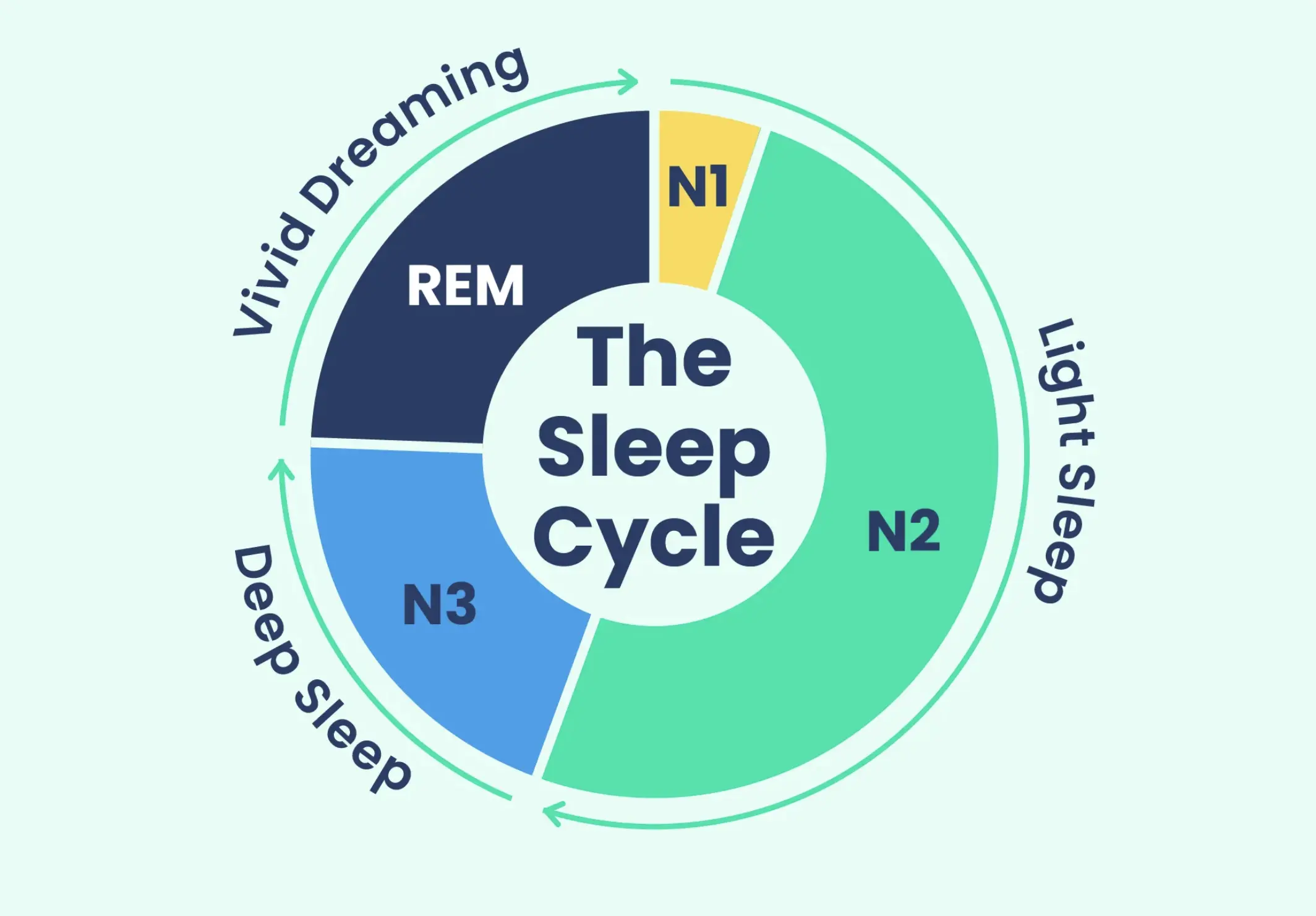
After falling asleep, our brain undergoes 4–5 sleep cycles each night, with each cycle lasting about 90 minutes. Within each cycle, two completely different sleep patterns alternate:
- Non-Rapid Eye Movement Sleep (NREM)
- Rapid Eye Movement Sleep (REM)
Non-Rapid Eye Movement Sleep (NREM)
Non-Rapid Eye Movement (NREM) sleep usually occurs in the first half of the night and is divided into three stages:
- N1, which accounts for about 5%–10% of sleep, represents the transition from wakefulness to sleep and lasts only a few minutes. The body begins to relax, and the heart rate slows down.
- N2, making up about 45%–55% of sleep, is a light sleep stage. Brain waves slow down and body temperature drops, aiding your progression into deeper sleep. This stage is marked by the presence of “sleep spindles,” which facilitate the transfer of factual memories from the hippocampus (a temporary storage) to the cortex (long-term storage), as well as consolidate motor skill memories, such as those for playing musical instruments, sports, or surgical techniques.
- N3, comprising 15%–25% of total sleep, is the deep sleep stage, also known as slow-wave sleep—the part I’m particularly lacking. During this phase, the body undertakes important repair work: releasing growth hormones, regenerating cells, boosting the immune system, and clearing toxic proteins linked to Alzheimer’s disease. It also further consolidates the memories that began transferring during N2.
Thus, the more deep NREM sleep you get, the more information you retain the next day. Even a short 20-minute nap, if it includes sufficient NREM sleep, can provide memory consolidation benefits.
Rapid Eye Movement Sleep (REM)
REM sleep, which primarily occurs in the latter half of the night, accounts for about 20%–25% of total sleep. During REM, the brain’s activity nearly matches that of wakefulness, the eyes move rapidly, and muscle tone is reduced—making it the primary period for dreaming.
The phenomenon known as “sleep paralysis” occurs during this stage, where the brain is awake but the body remains immobile. Nature limits muscle activity during dreams to protect us from acting out our dream scenarios.
As mentioned earlier, NREM sleep stores and strengthens new factual memories by transferring information from the hippocampus to the cortex. In contrast, REM sleep collides, integrates, and connects these cortical memory fragments with past experiences in ways the conscious mind would never attempt, transforming knowledge into wisdom and fostering creativity.
REM sleep also plays a significant role in emotional regulation. During REM, the brain temporarily ceases the release of norepinephrine (a neurotransmitter involved in stress responses), which helps desensitize us to the day’s pressures or even traumatic events. This process allows us to remember important events without being overwhelmed by negative emotions.
However, the book suggests that only those who experience traumatic scenarios in their dreams recover more effectively from trauma. If such scenarios do not occur in the dream state, negative emotions may persist longer.
Sleep is far more than simple rest—it’s an active process in which the brain and body repair and upgrade themselves. Each stage plays a unique role, and none can be neglected.
3. Sleep Hygiene Toolkit
So, what can you do to sleep better? Here are the 12 sleep health tips provided by Matthew Walker:
- Stick to a fixed sleep schedule. Go to bed and wake up at the same time every day. As habitual beings, we find it difficult to adjust our sleep patterns. Catching up on sleep over the weekend cannot fully compensate for a week of sleep deprivation and may make Monday mornings especially hard to face. Consider setting an alarm for bedtime. We usually set alarms for waking up but rarely for going to sleep. If you remember only one of these 12 tips, let it be this one.
- Exercise is beneficial, but avoid working out too late in the day. Aim for at least 30 minutes of daily exercise, but finish at least 2–3 hours before bed.
- Avoid caffeine and nicotine. Coffee, soda, certain teas, and chocolate contain the stimulant caffeine, which can take up to 8 hours to clear from your system. Thus, having a late afternoon coffee can make it hard to fall asleep at night. Nicotine is also stimulating and tends to result in lighter sleep in smokers. Furthermore, those quitting smoking may find themselves waking too early due to withdrawal.
- Avoid consuming alcohol before bed. A small drink before sleep might help you relax, but too much alcohol disrupts REM sleep, leaving you in a lighter sleep stage. Excessive alcohol consumption may also lead to breathing difficulties at night, and when its effect wears off, you might wake up in the middle of the night.
- Avoid heavy eating or drinking late at night. A light snack is fine, but overeating can cause indigestion that interferes with sleep. Likewise, drinking too much before bed may lead to frequent trips to the bathroom.
- Try to avoid medications that delay or disrupt sleep. Some common medications for heart conditions, blood pressure, or asthma, as well as certain over-the-counter cough, cold, or allergy drugs (and even some herbal remedies), can disturb your sleep pattern. If you have sleep issues, consult your healthcare provider or pharmacist to see if any medications you take might be responsible—and ask if they can be rescheduled to other times of the day.
- Avoid napping after 3 p.m. While naps can help make up for lost sleep, an afternoon nap might make it harder to fall asleep at night.
- Relax before bed. Don’t pack your day so full that you have no time to unwind. Your bedtime routine should include a calming activity, such as reading or listening to music.
- Take a warm shower before bed. After bathing, the subsequent drop in body temperature can make you feel drowsy, and the shower can help ease tension, making it easier to fall asleep.
- Keep your bedroom dark, cool, and free of electronic devices. Remove anything that might distract you—noise, bright lights, an uncomfortable bed, or an overly warm room. A cooler room promotes better sleep. Electronics like TVs, smartphones, or computers can distract you and prevent sleep. A comfortable mattress and pillow are key to a good night’s sleep. For those struggling with insomnia, hide the clock so you’re not constantly worrying about the time as you try to fall asleep.
- Get some sun. Daylight is essential for regulating your sleep cycle. Try to spend at least 30 minutes outdoors in natural sunlight every day. If possible, wake up with the sun or use very bright indoor lighting. Sleep experts recommend that if you struggle with sleep, you should get about an hour of sunlight in the morning and dim the lights before bed.
- Don’t stay in bed while awake. If after 20 minutes you’re still awake or begin feeling anxious, get up and do something relaxing until you feel sleepy. Anxiety from lying awake can make it even harder to fall asleep.
Final
We spend about one-third of our lives sleeping. Sleep is as essential as water and air, yet we humans may be the only species that deprives itself of it.
The drawbacks of sleep deprivation are numerous—it increases the risk of cancer, diabetes, Alzheimer’s, and cardiovascular disease, and it also undermines focus, emotional stability, and the immune system. Moreover, these deficits cannot be fully compensated by napping.
Getting good sleep might just be the most underrated form of self-repair.
💎 Curated Gems
1. How to Take Notes
Nat Eliason’s old article on how to take notes
The core idea of smart notes is that merely highlighting key points is often a waste of time. While key points might spark inspiration when you take notes, if you don’t capture the insights they trigger, you’re unlikely to remember their significance. Even if inspiration strikes when you review your highlights, you might interpret it completely differently.
When reading, instead of highlighting key points, mark the sentences that provoke thought and inspire you.
While writing down your ideas, include the context as well.
Organize and manage these note ideas based on where they will lead you in the future, rather than categorizing them by their source.
2. The Ultimate Guide to Writing Online
I recently met a new friend, Daniel, through writing, and he recommended David Perell’s Ultimate Guide to Writing Online, which is extremely comprehensive.
It not only shares tips on how to find writing ideas and create quality content but also discusses how to promote your work and build influence on social media.
Regarding building your own audience, two quotes particularly resonated with me:
Gaining attention does not mean you have an audience. An audience isn’t the number of people who know your name but the number of people you can reach at any time (which is why traditional celebrities, despite being famous, often lack a true audience). Some people’s audiences are much better than others. A large number of followers does not necessarily equate to loyalty.
The true value of an audience lies in the time it takes to build. If an audience grows too quickly, it won’t form a sustainable advantage. You can buy attention, but you can’t buy trust. Trust must be earned, and that’s what makes it so precious.
3. How to View Novels with Moral Flaws
This week, after listening to several episodes of Jiang Fangzhou’s podcast and being influenced by her and "A Thousand Words Conquers a Myriad," I finished watching the first season of the Netflix adaptation of One Hundred Years of Solitude.
In the podcast episode “Why Do Adult Men in Márquez’s Novels Always Fall for Underage Girls?” Jiang Fangzhou shared her perspective on novels with moral flaws, which was quite enlightening.
She believes there are only two types of novels—good ones and bad ones.
Good novels expand the boundaries of our awareness, giving us a clearer understanding of beauty, goodness, and truth, and helping us grasp the complexities of the world and the nuances of human nature.
Bad novels, on the other hand, narrow our values, flatten our worldview, cement our biases, and rob us of our ability to understand a complex world.
🧵 One More Thing
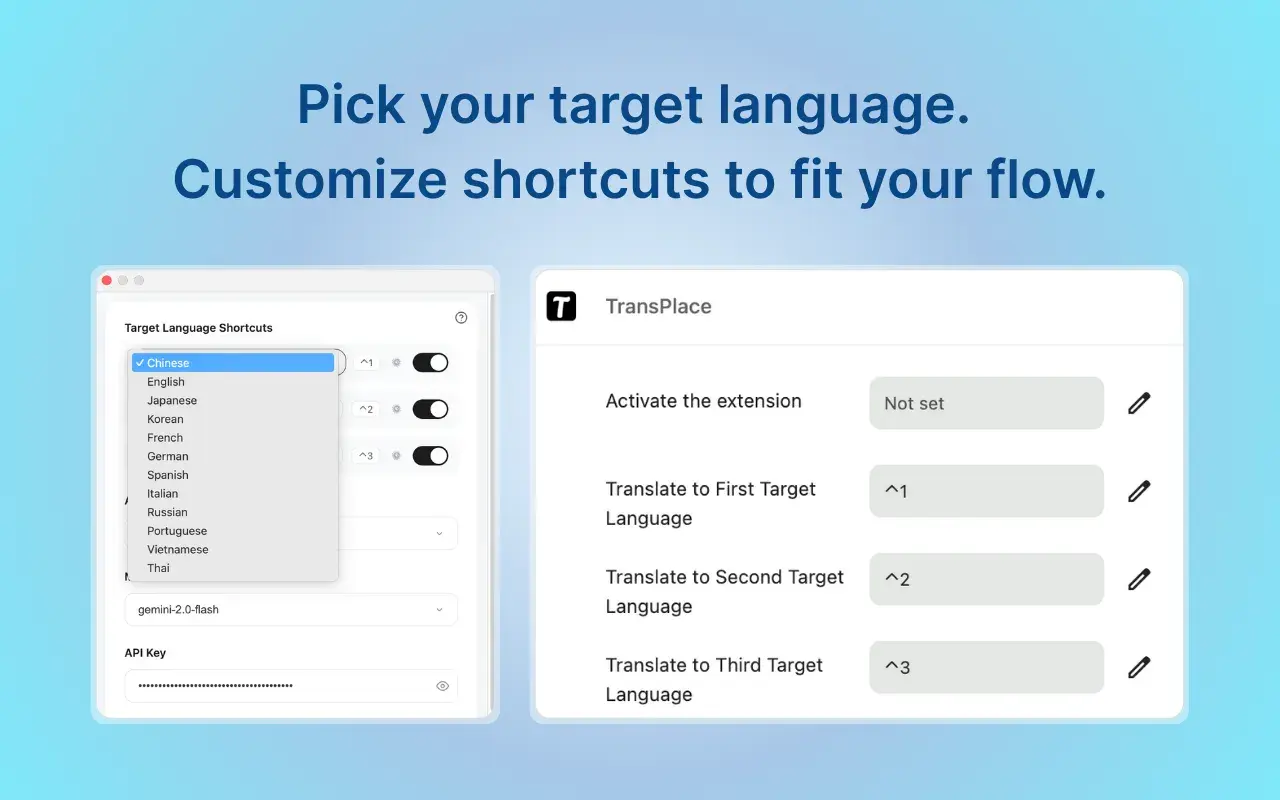
During the Dragon Boat Festival holiday, I finally launched my plugin TransPlace on the Chrome Web Store. This plugin allows you to input text into a field (or dialogue box), press a shortcut key, and have the text translated immediately, replacing the original text with the translation.
The idea for this plugin came from dealing with issues faced by Russian-speaking users, where I had to use ChatGPT to translate Chinese into Russian before copying it into a dialogue box. I wondered if I could make a plugin that lets you write in Chinese in the dialogue box and, with a shortcut key, translate it into Russian for direct submission.
After sharing this idea with a friend, he mentioned that Immersive Translation already offers this function. I tried it out and found it quite good, but it didn’t fully meet my needs since it only translates into one predefined target language.
Russian isn’t my only target language—I also need to translate into English on a daily basis. Over the course of a couple of months, I gradually turned the idea into a plugin that now supports three target languages.
This is my first plugin product, a personal milestone that brings me a lot of joy. However, from a product perspective, I’m not very confident—it hasn’t been promoted actively.
Especially these past few days, I noticed that the desktop version of WeChat Input Method has also been updated with a “write and translate simultaneously” feature that supports translations into over a dozen languages. Considering that input methods serve as a system-level interface, their reach far exceeds that of plugins. Hats off to the product manager at WeChat Input Method for capturing this need so effectively.